
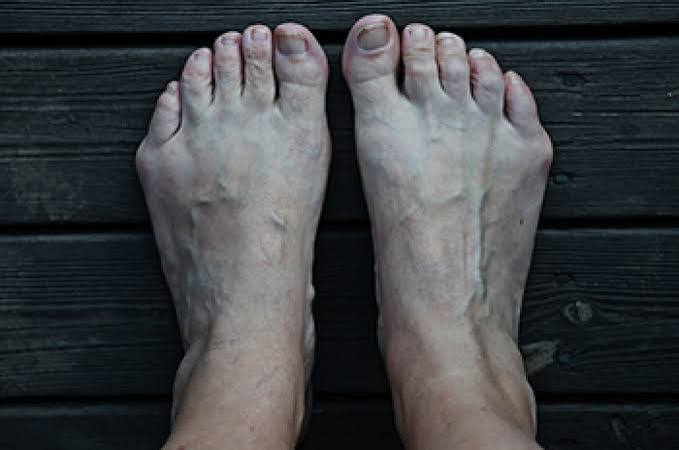


Most people picture the same thing when they hear the word bunion: a bony bump at the base of the big toe, pushing it inward toward the other toes. That image is accurate for the most common form of the condition, but it leaves out an entirely separate deformity that forms on the opposite edge of the foot and gets far less attention despite being genuinely common. It has a slightly old-fashioned name, the tailor’s bunion, and understanding what it actually is matters for anyone dealing with unexplained pain along the outer edge of their foot.
Where the Name Comes From
The tailor’s bunion, sometimes called a bunionette, sits at the base of the little toe rather than the big toe. The name traces back to tailors who traditionally sat cross-legged for long hours, with the outer edge of their feet pressed against the ground, gradually developing a bony prominence at that specific pressure point. Whether or not that origin story is entirely accurate, the condition itself is very real, and it develops through mechanisms similar to a standard bunion: a bony enlargement at the joint, often accompanied by the little toe angling inward, creating a visible bump along the outside of the foot.
Why It Gets Overlooked
Because most general information about bunion treatment focuses on the big toe version, people with pain and swelling on the little toe side of their foot sometimes dismiss it as an unrelated issue, assuming it must be a corn, a callus, or simple shoe rubbing. That assumption often delays proper treatment, since a tailor’s bunion left unaddressed tends to follow the same progressive pattern as its more common counterpart: gradual worsening, increasing shoe discomfort, and eventually pain even in supportive footwear.
What Actually Causes It
Genetics play a meaningful role, much as they do with standard bunions, since foot shape and joint structure are inherited traits that predispose certain people to developing these bony prominences regardless of footwear choices. That said, footwear absolutely accelerates the process. Narrow, pointed shoes that compress the front of the foot put direct pressure on the fifth metatarsal head, the bone most involved in a tailor’s bunion, and years of that pressure can turn a mild genetic predisposition into a genuinely painful deformity.
Certain foot mechanics also contribute. People who overpronate, meaning their foot rolls inward excessively during walking, place uneven stress across the forefoot that can encourage this kind of bony prominence to develop over time, which is one reason gait assessment is often part of a proper evaluation rather than looking at the foot in isolation.
Treatment for Bunions on the Outer Foot
The early-stage approach to a tailor’s bunion mirrors sensible treatment for bunions generally: switching to footwear with a wider toe box that does not compress the outer foot, using padding or cushioned inserts over the bony prominence to reduce direct pressure, and addressing any underlying gait pattern that may be contributing to uneven load across the forefoot. These conservative measures are genuinely effective for many people, particularly when the condition is caught before significant joint deformity has developed.
For cases where conservative approaches have plateaued and pain continues to interfere with daily activity or exercise, a proper podiatric assessment becomes necessary to evaluate the extent of bony involvement and whether more targeted intervention is warranted. This is true whether someone is dealing with a standard bunion, a tailor’s bunion, or both simultaneously, which does happen more often than people expect given that bunions treatment often needs to account for the whole foot’s mechanics rather than treating one bony prominence in isolation.
Footwear Choices That Actually Help
Shoe shopping with a tailor’s bunion requires paying attention to a part of the shoe most people never think about: the width and shape of the toe box specifically around the little toe, not just the overall shoe size. A shoe that fits comfortably lengthwise can still compress the outer foot if it tapers too sharply toward the front. Shoes with a squared or rounded toe box, rather than a pointed one, and soft upper materials that flex rather than press rigidly against the bony area, tend to make the biggest practical difference day to day.
Not Every Bump Needs the Same Answer
The wider lesson here applies beyond just tailor’s bunions. Foot pain that does not match the textbook description of the most common condition is not necessarily something to ignore or self-diagnose as minor. Standard bunions, tailor’s bunions, and other forefoot deformities can present with overlapping symptoms but respond to somewhat different management approaches, and a proper evaluation through Pavel Akimau’s podiatry practice is the most reliable way to know which one is actually causing the pain rather than guessing based on where the bump happens to sit.
Left unaddressed, either type of bunion tends to worsen gradually rather than resolve on its own, which makes early attention, even for a bump that seems minor at first, a genuinely worthwhile investment in long-term foot comfort and mobility.