
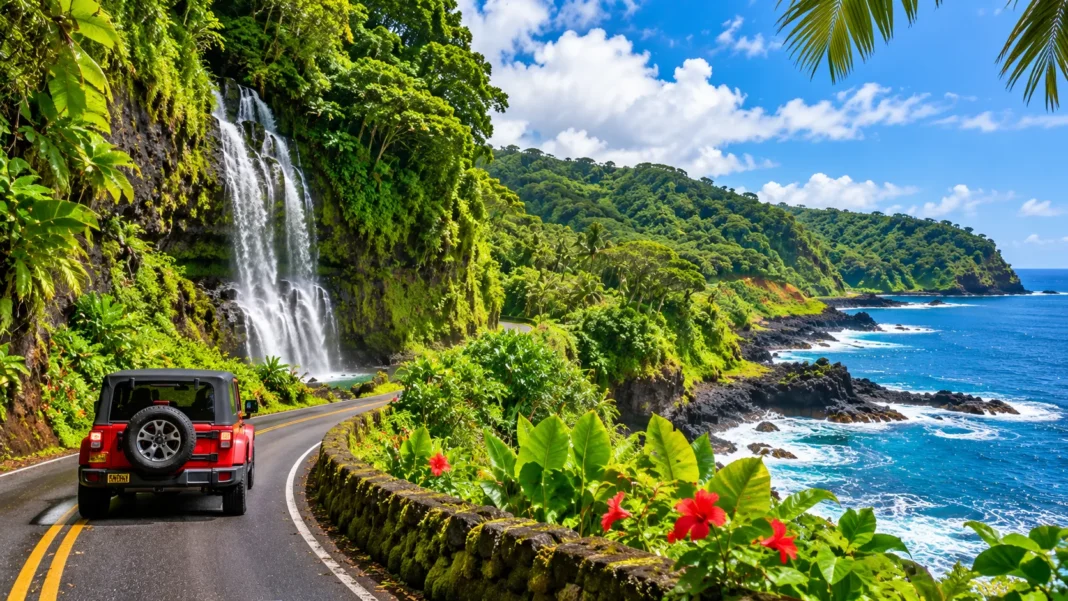


The Road to Hana is one of the most scenic drives in Hawaii, offering waterfalls, tropical rainforests, dramatic coastlines, and beautiful beaches. Located on the island of Maui, this famous highway takes visitors through some of Hawaii’s most breathtaking landscapes. Using a reliable Road to Hana map helps travelers discover worthwhile stops while avoiding unnecessary detours and stressful driving conditions.
The journey is about much more than reaching Hana town. Along the way, you can explore hidden waterfalls, admire coastal viewpoints, visit black sand beaches, and experience the peaceful atmosphere of East Maui. This guide explains the best Road to Hana stops, important mile markers, driving directions, and practical travel tips to help you plan a memorable adventure.
What Is the Road to Hana in Maui?
The Road to Hana is a famous scenic highway connecting central Maui with the small coastal community of Hana. The route follows the island’s northeastern coastline through lush valleys, tropical forests, and rugged mountains. Travelers encounter numerous curves, narrow bridges, and beautiful ocean views. Its remarkable scenery makes it one of Maui’s most popular sightseeing experiences.
The traditional route generally begins around Kahului or Paia and continues along Hana Highway toward Hana. Depending on your starting point, the main drive covers roughly 50 to 65 miles. However, the exact distance changes if you explore nearby beaches or continue toward Kipahulu. Understanding the route before departure helps prevent confusion during the journey.
Unlike an ordinary highway trip, the Road to Hana encourages slow and thoughtful exploration. Many of its best attractions are located beside narrow roads or require short walks. Waterfalls, coastal cliffs, and small communities appear throughout the journey. Planning ahead allows you to enjoy these experiences without rushing or creating unsafe traffic conditions.
How to Read a Road to Hana Map and Mile Markers
A Road to Hana map helps visitors understand the highway’s layout and identify important attractions. Most travel guides organize stops according to mile markers along Hana Highway. These roadside signs help drivers locate viewpoints, beaches, and hiking areas. However, the marker system changes between highway sections, so the numbers do not always increase continuously.
The journey usually follows Highway 36 before continuing onto Highway 360 near the beginning of the winding eastern section. Popular attractions such as Twin Falls, Keanae Peninsula, and Waianapanapa State Park appear along Highway 360. After Hana, mile markers change again on the road toward Kipahulu. Reading both location names and highway numbers reduces navigation mistakes.
Before leaving, download an offline Road to Hana route map to your phone. Mobile signals may become weak or unavailable in remote areas, particularly between smaller communities. A saved map helps you follow the correct road without depending entirely on mobile data. Keep a simple list of planned stops as an additional navigation reference.
Start Your Road to Hana Trip in Paia Town
Paia is a convenient starting point for a Road to Hana adventure. This charming North Shore town features small shops, cafés, and a relaxed coastal atmosphere. Many travelers stop here for breakfast before beginning the winding portion of Hana Highway. It also provides an opportunity to prepare for the journey ahead.
Before leaving Paia, make sure your vehicle has enough fuel for the entire trip. Gas stations become less frequent as you travel toward East Maui. Pack drinking water, snacks, sunscreen, and comfortable footwear for exploring scenic locations. Preparing these essentials early reduces the need to search for supplies along the narrower highway sections.
Starting early is particularly helpful during busy travel periods. Leaving the Paia area around sunrise or shortly afterward can provide more time for sightseeing. However, driving conditions should always determine your departure plans. Avoid rushing through unfamiliar roads simply to follow a strict schedule or reach every attraction before other visitors.
Stop at Hookipa Beach Park for Ocean Views
Hookipa Beach Park is one of the first worthwhile stops when traveling east from Paia. Located along Maui’s North Shore, this famous coastal area offers dramatic ocean scenery and opportunities to watch surfers. The beach is especially impressive when large waves roll toward the rocky coastline. It provides an exciting introduction to the island’s natural beauty.
Visitors can enjoy views from designated lookout areas without entering the water. Sea turtles sometimes rest along the beach, making the location particularly interesting for wildlife enthusiasts. However, visitors must maintain the required distance and avoid disturbing protected animals. Strong currents and powerful waves can make swimming dangerous, especially during rough ocean conditions.
Hookipa is ideal for a relatively short sightseeing stop before continuing toward Hana. Take photographs from safe viewing areas and respect any posted restrictions. During busy periods, parking may be limited, so avoid stopping in unauthorized roadside spaces. A brief visit lets you appreciate Maui’s coastline while preserving enough time for later attractions.
Explore Twin Falls Near Mile Marker 2
Twin Falls is among the first popular waterfall attractions along the Road to Hana. Located near mile marker 2 on Highway 360, the area features tropical vegetation, streams, and picturesque waterfall scenery. Visitors can explore permitted walking routes through the surrounding landscape. This stop introduces the lush rainforest environment that characterizes much of East Maui.
Access conditions vary depending on weather, water levels, and property management. Some trails may become muddy or temporarily unavailable after rainfall. Flash flooding can occur quickly, even when skies appear clear nearby. Never enter fast-moving water, cross flooded streams, or approach waterfalls when conditions appear unsafe.
Twin Falls can be a rewarding stop for travelers who enjoy short nature walks. However, parking availability, entrance arrangements, and access restrictions should be checked before arrival. Use designated parking facilities rather than leaving your vehicle along narrow road shoulders. If the area is crowded or closed, continue toward another planned attraction.
Visit Keanae Peninsula for Coastal Scenery
Keanae Peninsula is one of the most memorable coastal stops on the Road to Hana. Located near mile marker 16, this picturesque area features dark volcanic rocks, dramatic ocean waves, and green tropical landscapes. Its rugged shoreline creates an impressive contrast between the blue Pacific Ocean and black lava formations. The scenery is particularly attractive for photography.
The peninsula also has cultural importance because it is home to a longstanding Hawaiian community. Visitors may notice traditional agricultural landscapes and historic features that reflect local heritage. Exploring respectfully helps protect the area’s character and residents’ privacy. Remain on public roads and designated visitor areas rather than entering private land or residential property.
Many travelers stop near Keanae to enjoy the scenery and try locally prepared snacks when vendors are operating. Banana bread is a particularly popular treat along this section of Hana Highway. However, facilities and business hours can vary. Plan a relaxed visit while remembering that powerful waves make the rocky shoreline dangerous.
Discover Pua’a Ka’a State Wayside Waterfalls
Pua’a Ka’a State Wayside is a beautiful rainforest stop located around mile marker 22. The park features lush vegetation, waterfall views, and designated rest areas along Hana Highway. Travelers often appreciate this location because it provides a chance to pause during the winding drive. The green surroundings create a peaceful contrast with Maui’s coastal viewpoints.
Small waterfalls and natural pools add to the attraction’s tropical appearance. However, water conditions can change rapidly during or after heavy rainfall. Streams may become dangerous because of strong currents, slippery rocks, or sudden flooding. Observe waterfalls from safe areas and follow posted guidance rather than assuming that natural pools are suitable for swimming.
This location can also serve as a convenient break between major sightseeing stops. Restroom availability and other facilities may change, so prepare accordingly. During busy periods, parking spaces can fill quickly. If the designated parking area is unavailable, continue driving instead of stopping where your vehicle could obstruct traffic.
Explore Waianapanapa State Park and Black Sand Beach
Waianapanapa State Park is one of the most famous destinations along the Road to Hana. Located near mile marker 32, the park features a dramatic black sand beach surrounded by volcanic cliffs. The dark shoreline contrasts beautifully with turquoise ocean water and green coastal vegetation. Its unusual scenery makes it a favorite location for photography.
The park also offers coastal views, interesting volcanic formations, and opportunities to explore permitted walking areas. Visitors can enjoy the landscape while learning about the natural environment of East Maui. However, waves and currents may create hazardous swimming conditions. Always follow posted safety warnings and avoid entering the water when conditions are unsafe.
Advance reservations are required for many visitors, including non-Hawaii residents, and specific entry times apply. Parking and entrance charges may also apply depending on visitor status and current rules. Book your visit before traveling, as arriving without the required reservation may prevent entry. Build the reserved arrival window into your Road to Hana itinerary.
Reach Hana Town and Enjoy Local Attractions
Hana is a small coastal community surrounded by tropical landscapes and beautiful ocean scenery. Reaching the town feels rewarding after navigating the highway’s many curves and bridges. Unlike Maui’s busier resort areas, Hana offers a quieter atmosphere and a strong connection to the island’s local culture. Visitors should approach the community with respect.
Travelers can explore designated public areas, enjoy local food, and take a break from driving. Hana Bay provides coastal scenery and opportunities to appreciate the town’s relaxed setting. Small businesses may sell fresh produce, meals, and locally prepared treats. Supporting local businesses can contribute positively to the community when visitors follow local guidelines.
Although Hana is often described as the final destination, several attractions lie farther along the road. Hamoa Beach and the Kipahulu District are popular options for visitors with additional time. However, reaching these locations requires more driving and careful planning. Staying overnight in Hana can make extended exploration more manageable than rushing through everything in one day.
Visit Hamoa Beach for a Relaxing Coastal Stop
Hamoa Beach is located a short drive beyond Hana town and is known for its beautiful natural surroundings. The beach features soft sand, lush vegetation, and a curved shoreline framed by tropical scenery. It is a wonderful place to appreciate Maui’s eastern coastline. Visitors often include Hamoa Beach when planning a longer Road to Hana itinerary.
The beach’s appearance can change with the weather and ocean conditions. At times, waves and shore breaks may be powerful enough to make entering the water unsafe. Swimming conditions should never be judged by appearance alone. Check local warnings, observe posted signs, and stay out of the ocean when hazards are present.
Parking and access can be limited, particularly during popular visiting hours. Use legal parking areas and avoid blocking local roads or residential entrances. If you have limited time, consider enjoying the viewpoint rather than planning an extended beach visit. This approach allows you to appreciate the scenery while maintaining a manageable driving schedule.
Continue to the Pipiwai Trail and Kipahulu District
Travelers with additional time can continue beyond Hana toward the Kipahulu District of Haleakala National Park. This remote section of Maui features rainforest landscapes, freshwater streams, and impressive hiking opportunities. The area lies roughly 12 miles beyond Hana along the southeastern coastline. Reaching it requires additional travel time on winding roads.
The Pipiwai Trail is one of the district’s best-known hiking routes. This approximately four-mile round-trip hike passes through lush vegetation and a remarkable bamboo forest before reaching the Waimoku Falls viewing area. The trail includes uneven ground and potentially slippery sections. Visitors should wear suitable shoes and allow several hours for the experience.
The nearby Oheo Gulch area provides additional opportunities to observe dramatic natural scenery. However, access restrictions and safety rules may limit particular activities or viewpoints. National park entrance fees and operating conditions should be checked before arrival. If you plan to hike, consider staying overnight in Hana rather than combining every major attraction into one exhausting day.
How Long Does It Take to Drive the Road to Hana?
Driving the Road to Hana without extended stops generally takes several hours each way. From Kahului to Hana, the journey commonly requires approximately two and a half to three hours under favorable conditions. However, traffic, construction, weather, and frequent curves can increase travel time. The scenic route is not designed for fast driving.
A full day trip often requires around ten to twelve hours when sightseeing stops are included. Visitors may spend additional time at waterfalls, black sand beaches, restaurants, and viewpoints. Trying to visit every attraction can make the day unnecessarily stressful. Choosing five or six meaningful stops is usually more enjoyable than following an overloaded schedule.
If you want to explore Kipahulu or complete the Pipiwai Trail, consider spending two days in East Maui. Staying overnight allows more flexibility and reduces pressure to complete long drives after dark. It also provides opportunities to enjoy Hana’s quieter atmosphere. Remember that the return journey requires the same careful attention as the outward drive.
Essential Road to Hana Driving and Safety Tips
Driving the Road to Hana requires patience because many sections are narrow and winding. Some bridges accommodate only one direction of traffic at a time. Reduce speed, watch for oncoming vehicles, and follow posted road signs. Never stop suddenly in traffic to photograph waterfalls or scenic viewpoints, even when the view appears impressive.
Local residents depend on Hana Highway for work, school, and everyday activities. Visitors should allow faster local traffic to pass at safe, designated locations when appropriate. Avoid parking in restricted areas, blocking driveways, or entering private property. Respectful driving helps reduce congestion and supports a better experience for everyone using the highway.
Before departure, check weather forecasts, road closures, and rental vehicle restrictions. Heavy rain can create hazardous driving conditions or lead to temporary closures. Do not attempt unfamiliar remote roads simply because a navigation application suggests a shortcut. Returning by the same Hana Highway route is generally the more practical choice for first-time visitors.
Conclusion
A Road to Hana map is an essential planning tool for exploring one of Maui’s most beautiful scenic drives. The journey offers waterfalls, tropical forests, volcanic beaches, and dramatic ocean viewpoints. Attractions such as Twin Falls, Keanae Peninsula, and Waianapanapa State Park provide memorable experiences. However, thoughtful planning is necessary because the highway requires careful driving.
Choosing the right stops makes the adventure more enjoyable and less stressful. Start early, download offline navigation, and allow plenty of time between attractions. Remember to reserve entry for locations that require advance booking. Most importantly, respect local communities, follow traffic rules, and avoid hazardous swimming or hiking conditions.
Whether you plan a full-day excursion or stay overnight in Hana, this scenic journey offers unforgettable views of East Maui. Focus on enjoying a manageable number of attractions rather than visiting every location. With preparation, patience, and a reliable route plan, the Road to Hana can become one of the highlights of your Hawaii vacation.
Frequently Asked Questions
Where does the Road to Hana start and end?
The traditional Road to Hana route begins around Kahului or Paia and follows Hana Highway to Hana town. Some travelers continue farther toward the Kipahulu District of Haleakala National Park.
How many stops should you make on the Road to Hana?
Five to seven well-chosen stops are generally manageable during a full-day trip. The ideal number depends on traffic, weather, reservation times, and how long you spend exploring each location.
Do you need a reservation for the Road to Hana?
You do not need a reservation to drive Hana Highway itself. However, nonresident visitors generally need advance reservations for Waianapanapa State Park, and other attractions may have separate entry requirements.
Is the Road to Hana difficult to drive?
The Road to Hana can be challenging because it features numerous curves, narrow sections, and one-lane bridges. Careful driving, patience, and attention to road conditions make the journey more manageable.
Can you complete the Road to Hana in one day?
Yes, a full-day trip is possible when you start early and limit sightseeing stops. However, spending two days allows more time for hiking, exploring Hana, and visiting attractions beyond town.