
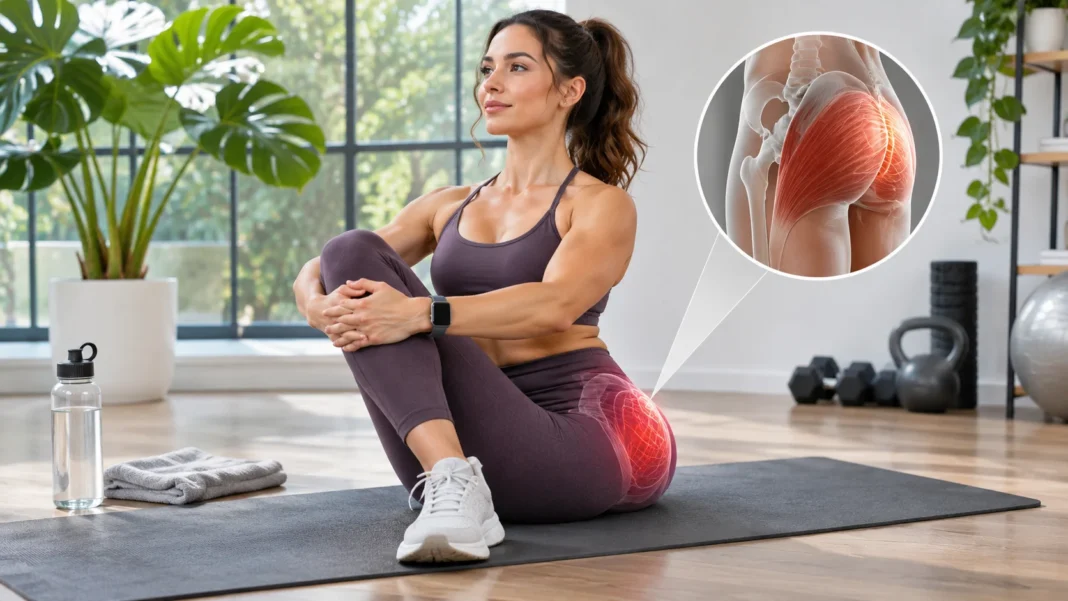


Tight or uncomfortable glute muscles can make everyday movements feel more difficult, especially after prolonged sitting, exercise, or physically demanding activities. Your glutes play an important role in walking, climbing stairs, maintaining balance, and supporting hip movement. Gentle stretching can help improve flexibility, reduce temporary muscle stiffness, and make certain movements feel more comfortable.
Learning the best stretches for glutes can help you develop a simple mobility routine that supports your hips and lower body. From the figure-four stretch to seated hip movements, several exercises target different areas around the buttocks. These stretches require little equipment and can often be performed comfortably at home.
This guide explains the benefits of glute stretching, proper exercise form, and common mistakes to avoid. You will also discover beginner-friendly movements, mobility tips, and guidance on when stretching may not be appropriate.
What Are the Glute Muscles?
The glutes are a group of three main muscles located around the buttocks and hips. They include the gluteus maximus, gluteus medius, and gluteus minimus. These muscles work together to support hip movement and pelvic stability. They are involved in everyday activities such as walking, standing, running, and climbing stairs.
The gluteus maximus is the largest of the three muscles and plays an important role in extending the hip. The gluteus medius helps move the leg sideways and stabilizes the pelvis during walking. The gluteus minimus assists with similar movements. Together, these muscles help coordinate lower-body movement during different activities.
Although the glutes are often discussed in strength training, mobility is another important aspect of their function. Comfortable movement around the hips can help with daily activities and exercise. However, a feeling of tightness does not always mean a muscle is physically shortened. Stretching should be one part of a balanced movement routine.
Benefits of Stretching Your Glutes
One potential benefit of glute stretching is improved hip flexibility. Gentle stretching may increase the range of motion available during certain movements. This can make activities such as bending, sitting, and changing positions feel more comfortable. The effects depend on individual mobility, exercise consistency, and the causes of any existing discomfort.
Stretching can also provide temporary relief from muscular stiffness after periods of inactivity. For example, someone who has been sitting for several hours may notice that their hips feel uncomfortable when standing. Gentle movement and stretching may help reduce that sensation. However, stretching is not a guaranteed treatment for every type of hip or lower back pain.
Another benefit is greater awareness of how your hips move. Performing controlled stretches helps you recognize comfortable positions and movement limitations. This awareness can support a broader mobility and strengthening program. Combining stretching with regular physical activity is generally more useful than relying on stretching alone.
Why Do Your Glutes Feel Tight?
Glutes can feel tight after prolonged sitting, unfamiliar exercise, or repetitive physical activity. Muscle fatigue and temporary soreness may contribute to this sensation. Some people notice stiffness after running or strength training. Others experience discomfort when remaining in one position for an extended period.
For example, sitting at a desk throughout the day may make the hips feel stiff when changing positions. A demanding workout may also cause temporary muscular soreness. However, these sensations do not necessarily mean the glute muscles have become permanently shortened. Muscle sensitivity, joint movement, and surrounding tissues may also influence how the area feels.
Persistent glute discomfort can sometimes be associated with conditions affecting the hip, lower back, or nearby nerves. Pain spreading down the leg may require a different approach from ordinary muscular stiffness. Identifying the underlying cause is important. If symptoms repeatedly return or interfere with daily activities, a healthcare professional can provide an appropriate assessment.
Figure-Four Stretch for Glute Flexibility
The figure-four stretch is one of the most popular stretches for glutes because it targets muscles around the back of the hip. It can be performed while lying on the floor, making it suitable for many beginners. The movement creates a gentle stretching sensation around the buttock. It should not produce sharp or increasing pain.
Begin by lying on your back with both knees bent and your feet resting on the floor. Place one ankle across the opposite thigh, just above the knee. If comfortable, gently bring the supporting thigh toward your chest. Keep your head and shoulders relaxed while maintaining a smooth breathing pattern.
Hold the position for approximately 15 to 30 seconds before slowly releasing it. Repeat on the opposite side without forcing the stretch deeper. If lifting the supporting leg feels uncomfortable, keep its foot on the floor. This modification still allows you to explore gentle hip movement while maintaining control.
Seated Figure-Four Stretch for Beginners
The seated figure-four stretch is a convenient option for people who spend time working or studying at a desk. It can be performed using a stable chair without special exercise equipment. This movement gently stretches the muscles around the outer hip and buttock. It also provides an opportunity to change positions during prolonged sitting.
Sit comfortably in a chair with both feet resting on the floor. Place one ankle over the opposite thigh while keeping the supporting foot stable. Maintain a comfortable upright position and gently lean forward from the hips. Stop when you notice a mild stretch around the buttock.
Hold the position for approximately 15 to 30 seconds while breathing normally. Slowly return to the starting position and repeat on the other side. Avoid pressing forcefully on the raised knee. People with hip or knee problems may need a modified position, so the exercise should always remain comfortable.
Knee-to-Chest Stretch for the Glutes
The knee-to-chest stretch is a simple floor exercise that can create a gentle stretching sensation around the buttocks and lower back. It requires no equipment beyond a comfortable surface. Many people use it as part of a general mobility routine. However, the exact muscles stretched depend on body position and individual movement.
Start by lying on your back with your knees bent. Slowly bring one knee toward your chest while keeping the other leg supported. Hold the raised leg gently without pulling forcefully. Keep your shoulders relaxed and avoid lifting your head from the floor.
Maintain the position for around 15 to 30 seconds before lowering the leg slowly. Repeat on the opposite side if comfortable. Some people prefer keeping both knees bent throughout the exercise. If the movement increases lower back pain or causes symptoms traveling into the leg, stop and seek appropriate guidance.
Supine Glute Stretch With a Gentle Hip Rotation
A lying hip rotation stretch can help explore movement around the glutes and deep hip muscles. This exercise involves rotating the hip while maintaining a supported position. It may be useful for people who prefer gentle floor-based mobility activities. Movements should remain slow, controlled, and within a comfortable range.
Lie on your back with both knees bent and your feet resting on the floor. Allow one knee to move slightly outward while keeping the pelvis comfortably supported. Move only as far as feels natural without forcing the joint. Return the knee toward the starting position in a controlled manner.
Repeat several times before changing sides. The exercise can be performed as a dynamic mobility movement rather than a prolonged stretch. Avoid pressing on the knee or attempting to achieve a specific angle. Gentle movement is usually more appropriate than pushing the hip into uncomfortable positions.
Standing Figure-Four Stretch
The standing figure-four stretch offers another way to stretch the glutes without lying on the floor. It can be useful when you want a brief movement break during the day. However, it requires balance and control. Beginners may find it easier to use a stable chair or countertop for support.
Stand comfortably while holding a secure support with one hand. Place one ankle across the opposite thigh, creating a figure-four position. Slowly bend the supporting knee slightly and move your hips backward. Keep the movement small enough to maintain balance and comfortable knee alignment.
Hold the position briefly when you notice a gentle stretch around the raised leg’s buttock. Return to standing slowly before switching sides. Avoid lowering into a deep squat or forcing the supporting knee to bend farther than feels comfortable. If balance is difficult, choose the seated or lying variation instead.
90/90 Hip Stretch for Glute Mobility
The 90/90 hip stretch is commonly used to explore hip rotation and mobility. It involves placing the legs in different bent positions while sitting on the floor. The movement can create a stretching sensation around the buttocks and surrounding hip muscles. However, some beginners may find the position challenging.
Begin seated on a comfortable surface with your knees bent. Position one leg in front of your body and the other toward the side or behind you. Allow both knees to bend naturally without forcing them into exact right angles. Use your hands on the floor for support as needed.
If the position feels comfortable, gently lean toward the front leg while keeping the movement controlled. Return upright and change sides slowly. Place a folded towel beneath your hips if additional support is helpful. People with existing hip or knee pain should avoid forcing this movement and consider professional guidance.
Gentle Pigeon Pose Modification
Pigeon pose is often included in stretching routines for the glutes and outer hips. The traditional position can be demanding, particularly for people with limited hip mobility. A modified version may provide a more manageable alternative. The goal is to explore comfortable movement rather than achieve a particular yoga position.
Begin on hands and knees on a supportive surface. Slowly bring one knee forward and position the lower leg where it feels comfortable. Extend the opposite leg backward only if the movement does not create discomfort. Keep your weight supported through your hands or cushions.
Maintain a gentle position for a short period before returning carefully to hands and knees. Avoid forcing the front shin into a horizontal position or placing excessive pressure on the knee. If the exercise feels uncomfortable, use a lying figure-four stretch instead. There is no need to perform pigeon pose to maintain healthy hip mobility.
When Should You Stretch Your Glutes?
Glute stretching can be included at different times depending on personal preference and exercise goals. Some people enjoy gentle stretches after walking or completing a workout. Others use stretching during breaks from prolonged sitting. The most useful time is generally when you can move comfortably without forcing tired or painful muscles.
Before demanding exercise, dynamic movements may be more suitable than long static stretches. Gentle hip circles, controlled leg movements, and comfortable walking can help prepare the body for activity. Static stretching may be included afterward when appropriate. However, warming up should also reflect the type of exercise you plan to perform.
Stretching does not need to follow a complicated schedule. A few comfortable movements may be enough for a short mobility session. Consistency can help maintain flexibility over time. If your hips already move comfortably, additional stretching may not be necessary, especially when it causes irritation or discomfort.
Common Mistakes When Stretching Glutes
One common mistake is stretching too aggressively in an attempt to increase flexibility quickly. Strong pressure can irritate muscles, joints, or nearby nerves. A useful stretch should generally feel mild and controlled. Sharp pain, tingling, or worsening symptoms indicate that the movement should be stopped.
Another mistake involves forcing the knees or hips into positions that do not feel natural. This can happen during figure-four stretches or floor-based hip exercises. Everyone has different joint structures and mobility characteristics. Using comfortable modifications is more important than making your position look identical to an exercise demonstration.
Rushing through movements can also reduce control and make it harder to recognize discomfort. Instead, breathe normally and change positions gradually. Stretching should not involve bouncing or sudden pulling. Combining gentle mobility with suitable strengthening exercises can provide a more balanced approach to lower-body movement.
How to Build a Simple Glute Mobility Routine
A simple glute mobility routine can begin with a few minutes of comfortable walking or easy movement. This helps you become familiar with how your hips and lower body feel. Choose two or three stretches that suit your abilities. There is no need to perform every available glute exercise in one session.
For example, start with a seated figure-four stretch on each side. Follow it with a gentle knee-to-chest movement and comfortable hip rotations. Hold static stretches briefly and avoid pushing into pain. The entire routine can remain short, particularly when you are beginning or returning after a period of inactivity.
Over time, you can adjust the movements according to your comfort and mobility needs. Strengthening exercises such as glute bridges may complement stretching when performed appropriately. Regular walking and varied daily movement are also valuable. A sustainable routine should support normal activities rather than create additional soreness or pressure to exercise excessively.
When Should You Avoid Glute Stretching?
Glute stretching may not be appropriate when discomfort comes from an acute injury or a medical condition requiring evaluation. Sharp pain, significant swelling, or difficulty bearing weight should not be managed by forcing stretches. Symptoms following a fall or other injury also deserve attention. Continuing painful exercises can sometimes worsen irritation.
Pain that travels from the buttock into the leg may involve nerve irritation rather than ordinary muscle stiffness. Tingling, numbness, or weakness are additional signs worth discussing with a healthcare professional. Certain stretching positions can aggravate nerve-related symptoms. An individualized assessment can help identify safer and more appropriate treatment options.
Seek emergency medical care for new loss of bladder or bowel control, numbness around the groin, or rapidly worsening leg weakness. These symptoms may indicate serious nerve compression. For persistent but non-emergency discomfort, a physical therapist or other qualified clinician can assess movement and recommend suitable exercises.
Conclusion
Glute stretching can be a useful part of a balanced mobility routine, especially when temporary stiffness makes everyday movement uncomfortable. The glute muscles support walking, standing, climbing stairs, and hip stability. Gentle stretches may help improve flexibility and movement comfort. However, stretching is not a guaranteed solution for every type of hip or buttock pain.
Exercises such as the figure-four stretch, knee-to-chest movement, and modified 90/90 stretch provide different ways to explore hip mobility. The most important factors are comfortable positioning, controlled movement, and appropriate modifications. Stretching should never require forcing a painful range. Combining mobility activities with suitable strengthening exercises can support overall lower-body function.
The best stretches for glutes are those that match your individual abilities and daily needs. Start gradually, pay attention to discomfort, and avoid unnecessary pressure to achieve extreme flexibility. If symptoms persist or involve numbness, weakness, or radiating pain, professional evaluation is important. A thoughtful approach can help you maintain comfortable movement and support long-term physical well-being.
Frequently Asked Questions
What are the best stretches for glutes?
Common glute stretches include the lying figure-four, seated figure-four, knee-to-chest stretch, and modified 90/90 hip stretch. Choose movements that feel comfortable and avoid forcing your hips or knees into painful positions.
How long should you hold a glute stretch?
Many static glute stretches can be held gently for approximately 15 to 30 seconds. The appropriate duration depends on your comfort and abilities. Stop if the movement causes pain, tingling, or numbness.
Can stretching help tight glutes?
Gentle stretching may improve flexibility and reduce temporary feelings of muscular stiffness. However, persistent tightness can have several causes, and stretching alone may not resolve discomfort related to nerve irritation or other conditions.
Is it good to stretch your glutes every day?
Gentle daily stretching may be appropriate when it feels comfortable and supports your mobility needs. However, daily stretching is not required for everyone. Avoid continuing movements that repeatedly increase pain or irritation.
Can tight glutes cause lower back pain?
Glute discomfort and lower back pain can occur together because the hips and spine work closely during movement. However, tight glutes are not always the cause, and persistent symptoms may require professional evaluation.