


TL;DR
- Heavy rain exposes small weaknesses, including slipped tiles, worn flashing and blocked gutters, that may remain unnoticed during lighter showers.
- The ceiling stain is not always directly beneath the damaged area because water can travel along roof timbers and underlay.
- Catch dripping water, protect your belongings and photograph the damage as soon as possible.
- A lasting repair addresses the source of the leak rather than simply covering the visible damage.
- Regular roof inspections and gutter maintenance can help prevent recurring leaks, particularly during periods of heavy rainfall in Chelmsford and across Essex.
A roof can appear perfectly sound for months before water starts dripping through the ceiling during a heavy downpour. For homeowners in Chelmsford, this can be particularly concerning during prolonged periods of rain or strong winds.
In many cases, the problem starts with a relatively small weakness in the roofing system. A slipped tile, deteriorating flashing or blocked gutter might not cause noticeable problems during light rain, but heavier rainfall can expose the damage.
Understanding the common causes of roof leaks can help homeowners recognise early warning signs, take appropriate action and arrange repairs before the problem becomes more serious.
Why Does a Roof Leak Only in Heavy Rain?
A roof often leaks only during heavy rain because lighter showers do not put the same pressure on vulnerable areas. During a downpour, larger volumes of water reach the roof, increasing the likelihood of water entering through small gaps or damaged sections.
Roofing systems are designed with overlapping materials that direct rainwater towards the gutters. When a tile becomes cracked or slips out of position, it can create an opening that allows water to reach the underlying layers.
Wind-driven rain can make matters worse. Strong winds can push water sideways or upwards beneath roof tiles, allowing moisture to enter through gaps that would normally remain protected.
Blocked gutters and valleys can also contribute to the problem. When rainwater cannot drain away properly, it may collect around vulnerable joints and eventually find a way into the roof structure.
What Are the Most Common Causes of a Roof Leak After Heavy Rain?
The most common causes include damaged roof tiles, failed flashing, deteriorating ridge mortar, blocked gutters, worn roof valleys and damaged flat roofing materials. Many of these problems develop gradually through weather exposure and general ageing.
Here are some of the areas worth understanding.
| Common cause | Where the problem occurs | Typical warning signs |
| Slipped, cracked or missing tiles | Main roof slopes | Broken tile fragments, visible gaps or damp loft insulation |
| Failed flashing or leadwork | Around chimneys, walls and skylights | Damp patches near chimney breasts or roof junctions |
| Cracked ridge mortar | Along the roof ridge | Loose ridge tiles or fallen mortar |
| Blocked or leaking gutters | Roof edges and drainage points | Overflowing water, damp external walls or gutter leaks |
| Worn roof valleys | Where two roof slopes meet | Water entering during prolonged or heavy rainfall |
| Flat roof damage | Extensions, garages and dormers | Blisters, splits or persistent standing water |
| Faulty vents or pipe collars | Around roof penetrations | Dripping or damp patches near pipes and ventilation outlets |
Even relatively minor defects can eventually cause significant water damage if they are left untreated. Identifying the problem early usually makes the repair process more straightforward.
How Can I Find Where the Roof Leak Is Coming From?
Start by inspecting the loft with a torch during or shortly after rainfall. Look for wet timber, damp insulation, water droplets or visible daylight coming through the roof structure.
If you find signs of moisture, try to trace the water upwards along the rafters. The point where water appears inside the property is not necessarily where it entered the roof.
Water can travel along roof timbers, underlay and pipes before reaching the ceiling. For example, a damp patch in a bedroom could originate from a damaged tile several feet away.
Use this checklist to help identify possible warning signs:
- Check the loft for wet timber, damp insulation and visible daylight.
- Examine the ceiling stain and note its approximate size and position.
- Look at the roof from the ground for slipped, cracked or missing tiles.
- Check gutters for visible blockages, leaks or overflow marks.
- Look for gaps or lifted lead flashing around chimneys.
- Check whether water is collecting around roof valleys or drainage points.
Binoculars can help you examine external roof areas without climbing a ladder.
If you cannot identify the source, a professional roof inspection is the safest way to investigate the problem. This leaking roof from inside guide can also help explain how water ingress is identified and assessed.
Safety note: Never climb onto a wet roof to investigate a leak yourself. Slippery surfaces and unstable roofing materials can create a serious risk of falling.
What Should I Do Straight Away If My Roof Is Leaking?
The first priority is to protect people and property from further damage. Move furniture away from the affected area, place a bucket beneath the leak and keep electrical equipment away from water.
An active roof leak should be treated as urgent because moisture can spread into insulation, plasterboard and roof timbers.
Follow these steps:
- Move belongings: Remove furniture, electronics and valuables from the affected area. Cover larger items with waterproof sheets if they cannot be moved.
- Catch dripping water: Place a bucket beneath the leak and use towels to reduce splashing.
- Watch for ceiling damage: If the ceiling is bulging or sagging, keep everyone away from the area. Do not attempt to puncture it yourself.
- Protect electrical safety: If water is entering near lights, sockets or electrical fittings, avoid touching them. Switch off the relevant circuit at the consumer unit only if it is safe to do so.
- Take photographs: Record the damage inside the property and any visible external issues that can be photographed safely.
- Arrange an inspection: Contact a qualified roofing professional to identify the source and prevent further water ingress.
If you need professional assistance, roofers in Chelmsford from Bestway Roofing – Chelmsford Roofing can assess the damage and recommend appropriate repair work. The priority should be making the roof watertight before addressing any internal cosmetic damage.
Dated photographs can also be useful if you need to contact your home insurance provider about the incident.
Can I Fix a Leaking Roof Myself?
Some minor tasks can be handled safely from inside the property, such as moving furniture, collecting dripping water and monitoring damp areas. However, repairs involving roof tiles, flashing or other external roofing materials should generally be left to a qualified professional.
Applying sealant or roofing tape might appear to offer a quick solution, but temporary patches do not always address the underlying fault. In some situations, they can conceal damage and make it more difficult to identify the original source of the leak.
A professional roofer will normally inspect the surrounding area rather than concentrating only on the visible damage. This is important because a leak can indicate weaknesses in several connected parts of the roof.
Consider arranging a professional inspection if:
- The leak returns after every period of heavy rain.
- You notice missing, cracked or displaced roof tiles.
- Ceiling stains are spreading or appearing in multiple rooms.
- Water is collecting on a flat roof.
- Damp insulation or wet roof timbers are visible in the loft.
- You cannot establish where the water is entering.
Leaving a recurring leak untreated can increase the likelihood of timber deterioration, damaged plasterwork and mould growth.
What Does a Professional Roof Leak Repair Involve?
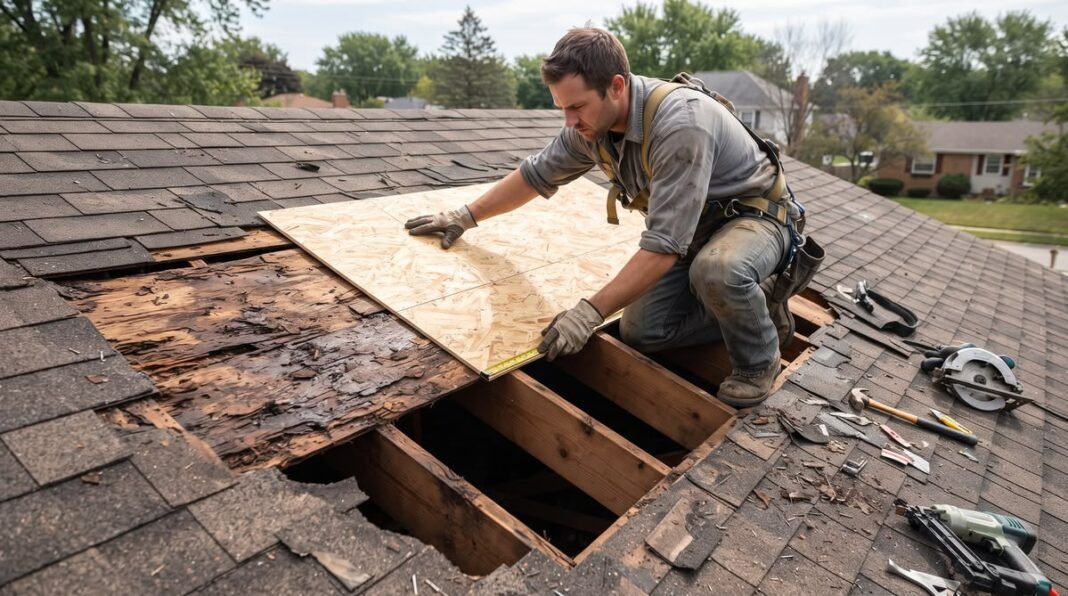
A professional roof leak repair begins with an inspection of the external roofing materials and the loft space. The aim is to establish exactly where water is entering and determine whether the problem is limited to one damaged section or involves several weaknesses.
For homeowners in Chelmsford, choosing an experienced roofing contractor who understands different roofing systems can make a difference to the quality and durability of the repair.
BestWay Roofing – Chelmsford Roofing provides roofing services in Chelmsford, Essex, including roof repairs, flat roofing, new roof installations and other roofing work. Its approach to roof repairs should involve identifying the underlying problem before recommending suitable materials and solutions.
A reliable roof repair process should include the following stages:
- Roof inspection
The roofer examines the external roof covering, including tiles, ridges, flashing, valleys and drainage points. An internal inspection may also be necessary to check for damp insulation, water marks and damaged timbers.
- Written quotation
Once the problem has been identified, the homeowner should receive a clear quotation explaining the recommended work, materials and associated costs.
- Repair work
The damaged section is repaired using suitable roofing materials. This could involve replacing broken tiles, repairing lead flashing, renewing ridge mortar or addressing defects in flat roofing.
- Final checks
The repaired area should be checked to ensure the original fault has been addressed and the roof can direct rainwater away effectively.
Before appointing any roofing contractor, homeowners should check that the company has appropriate insurance, provides clear quotations and offers written guarantees where applicable.
How Can I Stop My Roof Leaking Again?
Regular roof maintenance can help prevent many common causes of water ingress. Small defects are often easier and less expensive to address before they develop into larger problems.
Although roofs are designed to withstand changing weather conditions, prolonged rainfall, strong winds and seasonal temperature changes can gradually affect roofing materials.
A few straightforward maintenance habits can make a difference:
- Clear gutters regularly: Remove leaves, moss and other debris at least once or twice a year, particularly after autumn.
- Inspect the roof after storms: Look from ground level for displaced tiles, fallen ridge mortar or visible damage.
- Check the loft: Look for damp patches, water marks or discoloured roof timbers during routine property checks.
- Address damaged tiles promptly: Replacing a broken tile early can help prevent moisture from reaching the underlying roof structure.
- Inspect flashing and valleys: Pay attention to joints around chimneys, roof extensions and other vulnerable areas.
- Monitor flat roofs: Check for splits, blisters and standing water that remains after rainfall.
Homeowners in Chelmsford should pay particular attention to roof drainage during autumn and winter, when falling leaves and heavier rainfall can increase the likelihood of blocked gutters and water-related problems.
A professional inspection can also help identify weaknesses that may not be visible from the ground.
Frequently Asked Questions
Why Is My Roof Leaking When No Tiles Are Missing?
A roof can leak even when all the visible tiles appear to be in good condition. The underlying felt or membrane might have deteriorated, flashing may have become loose, or water could be entering through damaged ridge mortar or roof valleys.
Wind-driven rain can also force moisture beneath tiles during particularly severe weather. An inspection of the loft and external roofing materials can help identify the actual cause.
Is a Roof Leak an Emergency?
An active roof leak should be treated as urgent because water can damage insulation, plasterboard and structural timber. The situation becomes particularly serious if water is entering near electrical fittings or the ceiling is beginning to sag.
Keep people away from affected areas, take appropriate precautions around electricity and arrange a professional roofing inspection as soon as possible.
Why Does My Ceiling Stain Appear Far From the Damaged Tile?
Water does not always travel directly downwards after entering the roof. It can move along rafters, underlay and pipes before reaching a lower point where it eventually drips through the ceiling.
This explains why the visible stain may be several feet away from the original entry point. A roofer will often trace the moisture back towards the higher sections of the roof to locate the source.
Can a Flat Roof Leak Even If It Looks Fine?
Yes. Small splits, blisters and deteriorating edges can be difficult to identify from ground level. Water can also collect on a flat roof when drainage is inadequate.
Persistent standing water increases the pressure on vulnerable areas and can eventually lead to water ingress. If puddles remain for extended periods after rainfall, arrange an inspection.
Will Home Insurance Cover a Roof Leak?
Whether a roof leak is covered depends on the terms of your home insurance policy and the circumstances that caused the damage.
Sudden damage resulting from a storm may be covered under some policies, whereas gradual deterioration and general wear and tear are often excluded.
Check your policy wording and contact your insurer before arranging major repair work. Dated photographs and a written report from a roofing contractor may also support your claim.
How Often Should I Have My Roof Inspected?
There is no single inspection schedule that suits every property, as the age, condition and type of roofing materials all influence maintenance requirements.
However, checking the roof from ground level after severe weather and arranging periodic professional inspections can help identify problems before they become serious.
Older roofs and properties with a history of leaks may benefit from more frequent checks.
Final Thoughts
A roof that only leaks during heavy rain may have a relatively small defect, but ignoring it can lead to more extensive damage over time. Slipped tiles, deteriorating flashing, blocked gutters and damaged roof membranes are all common causes that deserve attention.
For homeowners in Chelmsford, recognising the early warning signs and arranging a professional inspection can help prevent recurring leaks and protect the property against further water damage.
Regular maintenance, prompt repairs and a proper assessment of vulnerable roof areas are among the most effective ways to keep a roof performing reliably throughout the year.