
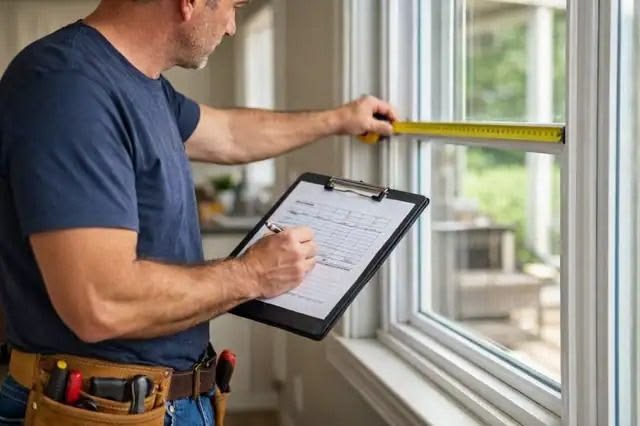


Most homeowners dread the moment they realize a window has failed. You feel the intense summer heat radiating through the glass, your energy bill unexpectedly spikes, and you immediately picture a high-pressure salesman sitting at your dining table for hours. Getting a quote for home window repair in Las Vegas does not actually require a marathon sales pitch. Many reputable local glass companies can give you an incredibly accurate estimate right over the phone or via email, provided you have the right numbers.
Taking your own measurements is the ultimate homeowner cheat code. It allows you to take control of the quoting process, compare prices quickly, and keep aggressive salesmen out of your house until you are actually ready to hire someone.
Whether you need a simple dual-pane glass swap or you want to know exactly how to measure for replacement windows before calling a contractor, you need to get the numbers right. A window that is ordered even half an inch too large will not fit in the opening, and a window that is too small will leak air and water.
Grab a standard steel tape measure, a piece of paper, and a pen. Here are five industry measurement hacks to ensure your numbers are perfectly accurate.
1. Always Measure From the Inside
The biggest mistake homeowners make is walking outside to measure their windows. Exterior measurements are almost always inaccurate. Las Vegas homes typically feature thick stucco exteriors, decorative pop-outs, and heavy exterior trim. These architectural details overlap the actual window frame, hiding the true edge of the unit.
You must take all of your measurements from inside the house. You want to measure the opening where the window frame meets the interior drywall or the interior trim. This gives you the true “rough opening” size. By staying indoors, you avoid measuring the exterior stucco overlap and ensure you are getting the exact dimensions of the window track itself.
2. The Three-Point Width Test
Houses settle over time. The extreme temperature swings in the Mojave Desert cause building materials to constantly expand and contract. Because of this natural movement, a window frame that was perfectly square when the house was built twenty years ago might be slightly bowed or warped today.
If you only measure the width across the bottom of the window, you might end up ordering a piece of glass that is too wide to fit the top section. You must measure the width in three separate places.
Start by measuring the distance horizontally across the top of the window frame. Then, take a measurement straight across the middle. Finally, measure across the bottom sill. Write all three numbers down. When you call a professional for a quote, you will use the smallest of those three numbers. Using the smallest measurement guarantees the new window or glass unit will slide into the opening without getting wedged against a warped frame.
3. The Three-Point Height Test
The exact same rule applies to the height of the window. The top header of the window frame can sag over time under the weight of the roof, especially in older homes.
Place the end of your tape measure at the highest point of the sill at the bottom, and measure straight up to the lowest point of the header at the top. Do this on the far left side, directly in the center, and on the far right side. Just like the width, you want to circle the smallest number of the three.
When you write your final dimensions down, the industry standard is to always list the width first, followed by the height. For example, if your smallest width is 36 inches and your smallest height is 48 inches, you will write it down as 36 x 48.
4. Check the Frame for Squareness
Measuring the width and height gives you the basic rectangular dimensions, but it does not tell you if the window frame is leaning or twisted. If a frame is severely out of square, a rigid new window or a perfectly cut piece of glass will not sit properly inside the track.
To check for squareness, you need to measure the window diagonally. Place your tape measure in the top left corner and pull it down to the bottom right corner. Write that number down. Next, measure from the top right corner down to the bottom left corner.
Compare those two diagonal numbers. If they are exactly the same, your window frame is perfectly square. If the numbers differ by more than a quarter of an inch, your frame has shifted. You need to mention this out-of-square measurement to your window contractor. A highly skilled installer can often use shims to correct minor shifting during the installation process, but they need to know about the issue before they order the materials.
5. Round Down to the Nearest Eighth
Standard tape measures can be confusing with their tiny fractional lines. When measuring for replacement glass or retrofit windows, precision is everything. You should never guess or round your numbers up to the nearest whole inch.
If your measurement lands exactly on a line, write it down exactly as it is. If the measurement lands between two lines, always round down to the nearest eighth of an inch. Rounding up is the most dangerous thing you can do during this process. If you round a measurement up, the factory will build a window that is physically larger than your opening. It is much easier for an installer to add extra caulking or insulation around a window that is slightly smaller than to try and force a massive frame into a tiny hole.
Understanding Glass Replacement vs. Retrofit
Once you have your accurate numbers, you need to know what you are actually asking for when you call a contractor.
If your vinyl or aluminum window frames are still in great condition but the glass itself is shattered or foggy, you do not need to buy brand-new windows. You simply need an Insulated Glass Unit replacement. You provide the measurements of the visible glass area to a local glass manufacturer. Their technicians will build a new dual-pane unit, come to your house, carefully remove the old glass from your existing frame, and slide the new glass right into place. This is incredibly fast and highly cost-effective.
If your window frames are physically damaged, chalky, severely warped, or incredibly outdated, replacing just the glass is a bad investment. You need retrofit windows. Retrofit windows are complete units designed to slide directly into the existing opening of your home without the need to tear out your exterior stucco or interior drywall. Providing your careful measurements to a contractor allows them to give you an accurate price for these full retrofit units before they ever step foot on your property.
Armed with accurate measurements, you can easily filter out aggressive sales companies. You simply call a trusted local manufacturer, hand over your width and height numbers, and ask for a straightforward price.
Frequently Asked Questions
Do I need to remove my window screen before taking measurements?
Removing the screen is not strictly necessary, but it makes seeing the exact inner edges of the frame much easier. If your screen pops out easily, remove it first so you can place your tape measure flat against the frame without any obstruction or interference.
What is the difference between measuring for a glass replacement versus a full window replacement?
When measuring for a glass-only replacement (an Insulated Glass Unit swap), you are measuring the visible glass area or the sash frame that holds the glass. When measuring for a full retrofit or new construction window, you are measuring the entire opening from frame to frame where the new window assembly will sit.
Will a glass repair company verify my measurements before fabricating the glass?
Yes, absolutely. Taking your own measurements is meant to give you a fast, accurate cost estimate over the phone or through email. Once you approve the initial quote, a professional technician will visit your home to take final, millimetric precision measurements before custom manufacturing your new dual-pane glass.
Can I replace foggy glass without replacing the entire frame?
Yes. As long as your vinyl, wood, or aluminum window frame is structurally sound and operates smoothly, you only need to replace the sealed glass unit inside. Swapping just the glass resolves the fogginess, restores energy efficiency, and saves you a substantial amount of money compared to a full window replacement.