


Understanding Your Mortgage
A mortgage is a financial instrument that allows individuals to purchase real estate by borrowing funds from a lender. The borrower agrees to repay the loan amount over a specified period, typically 15 to 30 years, in exchange for the right to occupy and use the property. Mortgages come in various forms, with the most common types being fixed-rate and adjustable-rate mortgages.
A fixed-rate mortgage maintains a consistent interest rate throughout the life of the loan, which results in predictable monthly payments for homeowners. Conversely, an adjustable-rate mortgage features an interest rate that may fluctuate based on market conditions after an initial fixed period, potentially leading to varying monthly payments. Homeowners should carefully assess their financial situations and risk tolerance when choosing between these types of mortgages.
The interest rate on a mortgage significantly impacts the total amount paid over the loan’s duration. This rate can be influenced by several factors, including the borrower’s credit score, market conditions, and the loan-to-value ratio—which compares the loan amount to the property’s appraised value. Generally, a lower interest rate means lower monthly payments and reduced total interest costs over time.
Monthly mortgage payments typically consist of three main components: principal, interest, and property taxes or homeowners insurance. The principal portion reduces the loan balance, while the interest compensates the lender for the borrowed funds. Additionally, property taxes and insurance premiums are often included in monthly payments, ensuring homeowners remain responsible for maintaining the property and complying with local regulations.
Understanding these fundamental aspects of mortgages is crucial for homeowners looking to manage their financial commitments effectively. Recognizing the structure of mortgage payments and the principles of mortgage types can empower borrowers and facilitate strategies for paying off a mortgage early, thus reducing the total interest cost and freeing up personal finances for future investments.
Advantages of Paying Off Your Mortgage Early
Paying off a mortgage early presents several significant financial and personal benefits that can greatly enhance one’s quality of life. One of the most compelling advantages is the substantial reduction in interest costs over the life of the loan. Mortgages typically span 15 to 30 years, leading to a considerable amount of interest being paid when the loan is fully amortized. By accelerating repayments, homeowners can significantly lower the total interest paid, leading to considerable savings.
Moreover, paying off a mortgage early contributes to increased financial freedom. With the absence of monthly mortgage payments, individuals can redirect their finances towards other essential areas, whether that is investing in retirement funds, saving for education, or allocating resources towards personal pursuits. This newfound flexibility allows homeowners to make more strategic financial decisions without the weight of a monthly mortgage obligation.
In addition to financial gains, there is an undeniable psychological benefit associated with owning a home outright. Achieving full ownership often brings a sense of stability and peace of mind, as individuals are no longer beholden to a bank or lender. This reduction in financial stress can lead to an improved quality of life and an increased capacity to enjoy the fruits of one’s labor. Furthermore, owning a home free and clear can provide a safety net in times of economic uncertainty, as there are no mortgage payments to worry about during challenging times.
Ultimately, the decision to pay off a mortgage early is influenced by individual circumstances. However, the combination of reduced interest costs, enhanced financial flexibility, and the psychological ease that comes with homeownership can be compelling reasons to prioritize early repayment, making it a worthwhile consideration for many homeowners.
Evaluate Your Financial Situation
Before embarking on the journey to pay off your mortgage early, it is crucial to conduct a thorough assessment of your financial situation. This evaluation should include a comprehensive understanding of your monthly expenses, income, existing savings, emergency funds, and retirement planning. Each of these components plays a significant role in determining whether early mortgage repayment is a feasible and wise decision for you.
Begin by listing all your monthly expenses, including fixed costs like utilities, food, transportation, and flexible spending like entertainment. Understanding your spending habits will help you identify areas where you can potentially cut back, allowing you to allocate more funds toward mortgage repayment. Next, consider your income sources—evaluate if there are possibilities for increasing your earnings through additional work or investment opportunities. In many cases, redirecting excess income towards the mortgage can result in substantial savings on interest over time.
Next, assess your savings and emergency fund. An emergency fund is essential for financial security; it typically covers three to six months’ worth of living expenses. Before prioritizing early mortgage payoff, ensure that you have appropriately funded this reserve to shield yourself from unforeseen circumstances that could compromise your financial stability. Furthermore, consider your retirement savings. If you are not adequately contributing to your retirement accounts, it may be wiser to allocate funds there first, especially if your employer offers a matching contribution.
Ultimately, the decision to focus on early mortgage repayment hinges on your individual financial landscape. Taking the time to evaluate these elements will guide you in determining whether paying off your mortgage early aligns with your broader financial goals and provides the peace of mind you seek.
Making Extra Payments
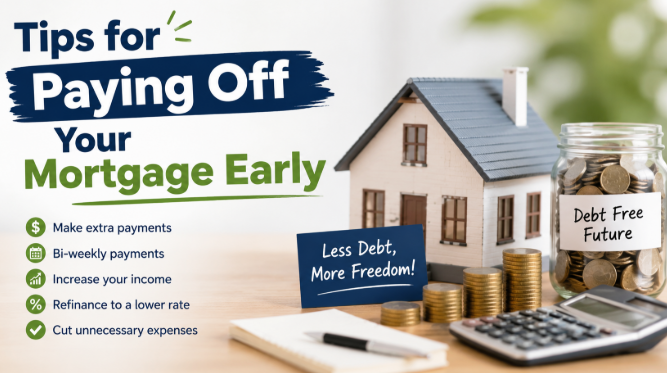
Paying off your mortgage early can significantly reduce the amount of interest paid over the life of the loan. One effective strategy to achieve this goal is making extra payments. There are several methods for implementing extra payments, including bi-weekly payment plans, one-time lump-sum payments, and rounding up monthly payments.
Bi-weekly payment plans can be particularly advantageous. Instead of making monthly mortgage payments, homeowners can opt to pay half of their monthly mortgage every two weeks. This approach results in 26 half-payments each year, equivalent to an additional full payment each year. This method not only shortens the loan term but also lowers the total interest paid, as payments are made more frequently.
One-time lump-sum payments represent another viable option for paying off a mortgage early. If you receive a bonus, tax refund, or inherit funds, consider using a portion or all of this money to make a one-time payment toward the principal. By doing so, you directly reduce the amount owed on the loan, which results in lower interest charges over time. Before proceeding, however, it is crucial to check with your lender regarding any potential prepayment penalties, as some lenders may impose fees for early repayment.
Rounding up monthly payments is yet another strategy that can significantly impact your mortgage principal. If your mortgage payment is $1,200, consider rounding up to $1,300 each month. This additional $100 may not feel substantial, but over time, it can accumulate and lead to considerable interest savings as well as a shorter repayment period. Implementing these extra payment strategies can create a manageable path to financial freedom.
Refinancing Your Mortgage
Refinancing is a financial process that involves replacing your existing mortgage with a new loan, typically with different terms. Homeowners often consider refinancing when they believe it can contribute to paying off their mortgage more quickly, primarily by obtaining a lower interest rate or adjusting the loan term. Refinancing can be particularly advantageous when market interest rates decline or when the homeowner’s credit profile improves, allowing them to secure more favorable terms than those offered in their existing mortgage agreement.
One of the primary motivations for refinancing is to reduce the monthly mortgage payment, thereby freeing up additional funds that can be redirected toward paying down the principal balance more aggressively. A lower interest rate can yield significant savings over the life of the loan, allowing homeowners to complete their payments in a shorter time frame. Alternatively, some homeowners opt to refinance from a long-term loan, such as a 30-year mortgage, to a shorter-term mortgage, like a 15-year loan. While this may result in higher monthly payments, it can drastically reduce the total amount of interest paid over the life of the loan.
However, refinancing is not without its drawbacks. Homeowners should thoroughly evaluate the closing costs associated with refinancing, as these can offset the potential savings. It is also essential to consider the homeowner’s long-term plans. If the intention is to move within a few years, the benefits of refinancing may not be realized, and the homeowner could incur additional costs without sufficient time to recover those expenses through lower payments. Therefore, careful consideration of one’s financial situation and long-term goals is critical when determining if refinancing is the right choice to facilitate an early mortgage payoff.
Making Use of Windfalls and Bonuses
Unexpected financial windfalls can significantly accelerate the journey to mortgage freedom. Tax refunds, work bonuses, or inheritance sums represent unique opportunities to make substantial contributions toward reducing your loan balance. By considering how to allocate these funds effectively, homeowners can bring down their mortgage principal or even pay off the loan entirely sooner than anticipated.
When receiving a tax refund, the funds can be earmarked specifically for the mortgage. This approach can help lower the overall interest paid over the life of the loan, enhancing the potential savings. The same principle applies to work bonuses. Many companies provide performance-based incentives, and utilizing a portion of that extra income to reduce mortgage debt can yield long-term financial benefits.
Inheritance, which may arrive unexpectedly, presents an excellent opportunity for mortgage payoff. Often, individuals debate how to best utilize inherited funds; channeling a part of these assets into mortgage payments can alleviate financial burdens and create a sense of security. It is also plausible to consider dividing the windfall – allocating a specific percentage to the mortgage and another toward investments or savings. This strategy not only helps in paying off the mortgage but also contributes to long-term financial growth.
Furthermore, it is advisable to assess the terms of your mortgage. Some loans may incur prepayment penalties, which could affect the decision to apply these windfalls toward the mortgage. Always review your loan agreement and, if necessary, consult with a financial advisor to develop a targeted strategy that maximizes the financial potential of your incoming funds.
Creating a Financial Plan
Establishing a comprehensive financial plan is crucial for anyone aiming to pay off their mortgage early while still achieving other important financial objectives, such as retirement savings and maintaining an emergency fund. A well-structured plan ensures that funds are allocated efficiently across various priorities, helping to secure long-term financial stability.
To start, it is essential to assess your current financial situation by reviewing income, expenses, assets, and liabilities. This analysis will provide a clear picture of your cash flow and highlight areas where adjustments can be made. Once you have a solid understanding of your finances, you can set specific, measurable, achievable, relevant, and time-bound (SMART) goals.
Integrating mortgage repayment into your financial plan means determining how much extra payment you can consistently afford each month without compromising other financial commitments. Consider employing strategies such as the bi-weekly payment method, which allows you to make an extra monthly payment each year, thereby reducing the principal amount quicker, which ultimately lowers the interest paid over the loan period. This approach can be beneficial, but it must align with your broader financial objectives.
Additionally, prioritizing the establishment of an emergency fund is vital. Financial experts often recommend saving three to six months’ worth of expenses in an easily accessible account to protect against unforeseen circumstances. By securing this fund, you can prevent the necessity of using mortgage repayment funds in case of emergencies, thus maintaining your goals.
Lastly, while focusing on mortgage repayment, it is important not to neglect retirement savings. Contributing to a 401(k) or an IRA can provide tax benefits and grow capital over time, which becomes invaluable as you age. Balancing these elements can lead to financial resilience. With a detailed plan in place, you will be well-equipped to tackle your mortgage and achieve your broader financial aspirations efficiently.
Staying Motivated
Paying off a mortgage early can be a formidable goal that requires dedication and perseverance. One effective way to maintain motivation is by setting achievable goals. Consider breaking down the overall mortgage amount into smaller, manageable targets. For instance, instead of focusing on the total remaining balance, set a goal to pay off a specific percentage or amount each year. These smaller milestones can provide a clear sense of progress and reinforce the journey toward financial freedom.
Tracking progress is another vital component in staying motivated. Utilize financial tools or apps designed for budget tracking and goal setting. You can document your monthly payments, additional contributions, and overall balance reduction. Visual representations, like graphs or charts, can help you see your advancement over time, making the process tangible. When you can track how much closer you are to your goal, it can infuse a sense of achievement and encourage continued effort.
Celebrating milestones is essential as you pay down your mortgage. Whether it is reaching the first $10,000 payment mark or paying off a substantial portion of the principal, take time to acknowledge these accomplishments. Celebrations can be simple yet meaningful. Treat yourself to a nice dinner, enjoy a weekend getaway, or invest in something that brings you joy. These moments are not only rewarding but serve as reminders of the progress made on your journey to becoming mortgage-free.
Staying motivated while paying off a mortgage is entirely achievable with the right strategies. By setting attainable goals, regularly tracking your progress, and celebrating your successes, you can maintain the enthusiasm necessary to reach the finish line sooner.
Assessing Progress and Making Adjustments
To successfully pay off your mortgage early, it is crucial to periodically assess your progress toward this significant financial goal. Regularly evaluating your mortgage repayment journey allows you to stay on track and make informed decisions about your budgeting and financial strategies. Begin by reviewing your mortgage statement and determining how much principal has been paid down, compared to your target payoff timeline. This evaluation will help you understand whether you are ahead, on track, or falling behind your repayment objectives.
Next, it is important to review your overall budget periodically, as changes in income, expenses, or even unexpected financial circumstances can significantly impact your mortgage repayment strategy. By regularly updating your budget, you can identify areas where you can cut costs or redirect funds toward your mortgage, thus accelerating repayment. For example, if you receive a bonus at work or have lower monthly expenses, consider allocating a portion of those funds toward extra mortgage payments.
Additionally, life events such as job changes, medical emergencies, or shifts in family circumstances may necessitate adjustments to your repayment plan. Creating a flexible mindset and being open to reassessing priorities can help you manage your mortgage more effectively. If you find that your current repayment strategy is no longer sustainable, it may be beneficial to explore options such as refinancing to a lower interest rate or modifying your repayment terms.
In their journey to eliminate their mortgage, readers are encouraged to take a proactive approach to assess their financial situation regularly. By examining both progress and budget, individuals can make strategic decisions that align with their changing circumstances, ensuring that they remain committed to the goal of paying off their mortgage early.