


Overview of the Hawaiian Islands
The Hawaiian Islands, an archipelago located in the central Pacific Ocean, comprise 137 islands, islets, and atolls, with eight major islands being prominent in tourism and culture. These islands are known for their stunning natural beauty, diverse ecosystems, and rich cultural heritage. Together, they form the 50th state of the United States, celebrated for their unique blend of native Hawaiian traditions and modern influences.
The eight main islands are Hawai’i, Maui, O’ahu, Kaua’i, Molokai, Lanai, Ni’ihau, and Kaho’olawe. Each of these islands offers distinct experiences and attractions, catering to a wide range of visitors. For instance, Hawai’i, also known as the Big Island, boasts active volcanoes and sprawling landscapes, making it a favorite for adventure seekers. Maui is celebrated for its luxurious resorts and breathtaking beaches, while O’ahu draws large crowds with its vibrant nightlife and historical sites, including Pearl Harbor.
Kaua’i, termed the “Garden Isle,” is well-regarded for its lush greenery and dramatic cliffs, appealing to nature enthusiasts and hikers. Molokai and Lanai provide a quieter, more traditional Hawaiian experience, away from the bustling tourist crowds. Ni’ihau, privately owned, is less accessible and known for its pristine environment and preservation of native culture. The least visited island, Kaho’olawe, is historically significant yet offers limited opportunities for tourism.
Recognized collectively as a popular travel destination, the Hawaiian Islands enchant visitors with their natural wonders, ancient traditions, and welcoming spirit. Understanding the unique characteristics of each island is essential for travelers when deciding which destination aligns best with their interests.
Overview of Major Hawaiian Islands
The Hawaiian archipelago is composed of diverse islands, each offering its own unique experiences and natural beauty. Understanding the characteristics of each island can assist travelers in selecting the most suitable destination for their vacation.
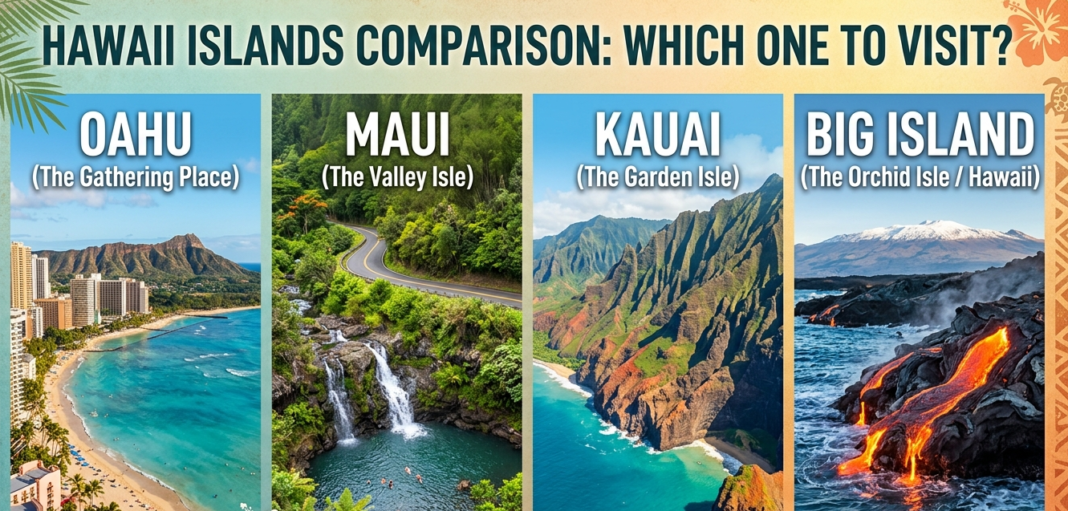
Hawaii Island, also known as the Big Island, is the largest of the Hawaiian Islands. This island is renowned for its stunning volcanoes, including Mauna Loa and Kilauea, and features diverse landscapes ranging from lush rainforests to arid deserts. Visitors can witness the unique geological formations and enjoy a range of outdoor activities, making this island a haven for adventure seekers.
Maui is celebrated for its breathtaking beaches and picturesque vistas. Known as the “Valley Isle,” Maui is home to the scenic Road to Hana and the stunning Haleakalā National Park, where one can observe breathtaking sunrises above the clouds. The island’s luxurious resorts and vibrant nightlife also add to its appeal, making it a preferred destination for honeymooners and families alike.
Oahu, the third-largest island, is often referred to as “The Gathering Place.” This island offers a blend of urban experiences and natural beauty, with the bustling city of Honolulu and the iconic Waikiki Beach. Oahu’s historical sites, such as Pearl Harbor, provide cultural enrichment, while the North Shore beckons surfers with its legendary waves.
Kauai, known as the “Garden Isle,” showcases lush landscapes and dramatic cliffs, epitomized by the Na Pali Coast. Its tranquility and natural beauty make it a perfect choice for travelers seeking relaxation and outdoor adventure such as hiking and kayaking.
Lanai is often less frequented by tourists, providing a more secluded atmosphere. It boasts luxurious resorts and pristine beaches, along with unique attractions such as the historic Lanai City and the intriguing Garden of the Gods.
Finally, Molokai is celebrated for its rich cultural heritage and authentic Hawaiian experiences. This island offers visitors a glimpse into traditional Hawaiian life, with its unspoiled landscapes and friendly communities. Molokai’s commitment to preserving its culture makes it a special destination for those looking to connect with the essence of Hawaii.
Activities and Attractions by Island
Hawaii offers a diverse range of activities and attractions across its islands, catering to various interests and preferences for travelers. Each island possesses its own unique set of experiences that highlight the natural beauty, culture, and history of the region.
On the Big Island, adventure seekers can explore the dramatic volcanic landscapes of Hawaii Volcanoes National Park. This park features trails leading to craters, lava tubes, and unique geological formations. Additionally, visitors can engage in stargazing at Mauna Kea, which boasts some of the clearest skies, making it ideal for astronomical observations.
Maui is renowned for its stunning beaches and outdoor activities. The Road to Hana offers breathtaking views and access to waterfalls, black sand beaches, and tropical rainforests, making it a popular scenic drive. Water sports such as snorkeling at Molokini Crater and surfing in upcountry Maui attract many enthusiasts. Furthermore, Haleakalā National Park provides the opportunity to witness spectacular sunrises and sunsets above the clouds.
Oahu, known for its vibrant urban life, combines modern attractions with natural wonders. Waikiki Beach serves as a bustling hub for beachgoers and surfers alike. The island is also home to historical sites such as Pearl Harbor, which offers insight into the events of World War II. Hiking enthusiasts can tackle the Diamond Head Crater Trail for panoramic views of Honolulu and the coastline.
Kauai, often referred to as the “Garden Isle,” is famous for its lush landscapes and outdoor adventures. Visitors can hike along the stunning Na Pali Coast, kayak on the Wailua River, or relax on the serene beaches of Poipu. Furthermore, the breathtaking Waimea Canyon, sometimes called the “Grand Canyon of the Pacific,” showcases the island’s unique geological history.
Each Hawaiian island presents an array of activities that promises a memorable experience for every visitor, whether they seek relaxation, adventure, or cultural enlightenment. Understanding these distinctions can significantly enhance your travel planning and optimize your vacation experience in the islands.
Accommodations and Resorts
When planning a trip to the Hawaiian Islands, the variety of accommodations can significantly influence your vacation experience. Each island offers distinct options that cater to a broad spectrum of budgets and preferences. From luxurious beachfront resorts on Maui to charming budget hostels on the Big Island, travelers are afforded numerous choices for their stay.
Luxury resorts, such as those found in Wailea and Kaanapali, provide first-class amenities, including spa services, fine dining, and stunning ocean views. These properties often feature exclusive activities, like guided snorkeling tours and private beach access. For travelers seeking a high-end experience, these resorts present not only opulence but also unparalleled customer service.
On the other hand, more budget-conscious travelers can find various affordable options across all islands. Hostels, guesthouses, and budget hotels allow visitors to enjoy the beauty of Hawaii without overspending. Locations in towns like Hilo or Kailua cater to those looking to explore local culture while keeping accommodation costs low.
Vacation rentals, often listed on platforms such as Airbnb, have gained popularity for their flexibility and home-like environment. Whether it be a cozy cottage on Kauai or a modern condo on Oahu, these rentals can span a range of prices and provide unique local experiences. Many come equipped with kitchens, which not only help travelers save on dining expenses but also allow them to experience the island’s culinary offerings at their convenience.
Ultimately, whether you opt for a lavish resort or a budget-friendly Airbnb rental, choosing the right accommodation hinges on your personal preferences, such as desired location, amenities, and guest experiences. Each option contributes distinctly to capturing the essence of Hawaiian culture and hospitality, enriching your visit to the islands.
Culinary Delights of Hawaii
The culinary landscape of Hawaii is a vibrant tapestry woven from diverse cultural influences and local ingredients, making it a significant aspect of each island’s identity. Traditional Hawaiian cuisine places an emphasis on fresh and locally sourced produce, seafood, and meats, creating a burst of flavors that reflect the islands’ rich history. Among the most iconic dishes is poke, a raw fish salad seasoned with soy sauce and sesame oil. You will find phenomenal poke spots across all the islands, particularly in Honolulu, where many establishments offer innovative twists to this classic dish.
Kalua pig, often prepared for luaus, is another must-try culinary delight. Slow-cooked in an underground oven called an imu, this tender and smoky pork embodies the essence of Hawaiian tradition. Visitors can savor kalua pig at local catering companies and home-style restaurants throughout the islands, notably in Maui during special gatherings.
Beyond traditional offerings, food trucks serve as a window into Hawaii’s modern culinary scene, especially on Oahu. A notable example is the Garlic Shrimp Truck, which features shrimp sautéed in garlic butter, capturing the essence of the islands’ seafood offerings on-the-go. For fine dining experiences, each island boasts unique establishments. The acclaimed Latitude 21 in Maui offers a farm-to-table approach, showcasing seasonal ingredients with contemporary Hawaiian flair.
Each island contributes its own unique dishes and experiences to the Hawaiian culinary scene, ensuring that visitors have ample opportunities to enjoy authentic flavors. By exploring food trucks, traditional restaurants, and fine dining, one can truly appreciate the diverse gastronomic offerings that Hawaii has to offer.
Best Time to Visit Each Island
When planning a trip to the Hawaiian Islands, selecting the right time to visit is essential to enjoy the best experiences each island has to offer. Although Hawaii is renowned for its pleasant weather year-round, fluctuations in temperature, rainfall, and crowd levels can significantly influence your experience.
Oahu, often the most popular choice among travelers, is best visited between mid-April and June, or from September to early November. These periods feature warm temperatures, reduced rainfall, and fewer tourists, making it ideal for enjoying the beautiful beaches, surfing conditions, and cultural festivals such as the Aloha Festivals in September.
Maui sees its peak tourist season during the winter months, particularly from mid-December to March, when whale watching opportunities abound. However, if you’re seeking fewer crowds and lower accommodation rates, consider visiting in April, May, or September, when the weather remains warm, and activity options, including the renowned Maui No Ka Oi Festival, are still accessible.
The Big Island offers a unique experience that can be enjoyed year-round. However, the best months to visit are from April to June and September to November. During these months, the trade winds create comfortable conditions for exploring the island’s diverse landscapes, and fewer tourists mean easier access to attractions such as Volcanoes National Park.
Lastly, Kauai, known as the “Garden Isle,” is particularly stunning from April to June when the weather is warm with minimal rainfall. The island’s lush scenery is complemented by vibrant cultural events, such as the Kauai Mokihana Festival in September. Conversely, travelers should consider avoiding the rainy winter months from December to March.
In conclusion, understanding the seasonal variations and tourism patterns on each island will lead you to a more enjoyable Hawaiian experience. By targeting your visit during these recommended times, you can savor the beauty and vibrant culture that each island uniquely offers.
Transportation Options Between Islands
Traveling between the Hawaiian Islands presents a variety of transportation options, predominantly encompassing ferries and inter-island flights. Each option caters to different preferences and itineraries, ensuring visitors can conveniently navigate the beautiful archipelago.
Ferry services are primarily available between the islands of Maui and Lanai, as well as Maui and Molokai. The ferry rides offer a scenic view of the ocean and an opportunity to appreciate the picturesque landscapes of the islands. These ferries typically operate multiple times daily, and reservations are recommended to guarantee a spot, especially during peak travel seasons.
Inter-island flights are the most popular means of transportation for travelers wishing to explore multiple islands. Airlines such as Hawaiian Airlines and Mokulele Airlines provide frequent flights that take as little as 20 minutes to navigate between islands. These airlines maintain an extensive schedule, making it convenient for tourists to plan their movement flexibly. Booking flights in advance can often secure better rates, and considering their overall efficiency, these flights are favored by most visitors.
Once visitors have arrived on their desired island, navigating the local areas is facilitated through various transportation methods. Car rentals are widely available and provide the flexibility to explore at one’s own pace. Driving is generally straightforward, with well-maintained roads and clear signage guiding travelers along the stunning coastlines and through lush landscapes.
In addition to car rentals, public transportation options, including buses, are accessible on some islands, albeit with limited schedules. This can be a cost-effective alternative for those looking to experience local culture and sights without the need for a rental car. Taxis and ride-sharing services also function on the islands, enhancing convenience for tourists without set itineraries.
Family-Friendly Activities and Attractions
When considering which Hawaiian island is best suited for family travel, several factors come into play, including the variety of activities available, educational opportunities, and overall accessibility for families. Each island offers unique attractions that cater specifically to families looking for enriching and enjoyable experiences.
Among the islands, Maui stands out as a highly recommended destination for families. With its stunning beaches, such as Ka’anapali and Wailea, families can indulge in safe swimming and snorkelling opportunities. The island also hosts the Maui Ocean Center, an aquarium showcasing local marine life, where children can learn about the ocean environment in an engaging manner. Additionally, the Road to Hana offers breathtaking views and family-friendly stops, such as waterfalls and natural pools, making it a great day-out option.
Oahu, often referred to as the “Gathering Place”, is another excellent choice for families. The world-famous Waikiki Beach is ideal for families, offering shallow waters perfect for younger children. Furthermore, the island boasts the Honolulu Zoo and the Waikiki Aquarium, which provide fun and educational experiences. Oahu is also home to Pearl Harbor, where families can explore a significant historical site with guided tours that cater to all ages.
Kauai, known as the “Garden Isle”, offers families stunning natural beauty and numerous outdoor adventures. Here, families can explore the lush Na Pali Coast through boat or helicopter tours, providing thrilling experiences for both children and adults. The island’s numerous hiking trails, including those at Waimea Canyon, are family-friendly, allowing for safe exploration amidst breathtaking scenery.
Ultimately, the best island for family travel in Hawaii depends on specific interests and the type of experiences families seek. Each island presents unique attractions that cater to a wide range of preferences, making Hawaii an ideal destination for family vacations.
Conclusion: Choosing the Right Island for Your Trip
When planning a visit to Hawaii, understanding the unique characteristics of each island is crucial in making the right choice for your vacation. The Hawaiian archipelago consists of several islands, each offering distinct experiences, landscapes, and activities. For those seeking a blend of urban life and nature, Oahu presents a vibrant atmosphere with world-famous beaches and cultural landmarks. Conversely, Maui is renowned for its luxurious resorts and scenic drives, such as the Road to Hana, appealing to travelers desiring both relaxation and exploration.
The Big Island, characterized by its diverse climates and volcanic landscapes, is perfect for adventurers aiming to experience natural wonders like lava flows and stunning waterfalls. On the other hand, Kauai, often referred to as the “Garden Isle,” attracts those who appreciate lush greenery and rugged coastlines, making it ideal for hiking and outdoor enthusiasts. Therefore, the choice of island hinges significantly on personal interests and what types of activities one wishes to indulge in during their stay.
As you consider your options, it is advisable to reflect on the kind of experience you envision. Determine whether you prioritize adventurous excursions, cultural experiences, or simply relaxing on the beach. Each island has its own charm and offerings, ensuring that every visitor can find a unique slice of paradise. By aligning your travel desires with the distinctive attributes of the islands, you can make an informed decision that maximizes enjoyment and fulfillment from your Hawaiian getaway.