
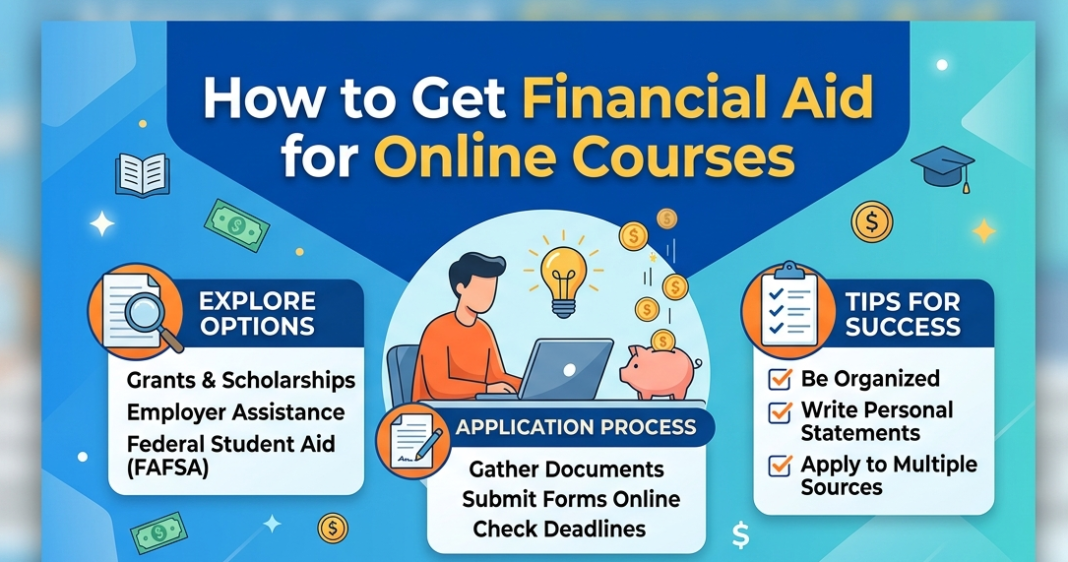


Understanding Financial Aid for Online Courses
Financial aid for online courses serves as a crucial resource for students seeking to further their education without incurring debilitating debt. It encompasses various forms of assistance intended to reduce the cost of tuition and related educational expenses. Key terms related to financial aid include grants, loans, scholarships, and employer assistance, each playing a distinct role in the funding landscape for online learners.
Grants are often need-based financial aid that does not require repayment, making them an attractive option for eligible students. They can come from the federal government, state governments, or private organizations. Loans, in contrast, must be repaid with interest, and they can be federal or private; understanding the terms and conditions is essential before accepting this type of assistance. Scholarships are merit-based awards given to students based on various criteria, including academic performance or specific talents. Unlike loans, scholarships do not require repayment and can significantly alleviate the financial burden of online education.
Another avenue for financial aid is employer assistance, where some corporations offer funding for employees pursuing online courses relevant to their job. This includes tuition reimbursement programs that can cover a portion or all of the educational costs, contingent upon maintaining satisfactory work performance and course completion.
To qualify for financial aid, prospective online learners must meet certain eligibility requirements, which can vary widely based on the type of assistance they are seeking. These may include citizenship status, enrollment in an accredited program, and maintaining satisfactory academic progress. Understanding these criteria is essential for maximizing available financial aid opportunities, thereby enhancing the overall accessibility of online education.
Types of Financial Aid Available
In the pursuit of online education, numerous financial aid options are accessible to help alleviate the cost burden. Understanding these types of financial aid is crucial for prospective students seeking to finance their education effectively.
Firstly, federal financial aid is a primary source available to students enrolled in online courses. The Free Application for Federal Student Aid (FAFSA) is the essential tool for applying for federal aid, which may include Pell Grants, Federal Supplemental Educational Opportunity Grants (FSEOG), and federal student loans. The amounts vary based on financial need, with Pell Grants typically awarding up to $6,495 per academic year as of the 2021-2022 academic year.
Secondly, state financial aid programs offer assistance based on the student’s residency. Many states provide grants, scholarships, or work-study programs tailored to residents attending online courses. The eligibility criteria and amounts can differ significantly between states, requiring students to research their specific state’s offerings. Information can often be found on state education websites.
Institutional aid is another significant source of financial assistance provided directly by colleges and universities. This can come in the form of tuition discounts, grants, or scholarships funded by the institution itself. Students usually must apply separately for these funds, which can vary widely in terms of availability and amount based on the institution’s funding levels and policies.
Additionally, scholarships from private organizations can significantly reduce educational costs. Candidates must typically complete a scholarship application and may need to meet specific eligibility criteria, including academic performance, field of study, or demographic factors. These scholarships can range from small one-time awards to larger, multi-year funding.
Lastly, employer tuition assistance programs serve as a valuable resource for those currently engaged in the workforce. Many employers offer educational benefits that can cover a portion or all of the tuition costs for relevant courses. To avail of this option, students are often required to meet certain employment criteria and submit proof of their course enrollment.
Eligibility Criteria for Financial Aid
Securing financial aid for online courses involves meeting specific eligibility criteria that vary by institution and type of aid. Understanding these criteria is essential for students seeking assistance with their education-related expenses.
Firstly, enrollment status plays a crucial role in eligibility. Many institutions require students to be enrolled at least half-time in an eligible program. Full-time enrollment may further enhance opportunities for different forms of financial aid, including grants and scholarships. Some aid programs might even have specific requirements for online course load, which can affect the total amount of funding a student can receive.
Secondly, academic standing is another critical factor. Students must generally maintain satisfactory academic progress, which is often defined by maintaining a minimum Grade Point Average (GPA) and completing a certain percentage of their courses. Failure to meet these academic requirements can result in a loss of financial aid, making it imperative for students to stay informed about their institution’s standards.
In addition to enrollment and academic criteria, financial need is heavily assessed in determining eligibility. Financial aid officers typically require students to submit the Free Application for Federal Student Aid (FAFSA) or similar financial documents to evaluate the household income and overall financial situation. Different types of aid, such as federal grants, loans, or institutional scholarships, may have unique requirements tied to financial need.
Lastly, it is essential to consider other specific requirements that may vary depending on the type of aid or institution. For example, certain scholarships may prioritize students from specific backgrounds or disciplines, while loans may require a credit check or a co-signer. Therefore, students are encouraged to thoroughly research each financial aid option and consult their school’s financial aid office for tailored guidance.
How to Apply for Financial Aid
Applying for financial aid for online courses can be an essential step in managing educational expenses. Follow this step-by-step guide to ensure a smooth application process.
First, determine your eligibility for federal student aid by reviewing the requirements on the Federal Student Aid website. Most online courses qualify, but it’s crucial to confirm that your chosen programs are eligible.
The primary form that must be completed is the FAFSA (Free Application for Federal Student Aid). This form gathers vital information about your financial situation, which will help in evaluating your need for aid. To begin, gather essential documents such as your Social Security number, driver’s license (if applicable), income tax returns, and bank statements. Documentation of your assets and any untaxed income may also be required.
Next, visit the FAFSA website to create an account. You will find comprehensive guides and support resources that can assist you in filling out the form. It is crucial to complete the FAFSA accurately, as errors can lead to delays or denial of aid. Double-check entries for accuracy and completeness before submitting the application.
After submitting the FAFSA, you will receive a Student Aid Report (SAR) that outlines your eligibility. Review this report for any discrepancies and respond to requests for additional information promptly. This will ensure your financial aid package is delivered as quickly as possible.
Finally, keep an open line of communication with your school’s financial aid office. They can provide specific guidance tailored to your circumstances, ensuring you understand the types of aid available and any steps you still need to complete. By adhering to these steps, you can efficiently navigate the financial aid application process for online courses.
Finding Scholarships for Online Courses
Finding scholarships specifically tailored for online learners can significantly alleviate the financial burden associated with pursuing distance education. The first step in this process is comprehensive research. Online universities often provide information on scholarships available exclusively to their students. Visiting the financial aid page of these institutions can help identify resources, specific eligibility criteria, and deadlines for application submission.
In addition to university offerings, various online scholarship databases can be invaluable resources. Websites such as Fastweb, Cappex, and Chegg Scholarships aggregate numerous opportunities, allowing prospective students to filter scholarships based on their specific needs, such as demographic information, field of study, or even types of coursework undertaken online. Utilizing these platforms can save time and expand the pool of potential financial aid options.
Community organizations also play a crucial role in providing financial assistance for online courses. Local charities, civic groups, and foundations often grant scholarships to residents wishing to further their education. It is beneficial to engage with local libraries and community centers, as they may have resources and information on less-publicized scholarships. Networking with local colleges and universities can also reveal scholarships that may not be widely advertised.
Once suitable scholarships are identified, crafting a compelling application is key to securing funding. It is essential to carefully read the eligibility requirements and tailor application materials to address them. Highlighting one’s achievements, aspirations, and the significance of online education in reaching professional goals can resonate with scholarship committees. Ensuring that application essays are well-written and free of grammatical errors also adds an element of professionalism to the submission.
Utilizing Employer Tuition Assistance Programs
Many employers recognize the importance of continued education and are willing to invest in their employees’ professional development through tuition assistance programs. These programs can significantly reduce the financial burden associated with pursuing online courses, making it essential for interested individuals to thoroughly explore this opportunity.
To determine if your employer offers a tuition assistance program, start by reviewing your employee handbook or reaching out to the Human Resources (HR) department. Many companies outline their educational assistance policies in these resources. In some cases, employers may also provide this information during orientation sessions.
If tuition assistance is available, understand the specific types of courses eligible for funding. Typically, employers prefer courses that are directly related to an employee’s current job or future career advancement within the company. However, options may vary significantly between organizations, with some allowing funding for a broader range of subjects. It is important to communicate with HR to ascertain the limits and requirements for covered courses.
Once you confirm that your employer has a tuition assistance program that aligns with your educational goals, the next step is to initiate the application process. This often involves completing specific forms and providing necessary documentation, such as a course description or a letter of acceptance from the educational institution. Employers may require you to maintain a certain grade point average or proof of successful course completion to qualify for reimbursement.
Leveraging your employer’s tuition assistance programs not only eases financial strain but also demonstrates your initiative and commitment to professional growth. Taking full advantage of these resources can help you enhance your skills and advance your education while simultaneously benefiting your employer through your enhanced expertise.
Understanding Student Loans for Online Courses
Student loans play a significant role in financing online courses, providing students with the necessary funds to invest in their education. When considering financial assistance, it is essential to understand the two primary categories of loans: federal and private student loans.
Federal student loans are typically more favorable due to their fixed interest rates and flexible repayment options. The U.S. Department of Education offers several types of federal loans, including Direct Subsidized Loans and Direct Unsubsidized Loans. Subsidized loans are awarded based on financial need, and the government pays the interest while the student is enrolled at least half-time. On the other hand, unsubsidized loans accrue interest from the moment they are disbursed, regardless of the student’s enrollment status.
In contrast, private student loans are provided by banks and financial institutions. They often require a credit check and may involve variable interest rates, which can be less predictable than federal loans. Borrowers must consider their credit history and financial situation when applying for private loans, as these factors greatly influence the loan terms. Additionally, private loans generally offer fewer repayment options and may not provide the same borrower protections as federal loans.
Interest rates are a critical aspect to examine across both federal and private loans. While federal loans have set rates that can be advantageous, private loans may offer lower rates depending on the borrower’s creditworthiness, making it essential for students to shop around for the best terms. Furthermore, students should familiarize themselves with various repayment plans, including income-driven repayment options that can provide relief based on earnings after graduation.
Ultimately, aspiring students should carefully consider their financing options, weighing the benefits and drawbacks of federal versus private loans. Understanding the implications of these loans is crucial to making informed decisions that align with their educational goals and financial situation.
Tips for Maximizing Financial Aid Opportunities
Securing financial aid for online courses is a crucial step for many students aspiring to further their education without incurring overwhelming debt. To maximize the opportunities available, there are several practical strategies students can employ.
First and foremost, maintaining good academic standing is essential. Many financial aid programs require students to meet specific GPA thresholds and satisfactory academic progress standards. By focusing on coursework and seeking academic support when needed, students can keep their grades up, which will help them retain their eligibility for various forms of financial assistance.
Additionally, submitting financial aid applications early is a key strategy. Most financial aid programs operate on a first-come, first-served basis; therefore, it is beneficial to complete and submit applications well before deadlines. This proactive approach not only increases the chances of securing funding but also allows students to explore and consider various options that can help pay for their online courses.
Furthermore, networking can significantly enhance financial aid opportunities. Students should engage with their academic advisors, financial aid officers, and even fellow students to discover less well-known scholarships, grants, and funding options. Often, local organizations and community foundations offer financial aid that may not be widely advertised but can provide essential support.
Moreover, staying informed about changes in financial aid regulations and funding availability is important. By regularly checking official school websites and resources, students can stay updated on new grants and scholarships, ensuring they do not miss out on any potential financial support.
By implementing these strategies—maintaining good academic performance, applying early, actively networking, and staying informed—students can enhance their chances of securing financial aid for their online education.
Navigating Challenges in Securing Financial Aid
Securing financial aid for online courses can present several challenges for students, which may hinder their educational pursuits. One common issue is the delayed processing times of applications, which can leave students anxious about their financial situation and ability to enroll in classes. It is crucial for students to proactively monitor the status of their applications and maintain open communication with their financial aid offices to address any potential delays. Staying informed about the expected timeframes for processing can also help set realistic expectations.
Another significant challenge involves documentation issues, which can arise when students are required to submit various forms and proof of income. Missing or improperly completed forms can lead to delays in receiving aid or result in ineligibility. To overcome this, students should ensure that they understand all requirements and submit complete and accurate documentation. It may be beneficial to create a checklist of required documents and deadlines to keep organized.
Furthermore, unexpected changes in financial status, such as job loss or medical expenses, can significantly affect a student’s ability to fund their online education. In such situations, it is recommended that students reach out to their financial aid office to inquire about the possibility of reevaluating their financial aid eligibility. Many institutions have policies in place to assist students who experience sudden financial hardships.
To cope with these challenges, students can also explore additional resources, such as online forums, financial aid workshops, and counselor support services. Engaging with others who are navigating similar situations can provide valuable insights and strategies. Overall, understanding potential challenges and actively seeking assistance can empower students to successfully secure financial aid for online courses.