
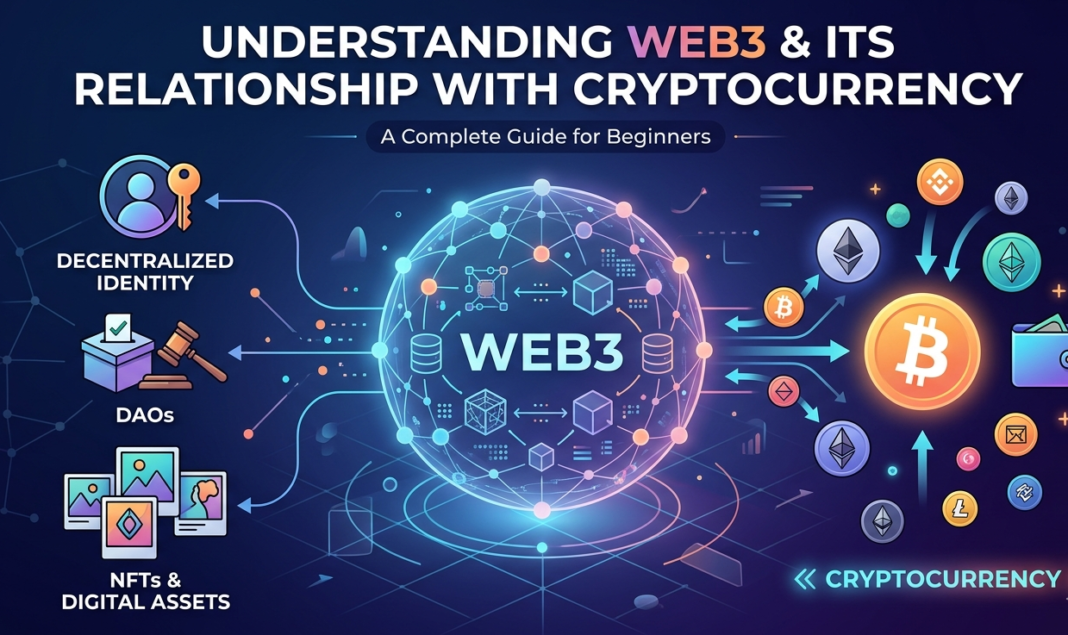

 and facilitating secure peer-to-peer transactions. Web3 and cryptocurrency integration brings numerous benefits, including increased security, lower transaction fees, and global accessibility to financial services. As we look to the future, anticipate the rise of Decentralized Autonomous Organizations (DAOs) and enhanced user privacy shaped by blockchain innovations. Stay informed about the evolving regulatory environment and the challenges that may impact the widespread adoption of Web3 technologies.)
What is Web3?
Web3, often referred to as the decentralized internet, is the latest evolution in the series of web development phases that began with Web1 and Web2. Web1 represented the early internet comprised primarily of static web pages, while Web2 brought interactivity and user-generated content through platforms like social media. Web3 marks a significant shift from these models towards a more decentralized framework, underpinned by blockchain technology, which enables peer-to-peer interactions.
The concept of Web3 emerged as a reaction to the hierarchical models prevalent in Web2, where a few corporations control vast amounts of user data. Core principles of Web3 include decentralization, enabling individuals to have greater control over their data and online identity. In this new paradigm, users are empowered through ownership of their digital assets, often facilitated by decentralized applications (dApps) that run on blockchain networks.
Decentralization is a foundational principle of Web3, allowing users to connect directly with one another without intermediaries. This has vast implications for privacy, as transactions and interactions can occur with increased anonymity. Furthermore, Web3 promotes transparency as blockchain’s immutable ledger records every transaction, allowing for auditability and verifiability.
Additionally, the advent of smart contracts—self-executing contracts with the terms of the agreement directly written into code—plays a vital role in the functionality of Web3. These contracts operate on blockchain platforms, like Ethereum, and automate processes while reducing the need for trusted intermediaries, thus enhancing efficiency and security.
Overall, Web3 represents a paradigm shift towards a more equitable and user-centric internet, fostering innovation and empowering users with autonomy over their digital experiences.
The Role of Cryptocurrency in Web3
Cryptocurrency is a fundamental element of the Web3 ecosystem, serving multiple crucial roles. Primarily, it facilitates decentralized applications (dApps), which operate independently of traditional central authorities or intermediaries. This shift to a decentralized architecture marks a significant evolution from the centralized models typically utilized on the Web2 platform. In this new realm, cryptocurrencies enhance the functionality and adoption of dApps by enabling peer-to-peer transactions securely and transparently.
Additionally, smart contracts, which are self-executing contracts with the terms of the agreement directly written into code, heavily rely on cryptocurrencies. These contracts automatically enforce and execute transactions when predefined conditions are met, thereby reducing the need for manual intervention. Such automation significantly increases efficiency while also minimizing the potential for fraud or manipulation. Cryptocurrencies, such as Ethereum, which is the most popular platform for smart contracts, play an essential role in underpinning these autonomous agreements.
Within the Web3 landscape, various cryptocurrencies contribute uniquely to the overall functionality of the ecosystem. For instance, Bitcoin remains the primary digital currency for transactions, while Ethereum’s token (ETH) is integral for operating dApps on its network. Other cryptocurrencies like Polkadot and Solana are emerging as competitive alternatives, each offering distinct capabilities and technological advancements. Their roles extend beyond mere currency, promoting user incentives through staking rewards or governance participation in decentralized finance (DeFi) initiatives. This integration of multiple digital currencies emphasizes the need for an adaptable and diverse digital economy, aligning with Web3’s goals of enhanced user autonomy and engagement.
Key Benefits of Web3 with Cryptocurrency Integration
The integration of cryptocurrency within the Web3 framework presents a multitude of advantages that significantly enhance the user experience and reshape traditional systems. One major benefit is increased security. The decentralized nature of blockchain technology, which underpins cryptocurrencies, provides a secure and tamper-proof method of recording transactions and storing data. This minimizes the risk of hacks, fraud, and other security threats that have plagued centralized systems.
Furthermore, cryptocurrency transactions often incur lower fees compared to traditional banking systems. This reduction in transaction costs not only encourages more frequent transactions but also democratizes access to financial services, enabling individuals to engage in global commerce without the burden of excessive fees. Users can transfer value instantly across borders, making it feasible for anyone, regardless of their location, to partake in the digital economy.
Global accessibility is another prominent feature of cryptocurrency integration in Web3. Utilizing digital currencies allows users in underbanked or unbanked regions to access financial services that are otherwise unavailable. This inclusion is pivotal in fostering economic growth and increasing opportunities for individuals worldwide. Moreover, cryptocurrencies enable enhanced user empowerment. Users have greater control over their assets and data, allowing them to engage directly with decentralized applications without intermediaries.
The advent of new economic models, such as decentralized finance (DeFi), has fundamentally altered the landscape of traditional finance. DeFi applications utilize cryptocurrencies and blockchain technology to create a financial system that operates independently of conventional banks, offering users innovative solutions like lending, borrowing, and trading. These platforms not only provide greater transparency but also allow for the democratization of finance, transforming how individuals manage their wealth and investments.
Future Implications of Web3 and Cryptocurrencies
As we look ahead, the landscape of the internet is poised for significant transformation through the adoption of Web3 technologies and cryptocurrencies. One of the most notable trends expected to gain momentum is the proliferation of Decentralized Autonomous Organizations (DAOs). These entities empower users to autonomously manage resources and make collective decisions using smart contracts on the blockchain, thereby shifting power structures away from traditional centralized institutions.
In addition to the rise of DAOs, user privacy is anticipated to deepen thanks to Web3 innovation. Blockchain technologies inherently provide enhanced privacy features compared to their predecessors. As data ownership returns to users, individuals gain greater control over their personal information, which is increasingly vital in a world where data breaches are commonplace. This improvement in privacy aligns with a public demand for more transparency in digital transactions and interactions.
Furthermore, the regulatory environment surrounding cryptocurrencies and decentralized platforms is becoming more dynamic. Governments worldwide are grappling with the challenge of establishing frameworks that promote innovation while ensuring adequate consumer protection and compliance with financial regulations. As regulations evolve, businesses will need to adapt quickly to these changes, fostering an environment where legitimate operations can thrive alongside illicit activities.
Despite these promising developments, challenges remain that could hinder the widespread adoption of Web3 and cryptocurrencies. Issues of scalability and interoperability persist, as current blockchain solutions grapple with transaction speeds and compatibility with existing systems. Addressing these challenges will be crucial for creating a seamless and efficient experience for users. Additionally, the establishment of clear regulatory compliance pathways is essential to guide the growth of this space responsibly.