
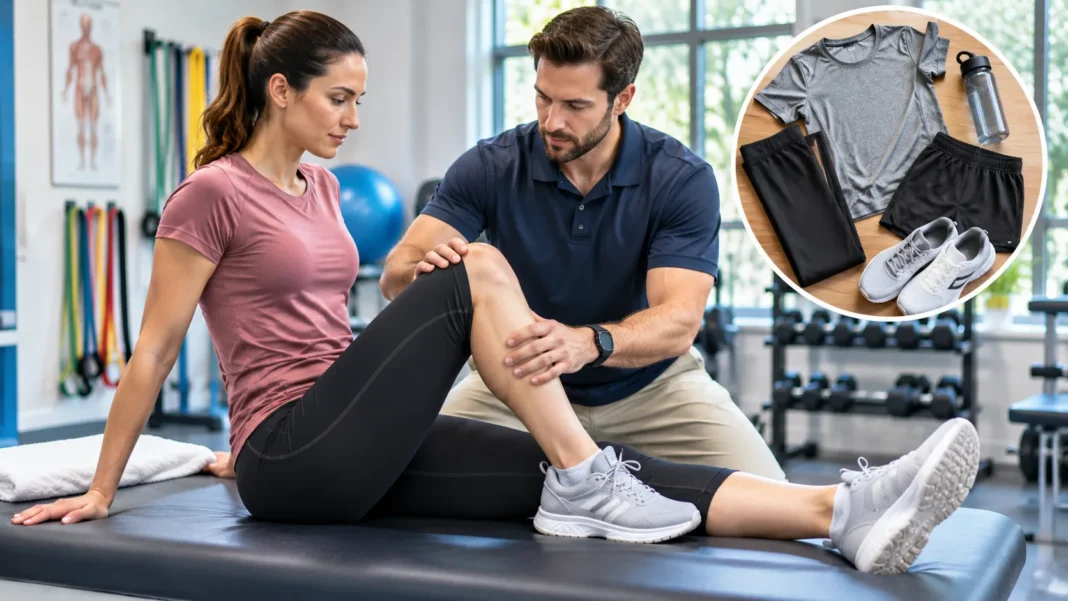


Knowing what to wear to physical therapy can make your appointment more comfortable, productive, and stress-free. Physical therapy often involves stretching, strengthening exercises, movement assessments, and hands-on treatment. Wearing comfortable clothing allows you to move freely while helping your physical therapist evaluate the affected area. The right outfit can also support safety and make everyday rehabilitation activities easier to perform.
Whether you are attending physical therapy for the first time or continuing treatment after an injury, clothing choices matter. Flexible fabrics, supportive footwear, and easily adjustable layers are usually better than restrictive outfits. However, the ideal clothing depends on the body part being treated and the activities included in your session. This guide explains what to wear to physical therapy, recommended clothing options, benefits, common mistakes, and practical safety tips.
What Should You Wear to Physical Therapy?
The best clothing for physical therapy is comfortable, flexible, and suitable for the movements involved in your appointment. Athletic shirts, loose-fitting tops, stretchy pants, and comfortable shorts are common choices. Your outfit should allow you to bend, stretch, sit, stand, and walk without unnecessary restrictions. Clothing that supports natural movement makes many rehabilitation exercises easier to perform.
Breathable fabrics are particularly useful because some physical therapy sessions involve repeated exercises and light physical activity. Moisture-wicking materials may help you feel comfortable if you become warm during treatment. Soft cotton clothing can also work well for less demanding appointments. The most important consideration is choosing garments that do not interfere with movement or cause skin irritation.
Your physical therapist may also need access to the area being examined or treated. For example, shorts can make knee assessments easier, while a flexible short-sleeved shirt may be suitable for shoulder therapy. You should still feel comfortable and appropriately covered throughout the appointment. Therapists can often suggest clothing adjustments or alternatives when direct access is necessary.
Why Wearing the Right Clothes to Physical Therapy Matters
Appropriate clothing can improve comfort and help physical therapists observe how your body moves during treatment. Tight or restrictive garments may limit certain movements or make exercises difficult. Comfortable clothing allows you to focus on instructions rather than adjusting your outfit repeatedly. This can make rehabilitation sessions feel more organized and manageable.
Clothing choices may also influence how easily your therapist evaluates posture, joint movement, and muscle function. Depending on the treatment area, the therapist may need to observe movement or examine nearby structures. Clothing that provides reasonable access can simplify these assessments. However, every examination should be explained clearly and performed with your consent.
Safety is another important consideration when selecting an outfit for physical therapy. Long, loose fabric may occasionally interfere with exercise equipment or create a tripping hazard. Shoes without adequate grip can increase slipping risks during standing activities. Choosing practical clothing and footwear helps create a safer environment for movement-based rehabilitation.
Best Shirts and Tops for Physical Therapy Sessions
A comfortable T-shirt is one of the simplest clothing options for most physical therapy appointments. Short-sleeved athletic shirts allow easy arm movement and are suitable for many general rehabilitation exercises. Lightweight fabrics can help maintain comfort during repeated movements. Choose a shirt that fits securely without pulling tightly around the shoulders or chest.
For neck, shoulder, and upper-back physical therapy, clothing that allows comfortable movement around the upper body is particularly useful. A loose T-shirt or sleeveless athletic top may provide convenient access when appropriate. However, sleeveless clothing is not required for every treatment. Your therapist can explain whether specific clothing would make the examination or exercises easier.
Layering can be helpful when traveling to appointments in colder weather or entering air-conditioned clinics. A lightweight jacket or zip-up sweatshirt is easy to remove when movement begins. Avoid complicated clothing that takes significant effort to adjust. Simple, comfortable tops generally provide enough flexibility for both exercise and everyday activities.
Best Pants and Shorts to Wear to Physical Therapy
Stretchy athletic pants are a practical choice for many physical therapy sessions because they allow movement in different directions. Joggers, leggings, and flexible workout pants can work well when they are comfortable and not excessively restrictive. The fabric should allow you to squat, bend, or lift your legs as needed. Avoid clothing that limits joint movement.
Shorts are especially useful for appointments involving the knees, thighs, ankles, or lower legs. They allow your physical therapist to observe movement and examine the affected area more easily. Choose shorts that provide comfortable coverage during stretching and strengthening activities. A flexible, secure waistband can prevent unnecessary adjustments while exercising.
For hip or lower-back treatment, comfortable athletic bottoms are usually more suitable than stiff jeans or formal trousers. Your therapist may ask you to perform movements involving bending, sitting, or lying down. Flexible clothing can make these activities easier without restricting your range of motion. If the treatment requires additional access, the clinic can explain appropriate options while respecting privacy.
What Shoes Should You Wear to Physical Therapy?
Supportive athletic shoes are a common choice for physical therapy because many sessions include standing, walking, or balance exercises. Shoes should fit comfortably and provide reliable traction on indoor surfaces. A secure fit can help reduce unnecessary movement inside the shoe. The ideal footwear may vary depending on your treatment plan and physical abilities.
Sneakers with stable soles are often suitable for general rehabilitation appointments. Avoid shoes that are difficult to keep securely on your feet during movement. High heels, slippery dress shoes, and loose sandals may be inappropriate for certain exercises. If your therapist has recommended specific footwear or a medical brace, follow those instructions instead.
Some physical therapy treatments require patients to remove their shoes for specific assessments or exercises. For example, foot and ankle evaluations may involve observing barefoot movement. However, walking barefoot is not appropriate for every patient or activity. Your therapist will determine whether shoes, socks, or barefoot exercises are suitable based on your condition.
What to Wear to Physical Therapy for Knee Pain
Knee physical therapy often includes movement assessments, flexibility exercises, strengthening activities, and walking evaluations. Wearing comfortable shorts is usually convenient because the therapist may need to observe the knee during movement. Flexible athletic clothing also allows easier bending and straightening of the joint. The outfit should remain comfortable throughout different exercise positions.
If you prefer wearing long pants, choose a pair that can easily be adjusted or rolled above the knee. Tight denim and restrictive trousers may make examination difficult. Your therapist might need to observe swelling, joint alignment, or movement patterns. Clothing that allows practical access can simplify these evaluations without requiring unnecessary exposure.
Supportive shoes may also be important during knee rehabilitation, particularly when exercises involve standing or walking. If you use a knee brace, bring it unless your therapist has advised otherwise. Wear clothing that fits comfortably around the brace without causing pressure. Following your treatment team’s recommendations is more important than choosing a particular athletic style.
What to Wear to Physical Therapy for Back Pain
Physical therapy for back pain may involve posture assessments, gentle stretching, strengthening exercises, and movement education. Comfortable athletic clothing usually works well because it allows bending, sitting, standing, and lying down. A flexible T-shirt paired with joggers or stretchy pants is a practical option. Avoid clothing that increases pressure around painful areas.
Your physical therapist may need to observe spinal movement or examine certain areas of your back. A shirt that can be adjusted comfortably may make this easier when necessary. You should always receive an explanation before any examination requiring clothing adjustments. Appropriate draping and privacy measures can help ensure that you remain comfortable throughout treatment.
Shoes with reliable support may be useful when your session includes walking, balance training, or standing exercises. Avoid carrying unnecessary accessories that make movement uncomfortable. If you use a prescribed back support, bring it and ask whether it should remain on during particular activities. Treatment instructions should reflect your condition and current rehabilitation goals.
What to Wear to Shoulder and Neck Physical Therapy
Shoulder and neck physical therapy commonly involves assessing posture, arm movement, muscle strength, and joint mobility. A comfortable short-sleeved shirt is suitable for many appointments because it allows the arms to move freely. Some patients prefer sleeveless athletic tops for additional shoulder access. However, clothing should always match personal comfort and treatment requirements.
Tight collars, restrictive sleeves, and heavy clothing may interfere with certain neck or shoulder movements. Choose fabrics that do not pull uncomfortably when raising your arms or turning your head. Lightweight clothing can also make it easier to perform repeated exercises. Simple designs are generally more practical than garments with complicated straps or closures.
Physical therapists sometimes need to examine the shoulder blade, upper back, or surrounding muscles. They should explain the assessment and request permission before adjusting clothing or performing hands-on treatment. You may ask for additional coverage or alternative examination methods. Maintaining comfort, dignity, and clear communication is an important part of effective rehabilitation.
What to Wear to Your First Physical Therapy Appointment
Your first physical therapy appointment may include questions about your symptoms, medical history, activity levels, and treatment goals. The therapist will often assess movement, strength, flexibility, and daily functional abilities. Wearing comfortable exercise clothing can make these assessments easier. Choose an outfit that allows movement without making you feel unnecessarily exposed.
You may be asked to perform activities such as walking, sitting, reaching, bending, or balancing. Flexible clothing and stable footwear can support these movements. The exact exercises depend on your condition and the reason for your appointment. Some sessions focus mainly on evaluation, while others include introductory exercises or treatment.
Bringing relevant medical information can also help your therapist understand your rehabilitation needs. This may include prescribed braces, mobility aids, or instructions from another healthcare professional. You can also bring a comfortable change of clothing if traveling directly from school or work. Preparing these items beforehand may make the first visit feel more organized.
What Not to Wear to Physical Therapy
Tight jeans, restrictive formal clothing, and stiff fabrics are usually less suitable for movement-based physical therapy. These garments may limit bending, stretching, or access to the treated area. Clothes that pull uncomfortably during exercise can also distract from the session. Comfortable alternatives are generally better for performing movements with fewer restrictions.
Very loose clothing may also create difficulties during certain activities. Long fabric can occasionally catch on equipment or interfere with observing movement. Bulky accessories, dangling jewelry, and unstable footwear may present unnecessary safety concerns. Removing or securing these items before exercise helps reduce avoidable distractions and potential hazards.
Clothing that causes skin irritation should also be avoided, particularly when treatment involves sensitive areas or medical equipment. Heavy perfume may be uncomfortable for others in shared treatment spaces. Avoid assuming that expensive workout clothing is necessary for rehabilitation. Simple, clean garments that fit comfortably are generally sufficient for most appointments.
What to Bring Along With Your Physical Therapy Outfit
A small bag can help you carry useful items without bringing unnecessary belongings into the treatment area. A water bottle may be helpful if your appointment includes exercise or if you need regular hydration. A small towel can also be convenient, depending on the activities involved. Ask the clinic whether particular personal items are recommended.
If you use prescribed orthotics, supportive braces, or mobility devices, bring them when relevant to your treatment. Your physical therapist may need to observe how these items affect movement and daily activities. Avoid changing prescribed support equipment without medical guidance. The therapist can help determine whether an item should be used during specific exercises.
You may also want to bring your appointment information, medication list, and relevant medical instructions. Comfortable socks can be useful if footwear needs to be removed during assessment. A change of clothes may help when sessions involve physical activity before another commitment. Being prepared allows you to focus on treatment rather than missing essential items.
Safety Tips for Dressing for Physical Therapy
Safety begins with choosing clothing that allows movement without interfering with rehabilitation equipment. Secure waistbands, comfortable sleeves, and properly fitted footwear can help reduce unnecessary distractions. Avoid clothing that restricts breathing or causes pressure around painful areas. Your outfit should support the exercises included in your individual treatment plan.
Pay attention to how your clothing interacts with braces, bandages, or other medical devices. Tight garments may cause discomfort around sensitive skin or recovering tissues. If you have a wound or recent surgery, follow your healthcare team’s instructions regarding dressings and clothing. Do not remove prescribed medical supports solely to make an outfit easier to wear.
Communicate with your therapist if clothing causes discomfort or limits a movement. You can also ask whether a different outfit would be better for future visits. Treatment plans may change as recovery progresses, creating different clothing needs. Keeping comfort and safety as priorities helps make rehabilitation more manageable throughout the recovery process.
How Proper Clothing Supports Physical Therapy Benefits
Appropriate clothing does not directly heal an injury, but it can make rehabilitation exercises easier to perform. Flexible garments allow comfortable movement and help therapists observe functional limitations. This may improve the quality of movement assessments and exercise instruction. Wearing practical clothing can therefore support the overall rehabilitation experience.
Comfortable clothing may also reduce distractions during stretching, balance training, and strengthening activities. When garments fit properly, patients can focus more easily on technique and therapist instructions. Stable footwear can provide additional confidence during appropriate standing activities. These advantages are especially relevant when exercises require concentration and controlled movement.
The greatest benefits of physical therapy come from an individualized treatment plan, appropriate exercises, and consistent participation. Clothing serves a supporting role by making these activities more comfortable and practical. Expensive athletic brands are not necessary for effective rehabilitation. Prioritizing fit, movement, accessibility, and safety is usually more valuable than appearance.
Conclusion
Knowing what to wear to physical therapy can help make appointments more comfortable and easier to manage. Flexible shirts, stretchy pants, comfortable shorts, and suitable footwear are practical choices for many sessions. The best outfit depends on the body area being treated and the exercises involved. Clothing should support movement while allowing reasonable access for necessary assessments.
Safety and comfort are more important than following a particular workout clothing trend. Avoid restrictive garments, unstable shoes, and accessories that may interfere with movement. Bring prescribed braces or supportive equipment when relevant to your treatment. If you are unsure about what to wear, your physical therapy clinic can provide specific recommendations.
Physical therapy is designed to improve movement, function, and everyday comfort through individualized care. Choosing appropriate clothing helps you participate more comfortably in assessments and exercises. It also supports clear communication with your therapist when adjustments are necessary. With a practical outfit and proper preparation, you can approach your physical therapy appointment with greater confidence.
Frequently Asked Questions (FAQs)
Can I wear jeans to physical therapy?
Jeans are usually less suitable because stiff denim can restrict bending, stretching, and movement assessments. Comfortable athletic pants or shorts are generally better, especially when treatment involves the hips, knees, or lower back.
Should I wear sneakers to physical therapy?
Sneakers are often a practical choice because they provide support and traction during walking or standing exercises. However, your therapist may recommend different footwear depending on your condition and treatment activities.
What should I wear to physical therapy for my knee?
Comfortable shorts and supportive athletic shoes are usually convenient for knee physical therapy. Shorts allow the therapist to observe joint movement, while flexible clothing makes bending and strengthening exercises easier.
Do I need to bring workout clothes to physical therapy?
You do not need specialized workout clothes for most physical therapy sessions. Comfortable, flexible everyday clothing is often sufficient, although a change of athletic clothes may be useful for exercise-focused appointments.
Can I wear leggings to physical therapy?
Yes, comfortable leggings can work well for many physical therapy appointments because they allow flexible movement. However, shorts or easily adjustable clothing may be more practical when the therapist needs direct access to a joint.