


What Are the 7 Steps Before You Start Your Car?
A quick check before starting your car can help you drive more safely and notice problems early. The routine does not need to be complicated. Taking a moment to check your surroundings, adjust your seat, and confirm that the car is ready can make each trip more comfortable and controlled.
The exact steps may vary depending on your vehicle. A manual car, an electric vehicle, and a model with keyless ignition may have different starting procedures. Your owner’s manual explains the controls and safety features specific to your car, so use it whenever you are unsure.
Here are seven useful checks to complete before setting off. These tips are general guidance and do not replace your vehicle’s instructions or professional maintenance. If a warning light, unusual sound, or serious fault appears, address it before driving.
1. Check the Area Around Your Car
Before getting in, look around the vehicle for people, pets, bicycles, or objects that may be difficult to see from the driver’s seat. Pay attention to the space behind and beside the car, especially in crowded parking areas or driveways. A quick walk-around can help you spot obstacles, leaks, or visible damage.
Check that the path you plan to take is clear. Children and pets can move quickly, and objects such as toys or bags may be hidden near the wheels. If someone is guiding you out of a tight space, agree on clear signals before moving.
Look at the tires and the ground beneath the car as well. A visibly low tire, puddle, or damaged part may need attention before you travel. Do not crawl under a vehicle that is not properly secured; ask a qualified mechanic to inspect anything that appears unsafe.
2. Get In and Secure the Car
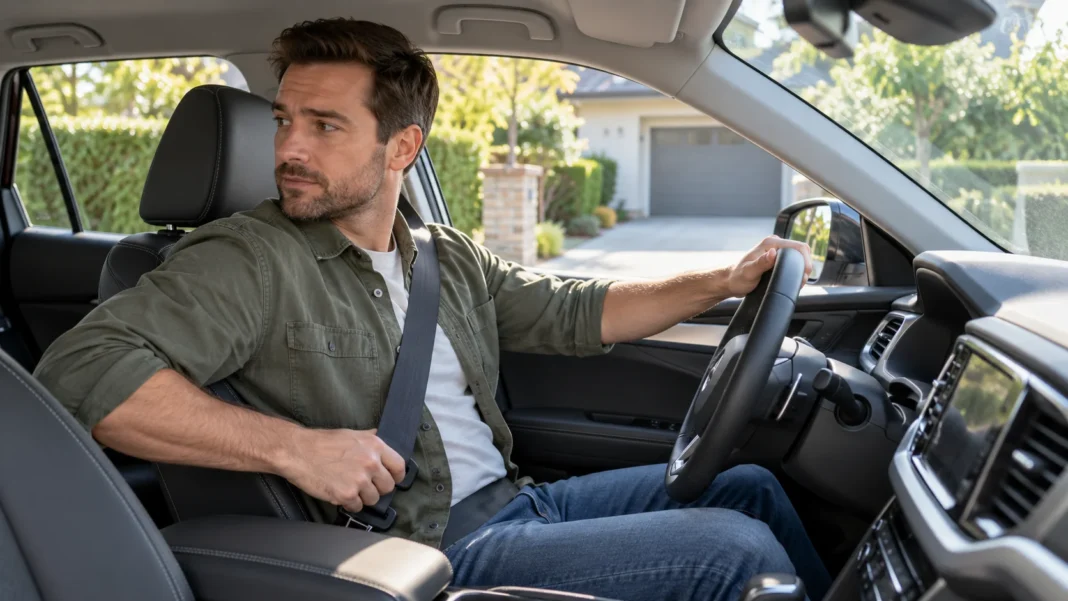
Once you are inside, close the door properly and make sure everyone else is seated. Ask passengers to fasten their seat belts before the car moves. Children should use a restraint appropriate for their age, height, and weight, following the vehicle and seat manufacturer’s instructions.
If your car has automatic door locks or child safety locks, know how they work before traveling. Keep loose items from rolling around the cabin, where they could distract the driver or interfere with the pedals. Store bags and other objects securely in the trunk or a stable area.
Check that the parking brake is engaged before starting, especially if the car is parked on a slope. The exact control may be a hand lever, pedal, or electronic switch. If you are unfamiliar with the vehicle, consult the owner’s manual rather than guessing.
3. Adjust Your Seat and Head Restraint
Set your seat so you can reach the pedals and steering wheel comfortably without stretching. Your knees should remain slightly bent when pressing the pedals, and you should be able to keep a relaxed posture. Sit upright enough to see the road clearly through the windshield and side windows.
Adjust the head restraint so it supports your head properly. A suitable position can improve comfort and help reduce the risk of injury in a collision. Check the vehicle manual for guidance on adjusting the seat and head restraint, since designs vary.
If several people drive the same car, readjust the seat each time you get in. Do not begin driving while leaning forward or reaching awkwardly for controls. A comfortable position helps you maintain better control and reduces fatigue on longer trips.
4. Adjust the Mirrors and Steering Wheel
Set the rear-view mirror so you can see the traffic behind you through the rear window. Then adjust the side mirrors to show the areas beside the car while minimizing overlap with the rear-view mirror. Even well-adjusted mirrors do not remove every blind spot, so check over your shoulder before changing lanes.
If your steering wheel adjusts, position it so you can hold it comfortably and see the dashboard. Keep enough space between your chest and the steering wheel, while making sure you can operate the controls without stretching. Follow the instructions for your specific vehicle.
Make mirror and steering adjustments while the car is parked. Avoid reaching across the cabin or changing settings while moving, since even a brief distraction can affect your attention. Recheck the mirrors after another driver has used the car or the seat position has changed.
5. Check the Dashboard and Warning Lights
When you turn on the ignition, many dashboard indicators briefly illuminate as part of a system check. Learn what the main symbols mean by reviewing your owner’s manual. If a warning light stays on after the car starts, do not assume it is harmless.
Some warnings may require you to stop driving and get immediate assistance, while others indicate that maintenance is needed soon. The meaning depends on the symbol, color, and vehicle. If you do not recognize a warning, consult the manual or contact a qualified mechanic before continuing.
Check that the fuel gauge or battery range is sufficient for your trip. Notice any unusual message, sound, or smell before moving the car. Taking a moment to understand a warning is safer than ignoring it and hoping the vehicle continues to operate normally.
6. Press the Brake and Start the Car Correctly
Follow the starting procedure in your owner’s manual. Many automatic vehicles require the brake pedal to be pressed before using the ignition button or key, while manual cars may have clutch-related starting requirements. Electric and hybrid vehicles also have specific indicators that show when they are ready to move.
Keep your foot on the brake while starting, and make sure the gear selector is in the correct position. Automatic cars are commonly started in Park, while manual vehicles should be in neutral with the parking brake applied. Check the vehicle’s instructions if you are unsure.
Listen and look for signs that the car has started normally. Do not repeatedly turn the key or press the start button if the engine does not respond as expected; repeated attempts may worsen a problem. If you notice an unusual sound, smoke, or warning, stop and seek appropriate help.
7. Select the Gear and Check Before Moving
Before releasing the parking brake, check your surroundings again and confirm that passengers are ready. Keep your foot on the brake while selecting Drive or Reverse in an automatic car. In a manual car, select the intended gear and use the clutch smoothly according to your training and the vehicle’s instructions.
Check for cyclists, pedestrians, and vehicles in your path. Look in the mirrors and over your shoulder where needed, especially when reversing or pulling into traffic. A reversing camera or parking sensor can help, but it should support—not replace—direct checks around the car.
Release the parking brake only when you are ready to move and have confirmed the path is clear. Move slowly in tight spaces and avoid rushing because another driver is waiting. If visibility is poor or you are uncertain about an obstacle, stop and check before continuing.
Extra Checks for Different Cars
A manual car requires attention to the clutch, gear position, and parking brake. Make sure the car is in neutral before starting unless your vehicle’s manual specifies a different procedure. If you are learning to drive, follow your instructor’s guidance and practice in a safe, permitted area.
Keyless and push-button systems may require the key fob to be inside the vehicle and the brake pedal to be pressed. Electric vehicles may be quiet when ready, so check the dashboard indicator before moving. The absence of engine noise does not necessarily mean the vehicle is off.
In cold or severe weather, clear windows, mirrors, lights, and cameras before setting off. Do not drive with a limited view through a small cleared patch. Give yourself enough time to remove frost or condensation safely, and use the vehicle’s defrosting features as described in the manual.
Common Mistakes to Avoid Before Driving
One common mistake is starting the car and moving before adjusting the seat and mirrors. Making these changes while driving can distract you and reduce control. Set up the cabin while parked, and ask passengers to wait until everyone is ready before the vehicle moves.
Another mistake is ignoring dashboard warnings or unusual behavior. A warning light, fluid leak, burning smell, or strange noise may signal a problem that needs attention. If the car seems unsafe, stop the starting process and contact roadside assistance or a qualified mechanic.
Drivers may also rely too heavily on cameras and sensors. These tools can be helpful, but they may not detect every person or object, especially in poor weather or around blind spots. Use them alongside mirrors, direct observation, and careful movement.
Conclusion
Before starting your car, check the area, secure passengers, adjust your seat and mirrors, review dashboard warnings, and follow the correct starting procedure. Then select the gear and confirm your path is clear before moving.
These simple checks can make driving more comfortable and help you notice issues before they become more serious. The details vary by vehicle, so keep the owner’s manual available and follow its instructions.
Build a calm routine and take enough time to complete it. If the car shows a warning, makes an unusual sound, or appears unsafe, pause and get appropriate help before driving.
FAQs
Should I press the brake before starting my car?
Many automatic and keyless vehicles require the brake pedal to be pressed before starting. Requirements vary, so check your owner’s manual for the correct procedure.
Should the car be in Park before starting?
Most automatic vehicles should be in Park before starting. Manual cars are generally started in neutral with the parking brake applied, but follow the instructions for your specific vehicle.
Do I need to warm up my car before driving?
Many modern vehicles do not need a long warm-up while parked. Follow your manual, clear the windows fully, and drive gently until the vehicle reaches normal operating conditions.
What should I do if a warning light stays on?
Check the owner’s manual to identify the warning and its urgency. If it signals a serious fault or you are unsure whether the car is safe, avoid driving and seek professional assistance.
Should I check around my car even if I have a reversing camera?
Yes. Cameras and sensors may miss obstacles or people, so use them alongside mirrors and direct checks. Look around before reversing or pulling away.