
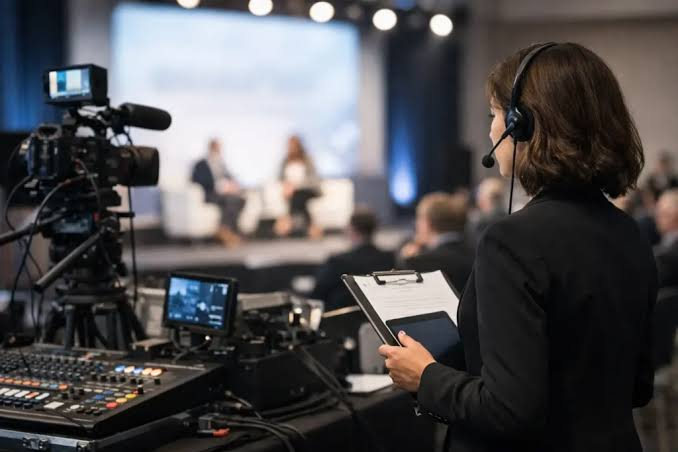


A corporate event lives or dies on details that most attendees never consciously notice. Nobody walks out of a well-run conference thinking about the staging height or the drape colour behind the podium, but they absolutely notice when a speaker is hard to see, when a backstage area is visible from the audience, or when the room simply feels disorganised. Getting these structural elements right is what separates an event that feels genuinely professional from one that feels thrown together, regardless of how good the actual content or catering turns out to be.
Why Corporate Events Need a Different Planning Lens
Social events and corporate events draw on a lot of the same rental categories, but the priorities shift considerably. A wedding can lean into decorative flourish. A corporate event generally cannot, since the goal is usually to reinforce a brand, keep attention on speakers and content, and run to a tight schedule without visible hiccups. This is exactly the kind of planning that corporate event planners in Toronto handle daily, coordinating everything from registration flow to breakout room logistics so that the structural elements support the agenda rather than distracting from it.
Companies organising events in-house without a dedicated planner still need to think through the same fundamentals: how attendees move through the space, where staging and audio-visual equipment need to sit relative to sightlines, and how the room should look on camera if any part of the event is being recorded or livestreamed.
Staging: More Than Just a Raised Platform
Stage rentals in Toronto need to account for more than simply lifting a speaker above the crowd. Height matters relative to room size and ceiling clearance, load capacity matters if multiple presenters or panel setups will be on stage together, and stability matters more than people initially assume, particularly for anything involving movement, product reveals, or live demonstrations. A portable stage or platform rental needs to be sized and configured around the actual content of the event, not treated as a generic add-on decided at the last minute.
Modular staging has become the standard choice for exactly this reason. It can be configured for a single speaker podium, expanded for a panel discussion, or reconfigured entirely between sessions without needing a completely different rental for each format, which matters considerably for multi-session conferences running on a tight changeover schedule.
Pipe and Drape: The Structural Element Nobody Notices Until It’s Missing
Pipe and drape rental in Toronto solves a genuinely practical problem at almost every corporate event: hiding what should not be visible and defining space that would otherwise feel open and unstructured. Backstage areas, storage for extra equipment, registration desk backdrops, and breakout session dividers all rely on drape to create a clean visual boundary without the cost or time of actual construction.
Colour and fabric choice matter more than people expect here too. A dark, matte drape reads as professional and recedes visually, which works well behind a stage or podium where the goal is to keep focus on the speaker. A branded or coloured drape section, by contrast, can reinforce company colours at a registration area or sponsor booth, doing quiet marketing work throughout the event without requiring a dedicated backdrop build.
Bringing It Together Under One Rental Provider
Corporate events typically involve enough moving pieces that consolidating rentals under a single provider genuinely simplifies execution. Coordinating event rentals in Toronto for furniture, staging, and pipe and drape through one company means one delivery schedule, one point of contact for last-minute adjustments, and a provider who already understands how the different elements need to work together rather than treating each as an isolated order.
This matters even more for organisations running the same type of event annually, whether that is an AGM, a product launch, or a company-wide conference. A rental provider with institutional knowledge of the venue, the typical layout, and what worked or did not work the previous year saves genuine planning time each cycle, rather than starting the specification process from scratch every time.
Working With a Corporate Event Organizer vs Going Direct
Some companies prefer working through a dedicated corporate event organizer who manages vendor relationships, timeline coordination, and on-site execution as a package. Others, particularly organisations with an internal events team, prefer going directly to rental providers for specific elements like staging and furniture while managing overall coordination themselves. Neither approach is inherently better. What matters is being honest about internal bandwidth: an in-house team with genuine event management experience can absolutely coordinate directly with rental providers, but a team without that specific expertise usually benefits from the structure a dedicated organizer or planner provides.
Starting the Conversation Early
Corporate calendars fill up fast, particularly in the autumn conference season and around year-end functions, and the venues and rental inventory that make an event feel genuinely well produced tend to book out well in advance. Reaching out to a rental provider early in the planning process, with at least a rough attendee count and event format in hand, consistently produces a smoother booking process and more accurate cost planning than trying to lock in staging, drape, and furniture in the final weeks before the event.