
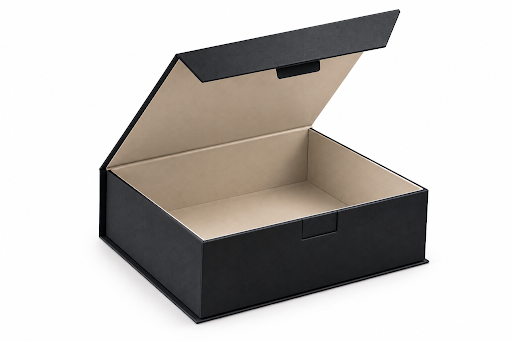


A magnetic box can look flawless in a mockup and still disappoint in a customer’s hands. The lid gapes open without need and the corners split open. Even the logo may give a rugged and used appearance before even the product is taken out of the box. When Custom magnetic closure boxes fail, the cause is rarely bad luck. It’s usually a decision made early, often to save a few cents, that shows up months later as returns, bad reviews, and a brand that feels cheaper than its price tag. Here’s where things go wrong, and a checklist to keep your next order out of trouble.
Why Custom Magnetic Closure Boxes Fail
1. Weak Magnets or Poor Placement
The magnet is the whole point of the format, yet it’s the part buyers check least.
- Magnets that are too weak leave the lid drifting open in transit.
- Magnets that are too strong make the lid hard to lift and can tear the wrap.
- Uneven placement causes a crooked close, which looks careless on luxury magnetic boxes.
Key point: Strength should match lid weight, and both magnets must align to the millimeter.
2. Board That’s Too Thin
If you talk about classic false economy, its cutting board thickness. Nothing loses its stardom more quickly than a stylish box made of flimsy material.. Magnetic closure rigid boxes earn their price through stiffness. Take that away and you’ve paid for rigid packaging without getting it.
3. Wrap and Print Problems
Even sturdy construction can fail on the surface.
- Paper wraps bubble or peel when adhesive is wrong or humidity isn’t controlled.
- Dark colors show smudges and fingerprints more quickly and prominently.
- Foil and ink crack along edges if the wrap gets to stretch too tightly.
Printed Magnetic closure boxes need artwork built around the folds and wrapped edges, not simply dropped onto a flat template.
4. Bad Sizing and Loose Inserts
A box that’s too big lets the product slide around. One that’s too tight scuffs the item and strains the closure. Inserts that don’t hold the product snugly undo the premium feel the moment the lid opens.
5. Ignoring How It Ships
Plenty of premium magnetic boxes are designed for the unboxing and forgotten for the journey. Shipping them bare, or in an oversized mailer with no padding, invites crushed corners. Magnets can also attract each other in bulk cartons, causing boxes to cling and scratch.
6. Skipping Samples and Testing
This is the biggest failure of all. A digital proof can’t show you magnet pull, wrap tension, or how the box handles a week in a humid warehouse. Approving a full run without a physical sample is gambling with your budget.
The 2026 Checklist to Prevent It
Design and Structure
- Confirm product dimensions, including weight, before sizing the box
- Specify magnet strength and placement in writing
- Choose board thickness suited to the product’s weight
- Design the insert to hold the item firmly without pressure
- Decide early between fixed and collapsible construction, since it affects both shipping cost and durability
Materials and Print
- Request a finish test for scuffing and cracking, especially on dark colors
- Keep critical artwork away from edges and folds
- Ask about practical lamination options
- Choose responsible and possibly certified boards
- Verify how Printed Magnetic closure boxes hold color across a full production run, not only the sample
Production and Testing
- Approve a physical, production-grade sample
- Test the closure repeatedly, at least dozens of open and close cycles
- Run a drop and compression test on a packed box
- Inspect the first units of a run before the rest ships
- Set clear tolerances for alignment, gaps, and wrap quality
Logistics and Compliance
- Plan outer packaging and keep magnets separated in bulk cartons
- Factor in weight, since rigid boxes raise freight costs
- Check current packaging and recycling rules in your markets, including new regulations taking effect in 2026
- Confirm lead times with buffer for holidays and peak season
Key Things To Remember
- Most of the time failures come due to opting shortcuts, not manufacturing accidents.
- Physical samples catch what proofs can’t.
- Custom magnetic boxes should be designed for shipping as well as unboxing.
- Match the magnet, board, and insert to the product’s real weight and value.
Good magnetic packaging boxes feel effortless, and that ease is engineered. Magnetic closure packaging may turn out to be cruelly harsh for brands that hurry over it. On the other hand it may reward more than anticipation, brands that invest enough time and effort in curating its style and print ideas. Use the checklist above as a conversation starter with your manufacturer. The extra week spent on testing costs far less than a reorder.