
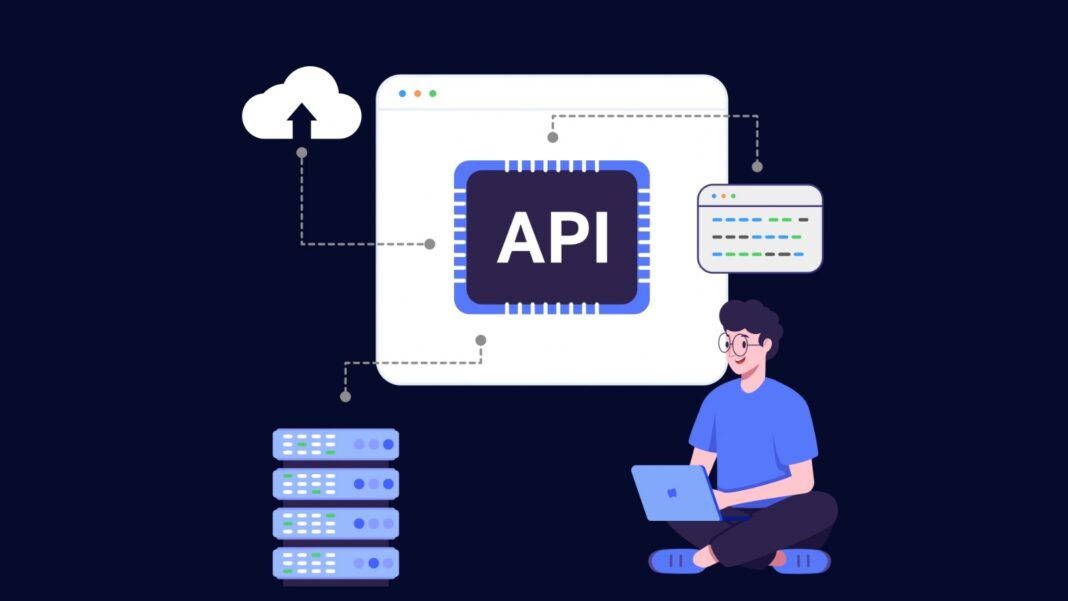


Most of what makes a modern application work never appears on screen. Behind every screen tap or page load sits a network of APIs quietly passing data back and forth, authenticating users, fetching records, processing payments, syncing with third-party services. When those APIs behave, nobody notices. When they don’t, the failure often shows up somewhere confusing: a spinner that never stops, a page that loads with missing data, an order that silently fails. That disconnect between where a bug originates and where it’s noticed is exactly why API testing has become such a critical discipline in its own right.
What API Testing Actually Covers
API testing verifies that an application’s programming interfaces do what they’re supposed to do, independent of whatever UI happens to sit on top of them. Instead of clicking through screens, testers (or automated scripts) send requests directly to an API’s endpoints and check the response: the right status code, the right data, the right structure, within an acceptable amount of time, and with the right behavior when something goes wrong. These API testing strategies help teams validate API behavior systematically across different scenarios.
This covers a wide range of checks. Functional testing confirms an endpoint returns correct data for valid input. Negative testing sends malformed or unexpected input to see whether the API fails gracefully instead of crashing or leaking information. Load and performance testing checks whether an API holds up under real-world traffic. Security testing probes for issues like broken authentication, exposed data, or improper access control. And contract testing verifies that an API keeps its promises to the other services and applications that depend on it, even as it evolves.
Because APIs sit underneath the UI rather than on top of it, testing them directly tends to be faster and more stable than testing through a browser or app. There’s no layout to render, no animation to wait on, and no interface element that might shift and break a test script. That speed and stability is a big part of why API testing has become a first line of defense for many engineering teams, rather than an afterthought bolted onto UI testing.
Core API Testing Strategies
Getting real value out of API testing depends less on any single tool and more on how deliberately a team approaches it. A few strategies consistently show up in teams that do this well.
The first is shifting testing left, writing and running API tests as soon as an endpoint exists, well before a UI is built around it. Because APIs are typically stable and well-defined earlier in development than the interfaces built on top of them, they’re one of the easiest places to start testing early and catch issues before they compound.
The second is layering test types deliberately rather than treating “API testing” as one uniform activity. A solid strategy usually includes smoke tests that run on every build to confirm core endpoints are reachable and responding, deeper functional tests that validate business logic and edge cases, contract tests that catch breaking changes before they reach consumers of the API, and periodic load tests that reveal how the system behaves under stress rather than assuming it will simply scale. Treating these as distinct layers, each with its own cadence, tends to produce far better coverage than one large, generic test suite.
A third strategy worth building in from the start is testing for failure, not just success. Real-world traffic includes malformed requests, expired tokens, rate-limited clients, and downstream services that are slow or unavailable. An API testing strategy that only verifies the happy path will miss the scenarios most likely to cause outages in production. Deliberately testing timeouts, invalid inputs, and dependency failures surfaces exactly the kind of brittleness that’s hard to spot any other way.
Finally, strong API testing strategies treat test data and environments as first-class concerns. Flaky, unreliable results are often caused less by the API itself and more by inconsistent test data, shared environments that drift over time, or tests that depend on the order they run in. Isolating test environments and keeping test data consistent and disposable tends to pay off far more than adding yet more test cases.
Choosing API Automation Testing Tools
Manual API testing has its place for exploratory work, but automation is what makes API testing sustainable as a codebase grows. The right api automation testing tools depend on a team’s stack and workflow, but a few things are worth weighing regardless of which tool ends up in use.
Look for a tool that integrates cleanly into continuous integration, so API tests run automatically on every commit or pull request rather than depending on someone remembering to trigger them manually. Favor tools that support both simple request/response checks and more advanced scenarios like chained requests, where the output of one call feeds into the next; this mirrors how real applications actually use APIs. Good reporting matters more than it might seem at first: when a test fails at 2 a.m. in a CI pipeline, a clear, specific failure message is the difference between a five-minute fix and an hour of digging through logs.
It’s also worth thinking beyond functional correctness alone. Many teams pair their functional API automation testing tools with platforms like HeadSpin to validate how APIs actually perform across real network conditions and geographies, not just in a clean staging environment. An endpoint that responds instantly on a office Wi-Fi connection can behave very differently over a congested mobile network in another part of the world, and catching that gap before users do is often what separates a reliable API from one that just looks reliable in testing.
Bringing It Together
API testing works best as an ongoing discipline rather than a one-time checklist. The strongest api testing strategies combine early, layered testing with deliberate attention to failure cases, consistent test data, and realistic conditions, backed by api automation testing tools that make all of that repeatable on every single build. Get this right, and the APIs holding an application together stay invisible for the best possible reason: because they simply work, every time, for every request that depends on them.