
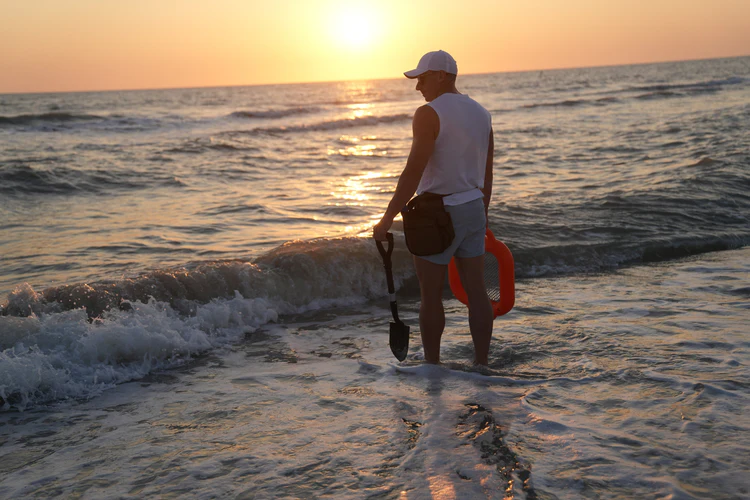


Using a Floating Sifter for Shark Teeth in Shallow Water
A floating sifter for shark teeth makes it easier to process wet sand and shell material without repeatedly lifting a heavy screening tray out of the water.
Unlike searching only on the surface, sifting allows beach hunters to examine material that may contain small teeth, fossil fragments, shells and other objects hidden below the visible layer. The floating frame stays near the surface while the mesh lets sand and water pass through.

This creates a simple process: collect material, place it in the basket, rinse it and inspect what remains.
Choosing the right place to search
Successful shark tooth hunting usually begins with reading the beach. Flat areas of clean sand may contain fewer finds than places where heavier objects naturally collect.
Useful areas to inspect include:
- lines of broken shells;
- gravel patches near the water;
- shallow tidal channels;
- sections affected by recent erosion;
- darker layers of compacted sand;
- areas uncovered after strong waves or storms.
Shell beds are particularly helpful because shark teeth often settle with objects of a similar weight. A shark tooth sand sifter can separate these materials more efficiently than searching one piece at a time.
How to work with a floating basket
Place a manageable amount of wet sand, gravel and shells into the sifter. Avoid filling the entire basket at once. A smaller load rinses faster and makes small teeth easier to notice.

Move the basket gently from side to side while it floats. Water will carry away the loose sand, leaving shells, stones and fossils on top of the stainless steel mesh.
Once the sand is gone, spread the remaining material into a thin layer. Look for dark triangular shapes, smooth edges or unusual textures. Turning the material over can reveal teeth that were hidden underneath shells.
Some hunters refer to this tool as a shark tooth net or shark tooth basket. However, the rigid mesh and stable frame make it better suited to controlled sorting than a soft net.
Why flotation matters
A normal screening tray can become heavy when filled with wet sand. With a floating design, the water supports the basket while the hunter sorts the material.
This can reduce arm fatigue during longer searches and makes the tool practical for shallow coastal water. The basket can also remain beside the user while a scoop or small shovel is used to collect the next load.
A visible floating tray is useful when several people are searching together. One person can collect material while another examines the contents, making fossil hunting an easy shared beach activity.
What to bring with the sifter
A basic shoreline kit may include a hand scoop, gloves, waterproof shoes, a small finds container and a brush for cleaning fossils. A tether can also help prevent the basket from drifting when waves or currents become stronger.

Keep valuable finds in a closed container rather than loose inside the tray. Small shark teeth can easily fall back into the sand while the next batch is being processed.
More than one use
A floating shark tooth basket is not limited to fossil teeth. The same tool can help search for shells, sea glass, coins, small jewelry, interesting rocks and other objects found in wet sand.
The key advantage is controlled separation. Fine material passes through the screen, while larger objects remain visible for inspection.
A durable floating sifter can therefore become a useful part of any beachcombing or treasure-hunting kit. It helps the user examine more material, stay organized and spend less time lifting heavy loads of wet sand.