
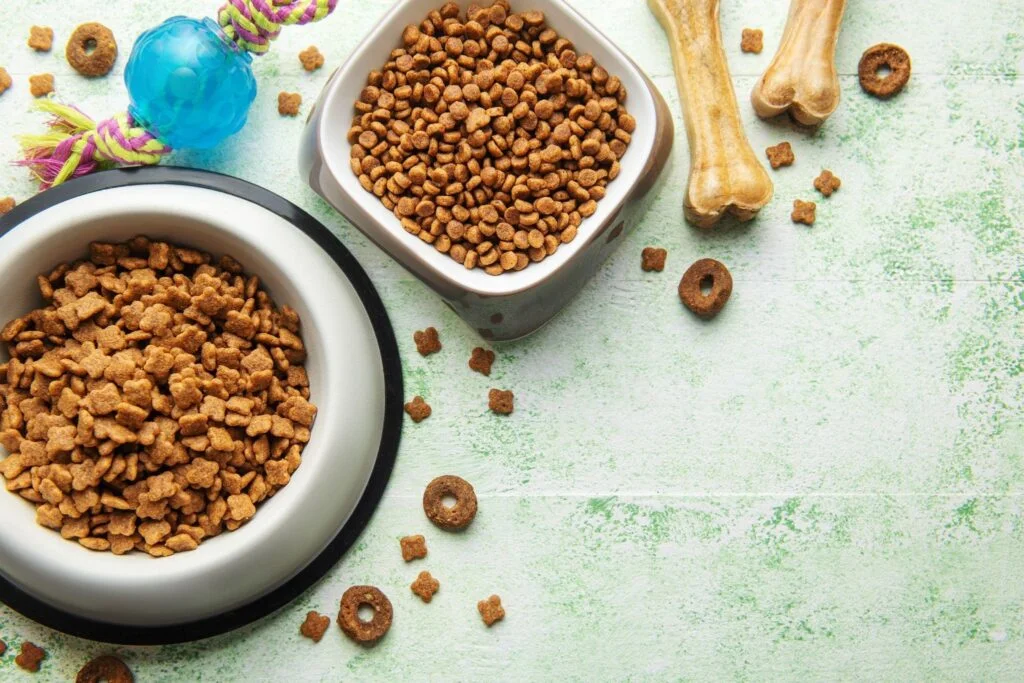


Buying dog food in a 20kg bag makes sense if you have a big dog or more than one. The price per kilo is lower and you are not running to the shops every week. The catch is that the last few kilos at the bottom of the bag can end up stale, soft or full of weevils if the bag sits open in the garage.
Why a big bag goes off
Dry kibble contains fats that react with air over time. Once the bag is opened, oxygen, humidity and heat start working on those fats, and the food slowly loses its smell and taste. Dogs notice long before we do, which is often why a dog that wolfed down the first half of a bag turns its nose up at the second half.
South African summers make this worse. A bag kept in a hot garage or a sunny scullery can lose its freshness in a few weeks, especially at the coast where humidity is high.
Keep the food in its original bag
It is tempting to pour kibble straight into a plastic bin. A better idea is to leave the food inside its original bag and put the whole bag into an airtight container. The bag has a lining that keeps fats in and air out, and it carries the batch number and best before date you need if there is ever a problem.
Local brands such as Montego dog food come in bags from 1kg right up to 25kg, so measure your container before you buy. A 20kg bag needs a container of at least 50 litres with a lid that seals properly, and it helps to check that the bag fits without being folded over too tightly.
Choose the right container
Look for a food grade container with a rubber seal or a clip lid. Pet stores sell purpose made storage bins on wheels, which are handy because a full 20kg container is heavy to move around. An old paint bucket or cooler box is not ideal, since you cannot be sure what was in it before.
Wash and dry the container completely between bags. Leftover crumbs and oils go rancid and will taint the fresh food you pour on top.
Find a cool, dry spot
Where you put the container matters as much as the container itself. Aim for somewhere below about 25°C, out of direct sun and away from the geyser, the fridge motor or the stove. A pantry or a shaded cupboard inside the house works far better than an outside storeroom.
Lift the container off the floor if you can, as a shelf or pallet keeps it away from damp and makes life harder for insects. Ants are just as keen on the bowl itself, and a water moat is an easy way to keep ants out of the dog food bowl once the food is served. Sweep up any spilt kibble after meals so there is nothing left to attract them.
Buy only what your dog can finish in time
Most manufacturers suggest using an opened bag within about six weeks. Work out how much your dog eats in a day and multiply by 42. A 30kg dog eating 400g a day gets through about 17kg in six weeks, so a 20kg bag is already close to the limit.
For smaller dogs a 20kg bag may hang around for months. In that case buy smaller bags, or split a large bag into several airtight containers and open them one at a time.
Check the food before every scoop
Fresh kibble has a mild, slightly meaty smell. If the food smells sour, musty or a bit like paint, or you see clumps, mould or moving specks, throw it out. A dog that suddenly refuses a food it normally loves is often telling you the same thing.
Use a clean, dry scoop rather than the dog’s bowl, and never pour a new bag on top of old food. With a little routine, the last kilo of a big bag can be every bit as appealing as the first.