
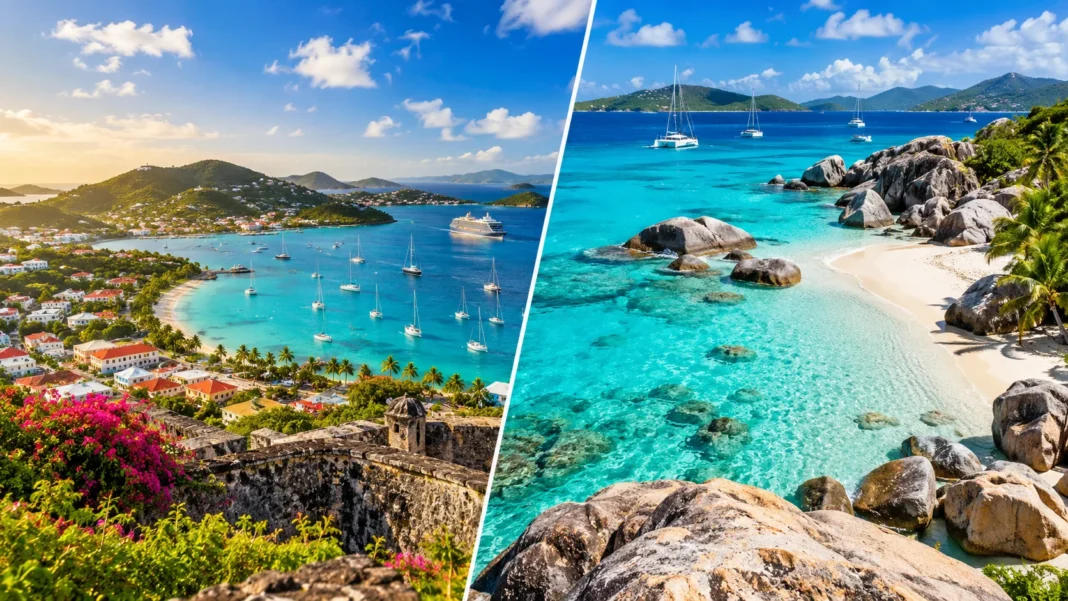


The Caribbean is home to some of the world’s most beautiful islands, and the US Virgin Islands and British Virgin Islands are two destinations that attract travelers with their turquoise waters, white-sand beaches, and tropical landscapes. Although these island groups are located close to each other, they offer different vacation experiences. From lively shopping districts and historical attractions to peaceful beaches and sailing adventures, both destinations have something special to offer.
Choosing between the US Virgin Islands vs British Virgin Islands depends on your travel preferences, budget, preferred activities, and overall vacation expectations. The US Virgin Islands are known for their accessible tourist attractions, vibrant towns, and established resort areas, while the British Virgin Islands are especially popular for sailing, secluded beaches, and relaxed island experiences. This comparison explores the differences between both destinations to help you decide which Caribbean getaway best suits your plans.
1. US Virgin Islands vs British Virgin Islands: Main Differences
The US Virgin Islands and British Virgin Islands are neighboring Caribbean territories with different political affiliations, transportation systems, and tourism experiences. The US Virgin Islands are an unincorporated territory of the United States, while the British Virgin Islands are a British Overseas Territory. Despite their political differences, both destinations share beautiful tropical landscapes, warm climates, and rich Caribbean cultural traditions.
The US Virgin Islands consist primarily of St. Thomas, St. John, and St. Croix, along with several smaller islands. St. Thomas is particularly popular for shopping and resorts, while St. John features protected natural areas. St. Croix offers historical attractions, diving opportunities, and a quieter atmosphere compared with the busiest parts of St. Thomas.
The British Virgin Islands include Tortola, Virgin Gorda, Anegada, Jost Van Dyke, and numerous smaller islands. These destinations are particularly attractive to travelers interested in boating, snorkeling, and exploring peaceful coastal environments. Although both island groups offer excellent beach vacations, the British Virgin Islands generally emphasize sailing and island hopping, while the US Virgin Islands provide a broader range of land-based tourist activities.
2. Comparing the Best Beaches in Both Island Groups
The US Virgin Islands are famous for their beautiful beaches, many of which offer convenient facilities and access to nearby tourist attractions. Magens Bay on St. Thomas is known for its calm waters and scenic shoreline, while Trunk Bay on St. John attracts visitors with its underwater snorkeling trail. These destinations are particularly appealing to families and first-time Caribbean travelers.
The British Virgin Islands offer equally impressive beaches, although many have a more secluded atmosphere. The Baths on Virgin Gorda features enormous granite boulders, natural pools, and unusual coastal formations. White Bay on Jost Van Dyke is another popular destination, offering soft white sand and clear turquoise water surrounded by beautiful tropical scenery.
Choosing the better destination for beaches depends on the type of experience you prefer. The US Virgin Islands are often more convenient for travelers seeking established beach facilities, while the British Virgin Islands offer outstanding opportunities to discover quieter coastal locations. Both destinations have exceptional swimming and snorkeling spots, although conditions can vary depending on weather and seasonal changes.
3. Which Destination Offers Better Tourist Attractions?
The US Virgin Islands offer a wide variety of attractions that combine natural beauty, historical landmarks, and cultural experiences. Visitors can explore Virgin Islands National Park on St. John, discover Fort Christian in Charlotte Amalie, or visit Buck Island Reef National Monument near St. Croix. These attractions provide opportunities for sightseeing, hiking, marine exploration, and learning about Caribbean history.
The British Virgin Islands focus more heavily on natural attractions, particularly scenic coastlines, protected marine areas, and unusual geological formations. Popular destinations include The Baths on Virgin Gorda, the beaches of Anegada, and Sage Mountain National Park on Tortola. Visitors can also explore picturesque harbors, coastal villages, and smaller islands that offer peaceful surroundings.
Travelers interested in museums, historical towns, and a greater variety of land-based attractions may prefer the US Virgin Islands. Those who enjoy exploring natural landscapes, sailing routes, and quieter island environments may find the British Virgin Islands more appealing. Both destinations provide memorable sightseeing experiences, but their strongest attractions reflect different styles of Caribbean tourism.
4. US Virgin Islands vs British Virgin Islands for Snorkeling and Diving
Snorkeling is among the most popular activities in both island groups because the surrounding Caribbean waters support diverse marine ecosystems. In the US Virgin Islands, Trunk Bay, Maho Bay, and Buck Island are well-known snorkeling destinations. Visitors may encounter tropical fish, sea turtles, rays, and colorful coral formations while exploring designated underwater areas.
The British Virgin Islands also provide excellent snorkeling and scuba diving opportunities, particularly around protected reefs and offshore islands. The Indians, near Norman Island, is a recognized snorkeling location featuring rocky formations and marine life. Divers may also explore designated wreck sites, including the historic RMS Rhone near Salt Island, through appropriately guided excursions.
Both destinations offer rewarding underwater experiences for beginners and experienced enthusiasts, although individual sites have different conditions and difficulty levels. Guided snorkeling trips can help visitors identify suitable locations based on swimming ability and weather. Respecting coral reefs, maintaining distance from marine animals, and following local conservation guidelines are essential when enjoying these remarkable underwater environments.
5. Sailing and Island Hopping: Which Is Better?
The British Virgin Islands are especially famous for sailing, attracting visitors who want to explore neighboring islands and beautiful coastal anchorages. Their relatively close island spacing makes them a popular destination for organized sailing vacations. Travelers can discover sheltered bays, scenic harbors, and small islands while experiencing the Caribbean from a different perspective.
The US Virgin Islands also offer sailing excursions, private boat trips, and island-hopping opportunities. Passenger ferries connect St. Thomas and St. John, making it relatively easy to visit both destinations during one vacation. St. Croix is farther away and generally requires more planning, particularly when arranging transportation between the main islands.
For travelers whose primary goal is exploring multiple islands by boat, the British Virgin Islands may offer the stronger overall experience. The US Virgin Islands are particularly convenient for visitors who prefer staying in one destination while taking occasional boat excursions. Both provide memorable coastal journeys, but transportation arrangements and available services should be checked before traveling.
6. Accommodation and Resort Options in Both Destinations
Accommodation options are an important consideration when comparing the US Virgin Islands and British Virgin Islands. The US Virgin Islands offer hotels, vacation rentals, resorts, and smaller guesthouses across their three main islands. St. Thomas generally provides a broad selection of tourist accommodations, while St. John and St. Croix offer different combinations of beachfront properties and quieter places to stay.
The British Virgin Islands are known for private villas, boutique resorts, waterfront accommodations, and properties designed around sailing vacations. Virgin Gorda features several well-known luxury resort areas, while Tortola offers hotels and guesthouses near major transportation hubs. Visitors seeking privacy and quieter surroundings may appreciate the accommodation experiences available across these islands.
Both destinations include properties at different price levels, although availability varies considerably by island and season. Travelers should compare accommodation costs alongside transportation, dining, and activity expenses rather than focusing only on nightly room rates. Booking early can be particularly helpful during peak travel periods when popular resorts and desirable waterfront properties receive strong demand.
7. US Virgin Islands vs British Virgin Islands: Travel Costs
The overall cost of visiting either island group depends on accommodation choices, transportation requirements, dining preferences, and planned activities. The US Virgin Islands can provide more flexibility for travelers seeking different hotel categories and land-based excursions. However, popular resorts, taxis, and organized activities can still make a vacation expensive, particularly during the busiest tourist months.
The British Virgin Islands can be relatively expensive, especially when a vacation includes private boat charters, exclusive resorts, or repeated inter-island transfers. Travelers staying on Tortola may find more accommodation options than those visiting smaller islands. Restaurant prices, transportation expenses, and additional fees can also affect the total cost of a British Virgin Islands vacation.
Both territories use the US dollar, making currency comparisons straightforward for travelers accustomed to American prices. Nevertheless, similar prices do not mean that travel expenses will be identical. Comparing complete vacation packages, ferry fares, accommodation locations, and activity costs is the most reliable way to determine which destination fits your travel budget.
8. Food, Culture, and Local Experiences
The US Virgin Islands have a rich cultural identity shaped by African, Caribbean, Danish, and American influences. Visitors can discover these traditions through local cuisine, architecture, music, and community celebrations. St. Croix is particularly recognized for its distinctive cultural heritage, while St. Thomas offers lively shopping areas, traditional restaurants, and historic neighborhoods.
The British Virgin Islands also maintain strong Caribbean traditions influenced by African heritage, British colonial history, and maritime life. Tortola and the surrounding islands feature local food establishments, cultural celebrations, and welcoming coastal communities. Traditional dishes often include fresh seafood, fungi, rice dishes, and locally prepared specialties that reflect the region’s culinary history.
Both island groups provide opportunities to discover authentic Caribbean culture beyond the main tourist attractions. Visiting local markets, exploring historic settlements, and attending community events can make a vacation more meaningful. Travelers interested in a larger selection of cultural sites and historic towns may find the US Virgin Islands especially rewarding, although the British Virgin Islands have their own distinctive traditions.
9. Transportation and Getting Around the Islands
Transportation is an important difference between the two destinations, particularly for travelers planning to visit multiple islands. The US Virgin Islands have airports on St. Thomas and St. Croix, with connections to the US mainland and other Caribbean destinations. Travelers visiting St. John generally arrive through St. Thomas before continuing by ferry to the island.
The British Virgin Islands have their main international airport on Beef Island, connected by bridge to Tortola. Many visitors also travel through St. Thomas and continue to the British Virgin Islands by international ferry. Additional boat services connect major islands, although schedules and availability can vary depending on weather, operators, and seasonal demand.
Rental cars and taxis are available in parts of both territories, and vehicles travel on the left side of the road. Some roads are steep, narrow, and winding, especially in mountainous areas. Travelers planning international ferry journeys should allow time for immigration procedures and confirm documentation requirements before crossing between the US and British Virgin Islands.
10. Passport and Entry Requirements for Travelers
Entry requirements differ between the US Virgin Islands and British Virgin Islands because they belong to separate jurisdictions. US citizens traveling directly between the US mainland and the US Virgin Islands generally do not need a passport, although appropriate identification and proof of citizenship may be necessary. Non-US citizens must follow applicable US immigration requirements.
The British Virgin Islands require international visitors to meet their own immigration and travel-document rules. US citizens generally need a valid passport and evidence of onward or return travel when visiting by air or regular international ferry services. Visitors of other nationalities may need a visa, depending on their citizenship and individual circumstances.
Travelers planning to visit both territories must consider entry requirements for each destination separately. International ferry journeys involve immigration and customs procedures, even though the islands are geographically close. Because visa policies, document requirements, and entry forms can change, checking current official guidance before departure is essential for a smooth Caribbean vacation.
11. Best Time to Visit the US and British Virgin Islands
Both island groups enjoy a tropical Caribbean climate with warm temperatures throughout the year. December through April is generally considered the most popular travel period because conditions tend to be relatively dry and comfortable for outdoor activities. However, this peak season can also bring higher accommodation prices and greater demand for popular attractions.
Late spring and early summer can offer opportunities to experience fewer crowds and sometimes more affordable accommodation options. The Atlantic hurricane season runs from June through November, bringing an increased possibility of tropical storms and heavy rainfall. Weather conditions can influence sailing schedules, outdoor excursions, ferry operations, and beach activities throughout both territories.
Travelers seeking comfortable sightseeing weather and favorable conditions for outdoor activities often prefer winter or early spring. Those prioritizing quieter resorts and potentially lower prices may consider alternative travel periods while monitoring forecasts carefully. Regardless of destination, flexible reservations and appropriate travel insurance can provide additional reassurance when planning a Caribbean island vacation.
12. Which Is Better for Families, Couples, and First-Time Visitors?
The US Virgin Islands are often an appealing choice for families and first-time Caribbean travelers because they offer established tourist facilities and a variety of activities. Visitors can combine beach relaxation with historical sightseeing, national park exploration, and organized excursions. St. Thomas is particularly convenient for travelers seeking restaurants, shopping, and access to popular coastal attractions.
The British Virgin Islands may be especially attractive to couples and travelers seeking peaceful surroundings, scenic sailing trips, and private accommodations. Destinations such as Virgin Gorda and Anegada offer beautiful natural environments away from larger tourist centers. Families can also enjoy the islands, although transportation planning and accommodation choices may require additional consideration.
Neither destination is automatically better for every traveler because individual interests and vacation expectations vary. Families interested in a convenient mix of activities may prefer the US Virgin Islands, while sailing enthusiasts may favor the British Virgin Islands. Comparing available experiences, transportation arrangements, and accommodation options helps determine which island group provides the most suitable vacation.
Conclusion
The US Virgin Islands and British Virgin Islands are both outstanding Caribbean destinations, offering beautiful beaches, tropical scenery, and unforgettable island experiences. Although they share similar natural environments, their travel experiences differ in important ways. The US Virgin Islands are particularly appealing for historical sightseeing, established tourist attractions, and convenient access to several popular vacation areas.
The British Virgin Islands stand out for their sailing opportunities, picturesque anchorages, peaceful coastal environments, and exceptional island-hopping experiences. Travelers seeking a quieter escape or a vacation centered around exploring the sea may find these islands especially rewarding. However, accommodation costs, transportation needs, and entry requirements deserve careful consideration before making a final decision.
Choosing between the US Virgin Islands vs British Virgin Islands ultimately depends on what you want from your Caribbean vacation. Both destinations offer beautiful beaches, outdoor adventures, and opportunities to discover local culture. By comparing their attractions, costs, transportation, and overall atmosphere, you can select the destination that best matches your interests and travel plans.
Frequently Asked Questions (FAQs)
Which is better, the US Virgin Islands or British Virgin Islands?
The US Virgin Islands are often better for first-time visitors seeking varied attractions and convenient tourist facilities. The British Virgin Islands are particularly attractive for sailing, secluded beaches, and peaceful island-hopping vacations.
Are the British Virgin Islands more expensive than the US Virgin Islands?
The British Virgin Islands can be more expensive, especially for private charters and luxury accommodations. However, total vacation costs depend on your hotel, transportation, activities, travel dates, and personal spending preferences.
Do you need a passport to travel between the US and British Virgin Islands?
Generally, yes. US citizens typically need a valid passport for international ferry travel to the British Virgin Islands. Entry requirements vary by nationality, so travelers should verify documentation rules for both territories.
Which Virgin Islands have the best beaches?
Both island groups offer beautiful beaches. The US Virgin Islands feature Magens Bay and Trunk Bay, while the British Virgin Islands are known for The Baths, White Bay, and the beaches of Anegada.
Can you visit the US Virgin Islands and British Virgin Islands on the same trip?
Yes, visitors can explore both territories during one Caribbean vacation using international ferry services or other suitable transportation. However, immigration requirements, ferry schedules, travel costs, and available time should be considered when planning.