
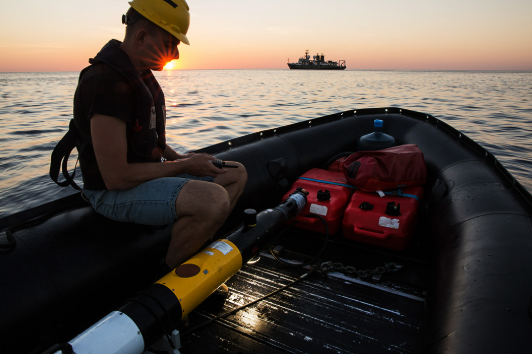


Stepping off dry land and heading out into open ocean waters is one of the most exhilarating experiences a mariner or offshore traveler can undertake. However, once a vessel travels beyond 15 to 20 nautical miles from shore, terrestrial cellular towers vanish, leaving travelers entirely dependent on onboard wireless and satellite technologies.
Equipment failures, atmospheric interference, power outages, and physical hardware damage can isolate a vessel in seconds. Preparing for ocean communication disruptions before casting off lines protects your crew, ensures accurate weather forecasting, and guarantees access to search-and-rescue networks when emergencies arise.
1. Identify Common Causes of Ocean Communication Failures
Quick Answer: Communication loss at sea stems primarily from severe atmospheric weather, saltwater hardware corrosion, vessel battery depletion, and physical antenna damage during rough seas.
Understanding why communication breaks down offshore helps mariners prevent outages before they happen. Ocean environments present extreme physical hazards that terrestrial communication systems rarely encounter.
Salt spray accelerates corrosion on external antenna connectors, while constant vessel vibration loosens internal wiring harnesses. Severe squalls and heavy atmospheric cloud cover can attenuate high-frequency satellite signals, while sudden electrical surges or dead battery banks can shut down nav-com systems entirely. Identifying these single points of failure allows boaters to harden their setups prior to departure.
2. Build a Multi-Layered Hardware Redundancy System
Quick Answer: Never rely on a single communication tool; layer short-range VHF radio, long-range HF/SSB radio, satellite messaging, and emergency beacons.
Relying on a single smartphone or satellite terminal creates an unacceptable point of failure on the open ocean. A robust communications stack uses overlapping technologies operating across different frequencies and power networks.
For short-range, vessel-to-vessel communication, fixed-mount and handheld VHF radios remain mandatory. For offshore passages beyond sight of land, deploying ocean satellite signal redundancy is critical. Equipping your vessel with compact portable satellite internet units gives your crew access to live GRIB weather files, email updates, and voice-over-IP connectivity even thousands of miles from the nearest coast.
3. Ensure Power System Autonomy for Comms Equipment
Quick Answer: Isolate critical radios and satellite gear on dedicated backup battery banks supported by solar panels or independent power banks to survive vessel electrical blackouts.
A top-of-the-line satellite transceiver is useless if your engine alternator fails and drains your main house battery bank. Total electrical blackouts on blue-water vessels happen more often than many recreational boaters realize.
Executing offshore power backup strategies requires wiring primary emergency radios directly to an isolated, waterproof auxiliary battery. Keep standalone, solar-rechargeable power banks inside a sealed dry bag, along with hand-crank emergency radios and extra charging cables, so you retain communication capabilities even if the main cabin floods or loses primary DC power.
4. Comparison of Offshore Communication Technologies
| Communication Tool | Operational Range | Primary Use Case | Power Requirement |
| Fixed-Mount VHF Radio | 15–25 Nautical Miles | Line-of-sight vessel & harbor traffic | 12V DC Ship Power |
| Satellite Internet / PTT | Global (Worldwide) | High-speed weather data, voice & text | 12V/24V or Internal Li-Ion |
| HF / SSB Radio | Thousands of Miles | Long-range marine nets & weather fax | High 12V Draw |
| EPIRB / PLB Beacons | Global (Satellite) | One-way emergency distress signaling | Internal Sealed Battery |
5. Establish Pre-Departure Maritime Emergency Communication Protocols
Quick Answer: File a detailed float plan with a trusted shore contact, schedule daily check-in times, and define explicit action triggers if a check-in is missed.
Technology is only half the solution; human protocols dictate how effectively help is summoned when radios fail. Establishing clear maritime emergency communication protocols ensures someone on land knows precisely when and where to alert rescue authorities.
Before pulling out of port, file an official float plan detailing your vessel registration, crew roster, onboard safety equipment, planned route, and estimated arrival times. Agree on a specific check-in window (such as twice daily via satellite text). Instruct your shore contact to wait a maximum of 6 to 12 hours past a missed check-in window before notifying the Coast Guard or local maritime rescue coordination centers (MRCC).
6. Myth vs. Fact: Ocean Connectivity Realities
- Myth: Satellite communicators work perfectly inside an enclosed sailboat cabin.
- Fact: Satellite signals require a clear, unobstructed line-of-sight to the sky; mounting antennas on archways or stepping onto the top deck is often required for stable links.
- Myth: An EPIRB allows two-way messaging with rescue crews.
- Fact: Standard EPIRBs and PLBs are one-way emergency distress beacons; they transmit your location to satellites but cannot receive text messages back from search-and-rescue teams.
7. Essential Offshore Communication Checklist
Run through this checklist 48 hours before departing on any offshore passage:
[ ] Antenna Inspection: Checked coaxial cable fittings for corrosion, cracks, and moisture intrusion.
[ ] Battery Verification: Fully charged all handheld VHF radios, satellite terminals, and secondary power banks.
[ ] Beacon Expiration: Confirmed EPIRB and PLB battery expiration dates and registered updated owner details with NOAA/COSPAS-SARSAT.
[ ] Float Plan Filed: Sent final route itinerary, check-in schedule, and shore contact instructions to family or harbor masters.
[ ] Offline Data: Downloaded offline nautical charts, satellite coverage maps, and manual device instruction guides onto waterproof devices.
8. Frequently Asked Questions
What should I do if my satellite terminal loses signal mid-voyage?
First, check for physical obstructions like sails, booms, or bimini tops blocking the antenna’s view of the horizon. Check power cable connections for voltage drops, and attempt a hard system reboot. If signal fails to return, switch to secondary communications like handheld satellite messaging or VHF marine nets.
How do I protect handheld radios from saltwater damage?
Store spare handheld radios, satellite phones, and power banks inside heavy-duty, waterproof dry bags with desiccant packs. Even waterproof IPX7-rated devices suffer rapid contact corrosion if left exposed to salt air without routine fresh-water rinses.
Preparing for ocean communication disruptions is a core responsibility of seamanship. By building a multi-layered hardware system, safeguarding independent power sources, establishing strict shore protocols, and maintaining your gear against harsh marine environments, you eliminate single points of failure. Thorough communication planning ensures that no matter how remote your voyage becomes, you remain connected, informed, and safe on the water.