


Understanding Your Goals
Setting clear educational goals is a fundamental first step in choosing the right education path. By identifying both short-term and long-term objectives, individuals can create a focused and structured approach to their learning journey. This process begins with thorough self-reflection, allowing one to evaluate personal aspirations, career objectives, and life circumstances that can influence educational decisions.
Short-term goals often span from immediate skills acquisition to specific certifications, providing foundational knowledge necessary for pursuing long-term aspirations. For instance, someone interested in healthcare may prioritize obtaining a certification in first aid or CPR before delving into a full degree program in nursing or public health. By establishing these preliminary objectives, learners can ensure a steady progression toward their broader aspirations.
Conversely, long-term goals encapsulate the bigger picture of what one envisions for their career and personal growth. This could involve attaining a specific degree, achieving a particular position within a chosen field, or developing expertise in emerging technologies. Clarity on these eventual objectives aids in selecting education programs that align with one’s overall plans.
Utilizing self-assessment tools such as personality tests, goal-setting worksheets, or even engaging in discussions with mentors can greatly enhance this clarity. Reflection techniques like journaling can help encapsulate evolving thoughts and insights regarding one’s educational trajectory. By diligently considering personal interests and professional necessities, individuals can draw a roadmap that aligns with their aspirations.
Ultimately, understanding personal goals fosters a more intentional approach to education, helping learners make informed choices that resonate with their unique journeys.
Exploring Different Types of Education
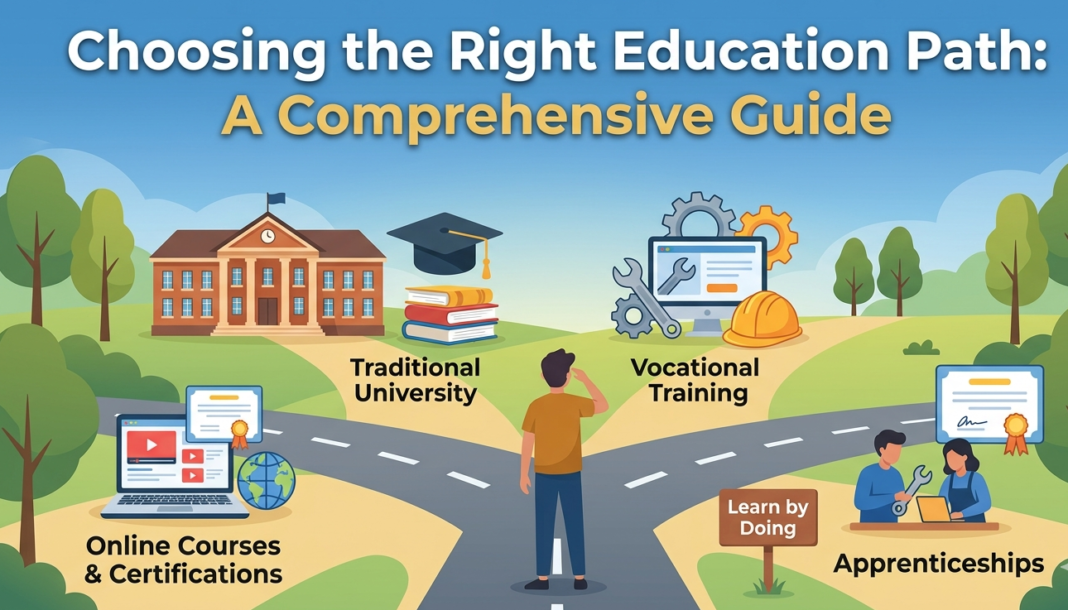
When considering the right education path, it is essential to explore the various options available, each with its unique set of advantages and drawbacks. Traditional degrees, vocational training, online courses, and alternative education methods represent the spectrum of educational choices.
Traditional degrees, typically offered by universities and colleges, are a common choice for many. They often encompass a broad range of subjects and provide a comprehensive education. Earning a degree can lead to improved job prospects and higher earning potential. However, the time commitment and financial investment required can be significant, and not all careers necessitate a formal degree.
Vocational training, on the other hand, tends to focus on specific skills and knowledge necessary for particular trades or professions, such as electricians, plumbers, or cosmetologists. This type of education can be a quicker, more cost-effective route into the workforce. While vocational training offers practical skills, it may limit exposure to a wider academic curriculum and detracts from opportunities for a liberal arts education.
Online courses have surged in popularity as technology enables flexible learning environments. Many institutions offer a wide range of subjects, allowing individuals to learn at their own pace and on their own schedule. Online education is accessible and often more affordable. Yet, it requires a high degree of self-motivation and discipline. Additionally, the lack of in-person interaction might hinder some learners.
Lastly, alternative education methods such as apprenticeships, mentorships, or self-directed learning, often emphasize experiential learning. These can provide hands-on experience and real-world application of skills. While beneficial, these paths may not always carry the same weight as traditional qualifications in certain fields.
Ultimately, choosing the right education type involves considering personal and professional goals, learning preferences, and the demands of the desired career path. Understanding the pros and cons of these various education pathways is crucial for making an informed decision.
Researching Career Opportunities
Choosing the right education path is vital for aligning your academic pursuits with future career prospects. To effectively research career opportunities that correspond with your chosen field of study, begin by exploring job markets and industry demands through various resources. Online job boards, industry reports, and governmental labor statistics can provide significant insights into the current trends affecting employment.
Another essential strategy is to leverage professional networks. Platforms such as LinkedIn can serve as valuable tools for connecting with industry professionals. Engaging with experienced individuals can help you gather firsthand knowledge about specific careers, including required qualifications and skill sets. Additionally, participating in informational interviews can allow you to ask targeted questions pertaining to day-to-day tasks and career trajectories.
As you research, understanding salary ranges and growth opportunities in different industries is crucial. Websites like Glassdoor and PayScale offer data on compensation packages which can help you set realistic financial expectations. Furthermore, analyzing growth projections for various fields can aid in identifying sustainable career paths. For instance, fields such as technology and healthcare often exhibit substantial growth prospects, making them attractive options for students.
In summary, exploring career opportunities involves a strategic approach to examining job markets, industry trends, and professional networks. Utilizing multiple resources will provide a comprehensive understanding of potential career paths, allowing you to make informed decisions about your education. Being proactive in researching various factors will ultimately enhance your readiness to enter the workforce and pursue a successful career aligned with your educational background.
Evaluating the Required Skills and Qualifications
When selecting an educational path, it is crucial to evaluate the skills and qualifications required for your desired career. Different professions demand a unique combination of technical skills, soft skills, and relevant qualifications. For instance, jobs in healthcare may require specific licensing and certifications, while those in creative sectors might prioritize portfolios showcasing prior work. Understanding these requirements can help guide your educational choices effectively.
Transferable skills, which can be applied in various professional contexts, also play a significant role in career development. Skills such as communication, teamwork, problem-solving, and time management are valuable across nearly all industries. It is beneficial to assess how your existing transferable skills can complement the requirements of your target field. For instance, someone with strong analytical skills may find opportunities in both finance and data science.
Acquiring the necessary qualifications often involves a combination of formal education and practical experiences. Enrolling in degree or certification programs can provide foundational knowledge and credentials. Additionally, internships, volunteer work, and extracurricular activities offer hands-on experience that cultivates essential skills and increases employability. Networking with professionals in your desired field can also expose you to unlisted opportunities and provide insights on the most efficient paths for skill development.
In light of the evolving job market, staying informed about the skills currently in demand is vital. Resources such as labor market reports, career development seminars, and workshops can offer guidance on relevant educational paths. Therefore, aspiring professionals should continually assess and adapt their skills to align with career aspirations while keeping educational avenues diverse and flexible.
Financial Considerations
Understanding the financial implications of education is essential in selecting the appropriate path. Various factors must be taken into account, including tuition costs, potential student debt, and financial aid options available. Tuition fees can significantly vary based on the type of institution—public universities often provide lower rates for in-state students compared to private colleges. Therefore, a thorough examination of the costs associated with each educational option is critical.
In addition to direct tuition fees, potential student debt must be considered. Many individuals may find themselves relying on student loans to finance their education. It is vital to calculate the total amount of debt that might be incurred and weigh this against potential earning prospects in the chosen field. Understanding loan terms, interest rates, and repayment options will significantly impact overall financial well-being post-graduation.
Scholarships and grants can help alleviate some financial burdens. These forms of aid do not require repayment, making them an attractive option for many students. Prospective students should actively research and apply for scholarships relevant to their field of study, academic performance, or background. Furthermore, work-study programs can provide significant financial support by allowing students to earn money while attending school.
Lastly, assessing the return on investment (ROI) of different educational choices is imperative. This involves evaluating potential salary ranges in the field and the financial benefits against the costs incurred during education. By carefully analyzing these elements, students can create a financial plan that aligns with their personal and career goals. This planning is crucial to ensure that they can make informed decisions that allow them to pursue their educational aspirations without compromising their financial future.
Assessing Learning Styles and Environments
Understanding your preferred learning style is an essential step in choosing the right education path. There are several recognized learning styles, including visual, auditory, and kinesthetic learners. Visual learners thrive on diagrams, charts, and written instructions, allowing them to engage with visual aids, while auditory learners benefit from discussions, lectures, and verbal explanations. Kinesthetic learners, on the other hand, enhance their comprehension through hands-on activities and real-life experiences. Identifying which category you fall into can help tailor your educational journey to better suit your needs.
Your learning style not only influences how you process information but also interacts with the environment in which you learn. For instance, if you are a visual learner, you may find that online courses featuring rich multimedia content align better with your preferences compared to traditional lecture-based formats. Conversely, auditory learners might favor in-person classes where they can engage directly with instructors and peers.
Furthermore, the choice between online and in-person education is another crucial factor that can affect your learning experience. Online learning offers flexibility and accessibility, allowing learners to manage their schedules effectively and access a wide range of resources. However, it may lack the immediate feedback and interaction found in face-to-face environments, which can be particularly beneficial for those who thrive on interpersonal engagement.
In-person classes, while providing structured environments and immediate support, may not offer the same level of flexibility but can foster deeper connections with classmates and educators. Ultimately, it is essential to consider both your learning style and the educational environment to find the best fit for your goals and preferences. Assessing how these elements align will help you make an informed decision as you embark on your educational journey.
Networking and Seeking Guidance
Establishing connections with professionals in your desired field is an integral step in determining the appropriate educational path. Engaging with industry experts can provide invaluable insights about the nuances of various careers, the skills required, and changing industry trends. One effective way to acquire such knowledge is through mentorship. Seeking out a mentor who has experience in your field of interest can facilitate personal and professional growth. By building a mentorship relationship, you can gain practical advice, boost your confidence, and obtain a closer look at what a career in that field might entail.
Another useful method is to conduct informational interviews. This involves reaching out to professionals and asking them about their experiences and career choices. Informational interviews allow you to ask specific questions related to your educational decisions, such as what degrees or certifications are necessary for advancement. You can also learn about potential job roles and industry expectations. This dialogue not only helps you gather relevant information but also allows you to showcase your interest in the field.
Effective networking extends beyond just meeting individuals in your desired area. Utilize platforms such as LinkedIn to connect with alumni from your school or professionals who attend industry conferences. Participating in workshops, interest-specific gatherings, and seminars also opens up opportunities to meet like-minded individuals and professionals. Engage actively in these environments by asking questions and contributing to discussions; this demonstrates genuine interest and fosters relationships that can benefit your educational decision-making process.
In essence, connecting with professionals and actively seeking guidance can enhance your understanding of various educational paths. These relationships serve as a foundation for informed decision-making, enabling you to navigate your career ambitions more effectively.
Setting a Realistic Timeline for Decision-Making
Choosing the right educational path can be a pivotal moment in an individual’s life, necessitating a well-structured timeline to facilitate effective decision-making. Establishing a realistic timeline involves several key steps that not only aid in the selection process but also provide opportunities for personal growth and clarity.
The first step in creating a decision-making timeline is to define specific milestones related to your educational goals. Milestones may include researching various educational institutions, understanding the requirements for different programs, and setting dates for application submissions. Each of these milestones should be allocated a reasonable amount of time to ensure thorough investigation and contemplation, allowing you to gather ample information to make informed decisions.
Moreover, it is beneficial to incorporate regular check-in points throughout the timeline. Engaging with mentors, academic advisors, or trusted peers can provide additional insights and guidance. They can offer valuable perspectives on available options and assist you in evaluating the feasibility of your chosen educational path. Scheduling these check-ins at regular intervals helps maintain momentum and ensures that you remain aligned with your goals.
As you progress through your decision-making timeline, it is essential to remain flexible and open to reassessing your goals. New information or experiences may shift your perspective, urging you to adjust your original timeline or refocus your educational objectives. This adaptability can be crucial, especially in such a dynamic environment where educational offerings and career opportunities evolve rapidly.
In conclusion, setting a structured timeline for decision-making enables you to approach the selection of an educational path with clarity and intention. By defining milestones, regularly consulting mentors, and remaining flexible, you can navigate this important journey more effectively.
Making the Final Decision and Staying Flexible
Choosing the right educational pathway is a multifaceted process that involves careful consideration of various factors, including personal interests, strengths, and career aspirations. After exploring the myriad of options and strategies discussed previously, it is essential to recognize that making a final decision is not merely a one-time event but rather a continuous journey. The importance of solid research, introspection, and self-awareness cannot be overstated when assessing the available options. As prospective students reflect on their choices, they must weigh the short-term benefits against long-term goals while remaining cognizant of the evolving landscape of education and employment.
One critical aspect to consider when determining the best educational route is the need for flexibility. In today’s fast-paced world, preferences and circumstances can shift dramatically. New career opportunities may arise, interests may evolve, and life circumstances can change. Therefore, it is vital for individuals to remain adaptable, embracing the idea that their initial educational choice does not dictate their ultimate career path. Staying open to alternative programs, additional certifications, or even completely different fields can lead to unexpected fulfilling career trajectories.
Additionally, establishing a network of mentors, peers, and professionals in the chosen field can provide invaluable support. These connections can offer insights, guidance, and encouragement to help navigate challenges and reassess goals as time progresses. Being proactive in evaluating one’s progress and seeking opportunities for growth can enhance both educational and career outcomes.
In conclusion, making the final decision about an educational pathway requires careful deliberation, ongoing reflection, and a commitment to adaptability. By embracing change and staying open to new possibilities, individuals are better prepared to thrive in an ever-shifting landscape of opportunities and challenges.