


Introduction to Gap Year
A gap year is defined as a deliberate break taken by students between high school and higher education, typically lasting for several months to a full year. During this period, students engage in various activities such as travel, volunteering, internships, or pursuing work opportunities. The concept of a gap year is not new; however, its popularity has surged in recent years, becoming an appealing option for students around the globe. Factors such as the desire for personal growth, cultural exposure, and the opportunity to gain practical skills have contributed to the increasing interest in gap years.
The notion of taking a year off before commencing university studies has been embraced in many countries, with students exploring different ways to utilize this time effectively. Travel has emerged as one of the most popular activities, allowing students to immerse themselves in different cultures, experiences, and languages. Many individuals see this as an opportunity to gain a broader perspective on life, which, in turn, can contribute to their success in higher education and beyond.
Additionally, volunteering during a gap year has gained prominence, with students opting to engage in community service projects, both locally and internationally. This experience provides valuable life lessons, a sense of fulfillment, and the chance to develop key competencies that are highly regarded in academic and professional environments. Moreover, internships and work placements offer practical experience that helps bridge the gap between academic knowledge and real-world applications.
In summary, a gap year presents students with a myriad of opportunities for exploration and growth. As the trend continues to gain traction, understanding the implications and experiences associated with taking a gap year becomes increasingly relevant for students preparing for the next stage of their education.
Understanding the Purpose of a Gap Year
A gap year, typically taken between high school and university, provides an opportunity for young adults to step away from formal education temporarily. The motivations behind taking a gap year are diverse, often centered around personal growth, travel, work experience, and skill development.
One of the primary reasons students opt for a gap year is to foster personal development. Young adults often find themselves transitioning from structured school environments to the more independent culture of university. This transitional period can provide an invaluable chance to cultivate self-awareness, confidence, and independence, which are crucial for navigating the demands of higher education.
Travel is another significant motivation for taking a gap year. Many individuals choose to explore different cultures, languages, and environments, which can broaden their perspectives and enhance their global understanding. Traveling allows students to gain first-hand experiences that classrooms cannot replicate, offering practical lessons in adaptability and problem-solving.
Moreover, gaining work experience during a gap year can be incredibly beneficial. Whether through internships, volunteering, or part-time jobs, these experiences help students acquire skills that enhance their employability when they enter the job market. Engaging in real-world work not only builds professional competencies but also provides insight into various career paths.
Skill development is yet another essential aspect of a gap year. Individuals may choose to learn specific skills, such as languages, technical abilities, or even soft skills like teamwork and communication. These are invaluable when transitioning to university studies and later in professional environments, where such competencies are often sought after by employers.
Pros of Taking a Gap Year
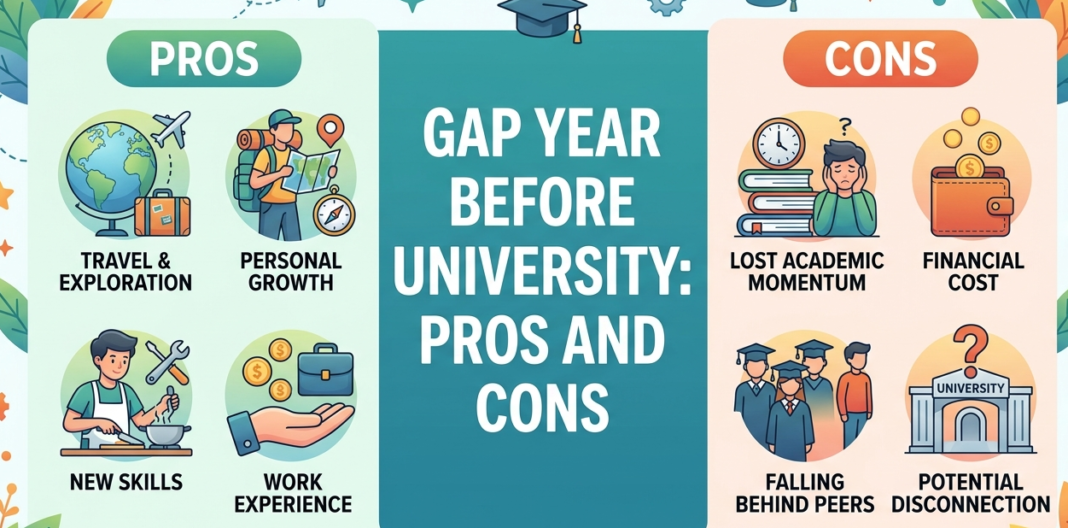
Taking a gap year before embarking on university studies can be an enriching experience that offers numerous benefits to students. One of the primary advantages is the opportunity to gain valuable life experience. Engaging in various activities such as travel, volunteer work, or internships allows students to step outside their comfort zones, develop independence, and learn essential life skills. Whether navigating a new culture or managing responsibilities in a work environment, these experiences often cultivate resilience and adaptability.
Moreover, a gap year can contribute to enhanced maturity among students. Taking time away from formal education allows individuals to reflect on their goals, values, and aspirations. By confronting real-world challenges, students often develop a more defined sense of self, which can positively impact their academic pursuits and personal lives. This increased maturity helps them approach university studies with a more focused mindset, making them better prepared for the demands of higher education.
In addition to personal growth, a gap year may lead to potential academic improvement. Students who choose to immerse themselves in different learning environments often return to their studies with renewed enthusiasm and enhanced motivation. They may identify specific interests or career paths while interacting with diverse groups of people, leading to a more intentional and informed choice of major when they eventually enroll in university. The time spent engaging in academic-related activities during a gap year can foster critical thinking and problem-solving skills, providing a solid foundation for future academic success.
Lastly, a gap year can significantly enrich cultural awareness. Exposure to different cultures, whether through travel or community service, expands students’ perspectives and fosters empathy. Understanding global issues and appreciating diversity become integral parts of their education. This awareness not only enhances their personal development but also prepares them to be more informed and compassionate global citizens.
Cons of Taking a Gap Year
While many students find value in taking a gap year before embarking on their university journey, it is essential to consider potential downsides that may accompany this decision. One of the most significant concerns is the financial implications of a gap year. The cost of travel, accommodation, and activities can accumulate quickly, leading students to depend on savings, parental support, or part-time work, which may not be feasible for everyone. This financial burden might also delay a student’s ability to pay for their university education, resulting in possible debt.
Another issue that students may face is the risk of losing academic momentum. After spending a year away from a structured educational environment, some individuals may find themselves mentally unprepared for the rigors of university studies. This adjustment can lead to increased stress and anxiety during the transition back to academic life. Furthermore, students might struggle to adapt to a system that demands a higher level of critical thinking and discipline compared to their previous learning experiences.
Re-adjusting to academic life after a gap year can also pose challenges. Students may find it difficult to re-establish a study routine, which is crucial for success in university-level coursework. This loss of routine can lead to struggles in maintaining focus and productivity, thereby negatively impacting their academic performance. In addition, staying connected with peers who continue their education can sometimes result in feelings of isolation or a sense of falling behind, exacerbating the difficulties faced when returning to school.
In summary, while the idea of taking a gap year can be appealing, potential downsides such as financial implications, loss of academic momentum, and re-adjusting challenges must be carefully considered before making this important decision.
Choosing the Right Gap Year Activities
When it comes to selecting activities for a gap year, it is essential to choose options that align with personal interests and future academic or career goals. A well-planned gap year can contribute significantly to personal and academic growth by enabling individuals to gain new experiences, skills, and perspectives.
Volunteering is a popular choice for many gap year students. Engaging in volunteer work not only helps communities in need but also fosters empathy and a sense of social responsibility. This form of activity offers individuals a chance to learn about different cultures and environments, enhancing both their interpersonal skills and their understanding of global issues. Many organizations, both local and international, offer structured volunteer programs, which can be tailored to fit various interests, whether in education, healthcare, or environmental conservation.
Internships present another valuable option. They allow students to gain practical experience in their field of interest, building a strong resume and acquiring skills that are essential for university studies and future employment. An internship can provide insights into a chosen career path, helping students decide if it aligns with their aspirations. This hands-on experience can also lead to professional networking opportunities, which may be beneficial after graduation.
Traveling during a gap year can broaden horizons and encourage personal growth. Exposure to different cultures, languages, and lifestyles can enhance adaptability and problem-solving skills. Traveling also fosters independence and self-confidence, traits that are advantageous in academic settings. For those interested in language acquisition, enrolling in language courses abroad can be particularly beneficial. Such courses not only improve linguistic skills but also immerse students in the culture, helping them develop a deeper understanding of the language in context.
Ultimately, the activities chosen for a gap year should provide enriching experiences that contribute holistically to personal development and prepare students for the academic challenges that lie ahead.
How a Gap Year Can Impact University Admissions
The decision to take a gap year before enrolling in university has become increasingly popular among prospective students. This period can provide invaluable life experiences, and its impact on university admissions is multifaceted. Admissions officers often have varied perspectives on this topic, considering both the potential advantages and disadvantages a gap year presents.
One of the most notable benefits of a gap year is the opportunity for personal growth. Students who take a year off may engage in travel, work, or volunteer opportunities that enhance their resume and contribute to their character development. Such experiences can give candidates an edge in the competitive admissions landscape. For instance, according to a report by the American Gap Association, students who took a gap year were found to show greater maturity and motivation when they applied to colleges, traits that admissions officers highly value.
Moreover, a gap year can grant students a reprieve from the rigorous academic environment, allowing them to return to their studies rejuvenated and more focused. This renewed passion can reflect positively in their university applications, showcasing not only a unique story but also a commitment to pursuing higher education with newfound vigor.
However, not all admissions officers view gap years favorably. Some may worry that students who take a break might struggle to adjust back into the academic routine or lose their momentum. There is also a concern regarding how a gap year aligns with a student’s overall educational plan. Admissions committees often appreciate clarity and direction within the applicant’s journey, so having a well-thought-out plan for one’s gap year can significantly influence its perception.
Ultimately, taking a gap year can impact university admissions in various ways, depending on the experiences gained during that time and how they are articulated in applications. Students contemplating this path should weigh the potential implications and be prepared to discuss their gap year journey during the admissions process.
Real-Life Experiences: Testimonials from Gap Year Students
Many students who choose to take a gap year before commencing university share diverse narratives that shed light on their unique experiences. For some, breaching the traditional educational timeline provides invaluable life lessons and skills that cannot be obtained in a classroom setting. For instance, Sarah, who traveled across Southeast Asia, remarked that her year away allowed her to engage deeply with different cultures, fostering a profound understanding of global perspectives. She emphasized that these experiences empowered her as she entered university, infusing her studies with real-world context and cultural awareness.
Similarly, John took a gap year focused on volunteer work in developing countries. He faced significant challenges, such as language barriers and adjusting to unfamiliar environments. Nonetheless, he credits this period for enhancing his resilience and interpersonal skills. John noted that the transformation in his character made him feel more prepared to tackle the rigors of university life. His real-life engagement with diverse communities inspired him to pursue social work, a decision he believes might not have come about without his gap year experiences.
In contrast, some individuals face hurdles during their gap year that can alter their perspective significantly. Mia, who anticipated an enriching experience traveling Europe, faced unexpected obstacles when her plans were disrupted by health issues. Despite the struggles, Mia stated that this led to personal growth, forcing her to reflect on her priorities and adapt to uncertainty. This resilience cultivated during her gap year ultimately strengthened her approach to both her academic pursuits and personal relationships.
The singular narratives of these gap year students highlight the multifaceted benefits and challenges of taking time off before university. Their stories reveal how the experiences accumulated during this period not only shaped their immediate post-high school trajectories but also laid a foundation for their future endeavors.
Tips for Planning a Successful Gap Year
Planning a successful gap year requires careful consideration and organization. To start, students should define their objectives for the year. Are they looking to travel, volunteer, work, or engage in further educational pursuits? Having a clear sense of purpose allows one to craft a meaningful gap year experience that aligns with their personal and professional aspirations.
Next, thorough research plays a crucial role in the planning process. Students should explore various destinations, programs, and opportunities that are available to them. Additionally, it is wise to connect with others who have undertaken similar experiences, as they can provide valuable insights and recommendations. Websites and social media groups dedicated to gap year travelers can serve as excellent resources for community support and guidance.
Budgeting is another vital aspect of planning a gap year. Students must assess their financial situation to understand what they can afford. Creating a detailed budget that includes expenses such as travel, accommodation, food, and activities will help eliminate surprises later on. It is beneficial to explore different funding options, such as part-time employment, scholarships, or crowdfunding, to make the gap year more financially feasible.
Additionally, students should consider obtaining travel insurance to protect themselves against unforeseen circumstances. Understanding visa requirements and ensuring proper health and safety measures are in place is also essential for a smooth experience. Lastly, students should not overlook the importance of flexibility; while having a structured plan is important, being open to spontaneous opportunities can enrich the overall gap year adventure.
Conclusion: Weighing the Decision to Take a Gap Year
Taking a gap year before attending university is a significant choice that can shape one’s academic and personal trajectory. Throughout this discussion, we explored the myriad advantages and disadvantages of this option. On one hand, a gap year presents a valuable opportunity for students to gain practical life experience, develop independence, and enhance their resumes. Engaging in travel, internships, or volunteer work can foster personal growth and help students acquire new skills that may not be obtainable within a classroom setting.
Conversely, there are potential drawbacks to consider. The time away from formal education may contribute to a decline in academic momentum, making it challenging for some students to transition back into an academic environment. Additionally, concerns over financial implications and the possibility of losing scholarships or uni placements can weigh heavily on the decision-making process.
The decision to take a gap year is deeply personal and should align with individual goals and circumstances. Students must critically reflect on their motivations for wanting to pursue this path. Are they seeking clarity on their future studies? Do they hope to cultivate specific skills? Such inquiries are crucial for determining whether the gap year will prove beneficial or hinder their academic aspirations.
In conclusion, the choice to embark on a gap year should not be made lightly. Balancing the potential benefits of exploration and growth with the possible risks of academic disengagement is essential. Understanding these nuances can empower students to make informed decisions that resonate with their long-term objectives and aspirations.