


Introduction to Blockchain Technology
Blockchain technology has emerged as a revolutionary system that fundamentally changes how transactions and data exchanges are recorded and verified. The origins of blockchain date back to 2008, when an individual or group known as Satoshi Nakamoto introduced it as the underlying technology for Bitcoin. Initially intended for currency transactions, blockchain has evolved into a versatile framework that underpins various applications across diverse industries.
At its core, blockchain functions as a decentralized ledger that allows information to be stored across a network of computers, known as nodes. Unlike traditional centralized systems, where a single entity controls data, blockchain distributes this power among all participating nodes, ensuring greater transparency and security. Each transaction is recorded in a block, which is linked to the previous block, forming a chain. This structure makes it exceedingly difficult to modify or corrupt data, as altering one block would require substantial changes to all subsequent blocks, thus requiring agreement from the majority of nodes.
The implications of blockchain extend far beyond cryptocurrencies. Its potential to enhance security, reduce fraud, and streamline processes has garnered significant interest from various sectors, including healthcare, supply chain, and finance. In particular, financial transaction systems benefit immensely from blockchain technology. By providing a secure, transparent, and immutable record of transactions, blockchain mitigates the risks associated with fraud and unauthorized access, enabling a new standard of integrity within financial services.
As the adoption of blockchain technology continues to grow in financial transaction systems, understanding its fundamental principles and operations becomes essential. This knowledge paves the way for informed decisions regarding its implementation and the optimization of security solutions.
The Importance of Security in Financial Transactions
In today’s digital landscape, the security of financial transactions is of paramount importance. As financial systems increasingly rely on technology for operations, the potential risks associated with these systems have grown significantly. Traditional banking systems, characterized by centralized control and reliance on legacy infrastructures, are particularly vulnerable to a myriad of threats. These threats can manifest in various forms, including fraud, hacking, and data breaches, all of which can severely undermine the trust that consumers place in financial institutions.
Fraud, for instance, has become a prevalent challenge, often facilitated by the growing number of channels through which consumers engage in financial transactions. Criminals exploit vulnerabilities in these channels, utilizing techniques such as phishing schemes or social engineering to gain unauthorized access to sensitive financial information. These tactics not only lead to significant financial losses but also degrade consumer confidence in the effectiveness of current security measures.
Furthermore, hacking remains a critical threat to financial networks. Cybercriminals employ sophisticated methodologies to infiltrate systems, often targeting centralized databases that hold vast amounts of personal and financial data. When system breaches occur, they expose sensitive information, leading to potential identity theft and significant reputational damage to financial institutions.
Data breaches constitute another serious risk factor. Financial organizations maintain extensive records that, if compromised, could result in the loss of customer trust and compliance with legal and regulatory frameworks. Recent incidents have illustrated how organizations, regardless of their size, can fall victim to these breaches, highlighting the urgent need for enhanced security protocols.
In conclusion, the ever-evolving landscape of financial transactions necessitates robust security measures to mitigate risks. The vulnerabilities present in traditional banking systems demand innovative solutions such as blockchain technologies, which promise improved security and transparency, thereby reinforcing the integrity of financial operations.
How Blockchain Enhances Security
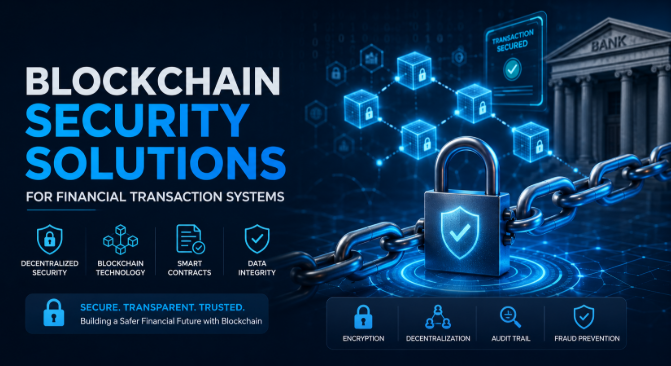
Blockchain technology provides a robust security framework that plays a crucial role in financial transaction systems. Central to its security features are cryptographic hashing, consensus mechanisms, and decentralization, each contributing significantly to protecting users and their transactions.
First and foremost, cryptographic hashing ensures the integrity of data stored on the blockchain. Each transaction is transformed into a unique hash code using a complex mathematical algorithm. This makes it nearly impossible for any unauthorized individual to alter transaction data without being detected, as any change would result in a completely different hash. Consequently, this mechanism preserves the authenticity of transactions, ensuring that they remain unaltered once confirmed.
Consensus mechanisms further enhance security by requiring the agreement of multiple parties before a transaction is validated. In a blockchain network, transactions must be approved by nodes, each of which verifies the information independently. This distributed method of validating transactions prevents any single entity from having control or manipulating the records, significantly reducing the risk of fraud.
Decentralization is another fundamental feature of blockchain that contributes to its security. Unlike traditional systems that operate through a centralized authority, blockchain functions on a peer-to-peer network, thereby diminishing the risk of a single point of failure. If one node in the network were to be compromised, the other nodes continue to hold intact copies of the data, thereby safeguarding against data loss or corruption.
These inherent features of blockchain technology create a secure environment for financial transactions. They not only protect users from fraud but also enhance their trust in the system, making blockchain an increasingly appealing solution for financial transaction systems. Through the seamless integration of these security features, blockchain ensures the integrity, authenticity, and stability of transaction data.
Key Blockchain Security Solutions
In the realm of financial transaction systems, ensuring the security of digital assets is paramount. Several blockchain security solutions can be effectively implemented to bolster the integrity and safety of these systems. Among the most noteworthy are multi-signature wallets, smart contracts, encryption techniques, and decentralized identity management.
Multi-signature wallets enhance security by requiring multiple private keys to authorize a transaction, rather than relying on a single key. This distributed approach mitigates the risk of fraud and unauthorized access. For instance, a three-of-five multi-signature wallet configuration requires at least three out of five designated parties to approve any transaction. This collectively reduces exposure to vulnerabilities, ensuring that no single point of failure can compromise the wallet’s security.
Smart contracts, on the other hand, automate and enforce agreements without intermediaries, thus reducing human error and ensuring predictive outcomes based on predefined conditions. By employing blockchain technology, these contracts provide an immutable record, which makes it extremely difficult for malicious entities to alter the terms post-creation. This capability is particularly useful in financial transactions, where adherence to contractual obligations is crucial.
Moreover, advanced encryption techniques serve as a foundational security layer in blockchain. They protect sensitive data by converting it into ciphertext, making it unreadable to unauthorized users. Techniques such as asymmetric encryption employ a pair of keys – public and private – to encrypt and decrypt data, ensuring that only intended recipients can access the information. This encryption aspect significantly enhances data confidentiality in financial transactions.
Lastly, decentralized identity management addresses the issue of identity verification in digital finance. By allowing users to maintain control over their personal information and share it selectively with authorized parties, this approach reduces the risk of identity theft while enhancing privacy. By integrating these blockchain security solutions into financial transaction systems, organizations can mitigate risks and enhance overall security.
Case Studies of Blockchain in Financial Security
In recent years, various organizations have adopted blockchain technology to improve the security of financial transactions. One notable case is that of Santander, a global banking institution that implemented blockchain to facilitate cross-border payments. Through a pilot project, they utilized a blockchain-based system to streamline international transfers, drastically reducing transaction times from several days to mere seconds. The implementation not only enhanced speed but also increased transparency, as all parties could track the status of transactions in real-time.
Another significant example is the collaboration between JPMorgan Chase and the blockchain startup ConsenSys to develop a blockchain platform aimed at enhancing the efficiency of financial settlements. Their initiative focused on tokenized assets, where digital representations of physical assets were managed on a secure ledger. This project highlighted how blockchain can ensure the integrity of transactions while minimizing the risks associated with fraud. By utilizing smart contracts, JPMorgan Chase was able to automate specific processes, thus reducing the need for manual intervention and decreasing potential human errors.
Moreover, the success of the Estonian government in integrating blockchain technology into its e-Residency program illustrates the effectiveness of blockchain in governance and banking. The program allows non-Estonians to establish a company in Estonia digitally. By employing blockchain for identity verification and data security, Estonia has managed to enhance trust in online transactions significantly. This case demonstrates not only the potential of blockchain to secure financial transactions but also its broader applicability in digital identity management.
However, despite the successes, these initiatives also highlight challenges, such as regulatory uncertainties and the need for widespread collaboration among industry stakeholders. Ensuring compliance with local laws and regulations while implementing blockchain solutions remains a complex issue. Nevertheless, these case studies exemplify the transformative potential of blockchain in enhancing security and efficiency in financial transaction systems.
Regulatory Considerations and Compliance
The integration of blockchain technology into financial transaction systems has prompted a significant evolution of the regulatory landscape. Regulatory bodies across the globe are keenly observing and adapting to the implications of blockchain to ensure that financial services operate within legal frameworks. This adaptation involves a comprehensive understanding of compliance measures that organizations must implement when utilizing blockchain for transactions.
Institutions seeking to adopt blockchain are mandated to comply with a variety of regulations, including Anti-Money Laundering (AML) and Know Your Customer (KYC) requirements. These regulations serve to mitigate risks associated with illicit activities and to promote transparent transaction processes. For instance, the traceability of transactions on a blockchain can significantly enhance an organization’s ability to fulfill KYC obligations by providing immutable records that facilitate identity verification.
Moreover, the decentralized nature of blockchain poses unique challenges for regulatory compliance. Organizations must ensure that their blockchain systems include mechanisms that allow for regulatory reporting, which is essential for maintaining transparency and accountability. This includes data-sharing solutions that can seamlessly interface with regulatory authorities without compromising the integrity or privacy of the underlying transaction data.
Importantly, compliance also extends to cybersecurity frameworks, whereby organizations must integrate robust security protocols to protect blockchain systems from potential breaches and fraud. As regulations continue to evolve, organizations must remain agile in their compliance strategies, ensuring they are equipped to adapt to new laws and guidelines that govern blockchain use in financial transactions.
In this continuously evolving landscape, proactive engagement with regulatory bodies can help organizations navigate complex compliance hurdles and leverage blockchain’s capabilities effectively, ultimately enhancing the security and efficiency of financial transaction systems.
Future Trends in Blockchain Security Solutions
As the landscape of financial transactions evolves, so does the technology that underpins it. One of the most promising future trends in blockchain security solutions is the adoption of quantum-resistant cryptography. Traditional cryptographic systems, which secure current blockchain transactions, may become vulnerable as quantum computing technology advances. This necessitates the development of new cryptographic algorithms capable of withstanding quantum attacks, ensuring that sensitive financial data remains protected against emerging threats.
Additionally, the evolution of regulatory frameworks is anticipated to play a critical role in shaping blockchain security solutions. As governments and financial regulatory bodies recognize the needs of digital currencies, there is an increasing demand for robust regulatory guidelines that dictate how blockchain technology should be utilized within financial systems. These frameworks aim to establish standards for security practices and compliance, which can help foster a secure environment for blockchain transactions.
Moreover, the integration of artificial intelligence (AI) and machine learning (ML) into blockchain security is gaining traction. AI can assist in fraud detection and risk management by analyzing vast amounts of transaction data in real time, identifying unusual patterns that may indicate malicious activities. This proactive approach not only enhances the security of financial transactions but also builds trust among users, which is paramount in digital finance.
Furthermore, decentralized finance (DeFi) platforms are emerging, challenging traditional banking systems by providing innovative ways to handle transactions and investments. With their rise, there will be a push for security solutions tailored specifically to address the unique challenges posed by DeFi, such as smart contract vulnerabilities.
In conclusion, the future of blockchain security solutions for financial transactions is marked by significant advancements in cryptography, regulatory developments, and technological integrations such as AI. These trends are set to create a more secure and resilient digital financial ecosystem, supporting the growth and adoption of blockchain technology.
Challenges and Limitations
Implementing blockchain security solutions within financial transaction systems poses several challenges and limitations that stakeholders must navigate thoughtfully. One primary concern is scalability, which refers to the system’s ability to handle increasing volumes of transactions without compromising speed or efficiency. As transaction volume grows, existing blockchain infrastructures may face bottlenecks, leading to slower processing times and increased costs. This challenge necessitates ongoing research into scalability solutions, such as sharding and layer-two protocols, to enhance performance.
Energy consumption also raises significant concerns. Most blockchain networks, particularly those employing proof-of-work consensus mechanisms, require substantial computational power, which translates to high energy usage. This has sparked debates about the environmental impact of blockchain technologies, especially in light of global movements toward sustainability. Transitioning to more energy-efficient consensus mechanisms, like proof-of-stake, is a vital area of exploration, but it brings its own set of challenges concerning security and decentralization.
User adoption presents another hurdle. Financial institutions and end-users need to be educated about blockchain technology to foster comfort and confidence in its use. The transition from traditional systems to a blockchain-based solution often requires significant changes to existing workflows, which can be met with resistance. Moreover, educating users about managing private keys and understanding wallet security is crucial to prevent loss of funds and ensure overall trust in the system.
Finally, ethical concerns regarding data privacy cannot be overlooked. Although blockchain’s transparency is one of its defining features, it may conflict with regulatory requirements for user data protection. Striking a balance between transparency and privacy is essential, particularly in sectors like finance, where sensitive information requires safeguarding from unauthorized access. Addressing these limitations and challenges is crucial for the successful implementation and scalability of blockchain solutions in financial systems.
Conclusion
As financial transaction systems continue to evolve, the necessity for robust security measures has never been more critical. This blog post has examined various aspects of blockchain security solutions, highlighting their potential to transform the landscape of financial transactions. The decentralized nature of blockchain technology minimizes the risk of fraud, ensures data integrity, and enhances transparency in financial operations, ultimately fostering trust among users.
In the context of financial transaction systems, implementing blockchain security solutions offers significant advantages. The immutable ledger characteristic of blockchain significantly reduces the likelihood of tampering and irregularities, assuring both service providers and customers that their transactions are secure. Furthermore, integrating blockchain can streamline processes, cutting down operational inefficiencies traditionally seen in centralized systems.
Investors, financial institutions, and stakeholders should continuously explore the vast potential that blockchain technology holds for improving not just security, but also the overall trust framework within the financial sector. By adopting blockchain security solutions, organizations can position themselves at the forefront of innovation, ensuring they remain competitive while also prioritizing the protection of sensitive financial data.
Moving forward, it’s crucial for stakeholders in the financial industry to stay informed about advancements in blockchain technology and security. Engaging in this exploration is not merely beneficial; it is essential for safeguarding assets and maintaining user confidence in an increasingly digital economy. Blockchain security solutions are set to play a pivotal role in shaping the future of financial transactions, and an early adoption will undoubtedly yield significant long-term benefits.