


Introduction to Automation
Automation refers to the technological process of operating systems, machinery, or software with minimal human intervention, significantly enhancing the efficiency and effectiveness of operations within various industries. Historically, automation’s roots can be traced back to the Industrial Revolution in the late 18th century, when mechanization began to replace manual labor, allowing for increased production and reduced operational costs.
As industrial practices evolved, so did the mechanisms of automation. Initially focused on simple tasks, such as converting raw materials to products, automation has expanded over the decades to encompass complex processes that involve data analytics, robotics, and artificial intelligence. This evolution marked significant milestones, such as the introduction of programmable logic controllers (PLCs) in the 1960s and the emergence of computer numerical control (CNC) machines in manufacturing. These technological advancements played a crucial role in redefining industrial productivity.
In modern industries, automation has become integral to operations, facilitating not only efficiency but also safety in work environments. For instance, in sectors like manufacturing, healthcare, and logistics, automation optimizes workflow, minimizes human error, and enables companies to meet rising consumer demands at an unprecedented pace. Furthermore, with the advent of Industry 4.0, characterized by the Internet of Things (IoT) and smart manufacturing, the capabilities of automation are set to reach new heights, providing opportunities for innovative solutions across multiple sectors.
Overall, automation represents a transformative force in modern industries, driving productivity gains and fostering the evolution of how businesses operate in an increasingly digital economy.
Types of Automation Technologies
Automation technologies have evolved significantly, and they play a pivotal role in enhancing operational efficiency across various industries. These technologies include robotics, artificial intelligence (AI), Internet of Things (IoT) devices, and machine learning, each contributing uniquely to the automation landscape.
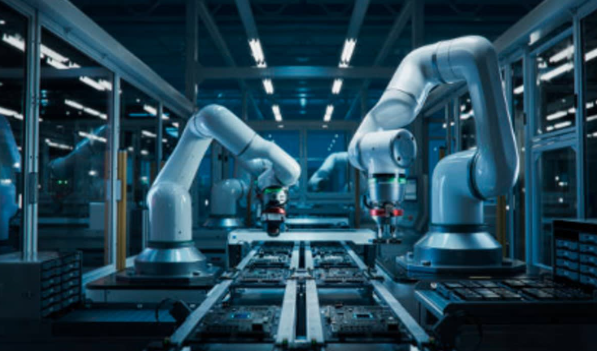
Robotics is perhaps the most visible form of automation technology. Industrial robots are employed in manufacturing for tasks such as assembling, welding, and painting. For instance, companies like Toyota and Tesla utilize robotic arms on their production lines to improve speed and precision, ultimately leading to increased productivity and reduced human error.
Artificial Intelligence enhances automation by enabling machines to learn from data and make decisions without human intervention. AI-driven systems are particularly useful in sectors such as finance, where algorithms analyze market trends and execute trades almost instantaneously. For example, firms like JPMorgan Chase have implemented AI to streamline processes and mitigate risks, thus demonstrating the far-reaching impacts of AI in automating complex tasks.
The Internet of Things (IoT) connects devices and systems, allowing them to communicate and share data. IoT devices are utilized in smart manufacturing environments, where machines relay real-time information regarding their performance and status. This data-driven approach enables companies to optimize operations and predict maintenance needs, as seen in businesses like Siemens, which leverages IoT for maximizing equipment uptime.
Machine learning, a subset of AI, involves training algorithms to recognize patterns and make predictions based on data inputs. Industries such as healthcare employ machine learning to automate diagnosis processes. For instance, researchers use machine learning models to predict patient outcomes by analyzing healthcare data, thereby streamlining workflows and improving patient care.
Overall, the integration of these automation technologies not only facilitates increased efficiency and productivity but also supports innovation across various sectors, making them fundamental to the future of modern industries.
Benefits of Automation in Industries
The integration of automation in various industries presents numerous advantages that significantly enhance operational efficiency and productivity. One of the most notable benefits is cost reduction. By automating repetitive tasks, organizations reduce labor costs and minimize human errors, which can lead to substantial financial savings. For instance, manufacturing plants that have adopted automated assembly lines often report a significant decrease in production costs and an increase in profit margins.
In addition to cost savings, automation accelerates processes allowing industries to operate at a much faster pace. Automated systems can perform tasks consistently without fatigue or breaks, increasing overall output. The automotive industry provides a relevant example; companies like Tesla have leveraged automation to streamline production, resulting in shorter lead times and quicker delivery to customers.
Furthermore, automation contributes to improved accuracy. Automated systems, such as robotics and AI-driven software, eliminate the potential for human error in tasks such as data entry or product assembly. This heightened accuracy not only enhances product quality but also strengthens customer satisfaction. For example, a food processing company that implemented automated quality control systems has seen a notable decrease in defects and recalls, thereby reinforcing brand trust.
Safety is another compelling advantage. Many dangerous tasks, such as heavy lifting or hazardous environment operations, can be assigned to automated systems, thereby reducing workplace injuries. This transformation not only promotes employee well-being but also lowers associated healthcare costs for companies.
Moreover, automation enables enhanced data collection and analysis, which is essential for informed decision-making. By integrating automated data capture systems, industries can gather real-time information about their operations, allowing for adjustments that improve efficiency. This capability is vital for industries such as finance, where real-time analytics can inform strategy and risk management.
Finally, automation provides the flexibility to scale operations effectively. As demand fluctuates, automated systems can be adjusted or expanded with relative ease compared to manual processes. This adaptability has been exemplified in industries like e-commerce, where businesses can adjust their logistics operations rapidly in response to changing consumer behaviors.
Challenges and Concerns of Automation
The adoption of automation in modern industries brings substantial advantages, but it also presents a set of significant challenges and concerns. One of the most pressing issues is job displacement. As machines and software systems increasingly take over tasks once performed by humans, workers may find themselves without jobs or needing to shift to new roles. This shift can lead to increased unemployment rates in certain sectors, creating a divide between those who have the skills to work alongside advanced technologies and those who do not.
In addition to employment concerns, high initial investment costs for automation technologies pose a barrier for many organizations. Businesses must allocate considerable financial resources towards acquiring automation equipment, implementing software solutions, and training employees to effectively utilize these new systems. For smaller enterprises, these costs can be prohibitive, limiting their ability to compete with larger organizations that have the means to invest in such technology.
Another significant concern is technological obsolescence. With the rapid pace of advancements in automation, organizations face the challenge of keeping their systems updated. This can require ongoing investments in new technologies and infrastructure, leading to concerns over long-term sustainability. Businesses must balance the benefits of automation with the risk of their chosen technologies becoming outdated, which can undermine their competitive edge.
Public concerns also play a crucial role in the dialogue surrounding automation. Issues related to privacy, surveillance, and ethical implications of autonomous systems have sparked debates among policymakers, business leaders, and the public. As automation increasingly impacts daily life, stakeholders must address these concerns to foster a more informed understanding of the potential consequences of widespread automation adoption.
Automation and the Workforce
As automation technology advances, its impact on the workforce is becoming increasingly significant. The integration of automated systems across various industries is reshaping traditional job roles, leading to a re-evaluation of workforce capabilities. The transition towards automation often necessitates a shift from manual, repetitive tasks to more complex, value-driven roles that require advanced skills. Consequently, many organizations are facing the urgency of redefining their labor needs.
The demand for new skills is emerging as a critical factor in this evolving landscape. Employees are expected not only to adapt to new tools and technologies but also to develop their analytical and problem-solving abilities as machines take over routine activities. Areas such as data analysis, software management, and engineering are seeing a surge in demand, reflecting a need for a workforce that can engage with automated systems effectively. The emphasis on critical thinking and creativity has never been more paramount, as these human qualities cannot be replicated by machines.
To facilitate this transition, retraining programs are becoming increasingly vital for employees at all levels. Companies are recognizing the importance of investing in their workforce’s future by offering upskilling opportunities and educational programs. Such initiatives are essential not only for individual employees but also for organizations aiming to remain competitive in an automation-driven market. Employers have a responsibility to assist their workforce in navigating these changes, ensuring that they are well-prepared for the demands of an automated world.
In summary, while automation presents challenges concerning job displacement, it also opens avenues for new opportunities within the workforce. It is crucial that stakeholders embrace this transformation by focusing on skill development and retraining strategies that align with the changing job landscape, thus enhancing employee adaptability and resilience in the face of continual technological advancement.
Future Trends in Automation
The future of automation in various industries is set to usher in significant transformations, particularly through increased collaboration between humans and machines. As the complexity of tasks grows, solutions that integrate human intuition and machine efficiency will become vital. Environments where machines can learn from human interactions and vice versa will foster a culture of synergy that enhances productivity. This collaborative approach is anticipated to optimize workflows, enabling both machines and humans to work toward common goals effectively.
Advancements in machine learning are also expected to play a critical role in shaping the future of automation. As algorithms continue to evolve and become more sophisticated, the capability of machines to process vast datasets and derive insights will revolutionize decision-making processes. Industries will increasingly leverage predictive analytics and intelligent automation to forecast trends, enabling companies to adapt swiftly to market demands. This enhancement in analytics is likely to lead to improved efficiencies, reduced costs, and more innovative solutions across sectors ranging from manufacturing to healthcare.
The development of autonomous systems represents another pivotal trend in the landscape of automation. As technology advances, vehicles, drones, and robotic systems will be designed to operate independently, performing tasks with minimal human intervention. The implications of this trend are profound, potentially transforming industries such as logistics, where autonomous delivery drones may streamline supply chains and reduce human resource dependency. Moreover, autonomous systems will provide enhanced operational safety in environments that pose risks to human workers, thereby reducing accidents and increasing overall safety standards.
Case Studies of Successful Automation Implementation
The integration of automation in various industries has yielded impressive results, exemplified by several case studies that showcase distinct methodologies, challenges encountered, and the successes achieved through automation. One notable instance is in the automotive sector, where Toyota has implemented its “Toyota Production System”. This approach emphasizes Just-In-Time manufacturing and automation to streamline production processes. By integrating robots for repetitive tasks and utilizing data analytics for operational efficiency, Toyota has significantly reduced production time while enhancing product quality. The challenge, however, lay in training employees to adapt to these automation technologies without compromising their roles.
Another compelling case can be found in the logistics industry, particularly with the company Amazon. The e-commerce giant has evolved its supply chain through the implementation of automated sorting and packaging systems. These advanced technologies not only expedite the fulfillment process but also improve accuracy in order picking. Despite grappling with initial resistance from workers, Amazon’s strategic investments in robotics and artificial intelligence have resulted in remarkable productivity gains, allowing them to meet the high demand of consumers effectively.
Furthermore, in the healthcare sector, the Mayo Clinic has successfully integrated automation within its administrative and diagnostic processes. They adopted robotic process automation (RPA) to manage patient scheduling and billing inquiries, which streamlined workflow and reduced human errors. The primary challenge here was ensuring that automation did not compromise the quality of patient care. By leveraging technology for administrative tasks, the Mayo Clinic has enhanced the efficiency of healthcare delivery while allowing medical professionals to focus on patient interaction.
These case studies illustrate how diverse industries have embraced automation to overcome operational challenges. Each example highlights not only the effective strategies employed but also the necessity for organizations to foster a culture of adaptation among employees to ensure a successful transition to automated processes.
The Role of Government and Policy in Automation
The landscape of automation in modern industries is significantly influenced by government policies and regulations, which play a crucial role in shaping how technology is implemented across various sectors. As automation technologies like artificial intelligence (AI), robotics, and machine learning become increasingly prevalent, governments around the world are crafting policies aimed at fostering innovation while ensuring public welfare.
One of the primary governmental responsibilities is to create an environment that encourages technological advancement. This includes providing funding for research and development, supporting educational initiatives aimed at equipping the workforce with necessary skills, and incentivizing companies that innovate in the automation space. By promoting a progressive regulatory framework, governments can stimulate investment in automation technologies, thereby enhancing productivity and economic growth.
However, alongside promoting innovation, it is equally important for governments to establish guidelines that address the potential negative impacts of automation on society. As industries automate routine tasks, there is a growing concern regarding job displacement. Policymakers must consider strategies to support affected workers, such as retraining programs and social safety nets, to mitigate the adverse effects automation can have on employment.
Moreover, regulations concerning data privacy, security, and ethical concerns surrounding AI deployment must be part of the policy discourse. For instance, governments need to develop frameworks that ensure transparency in the use of algorithms while protecting citizens’ rights. Striking a balance between innovation and the ethical implications of automation is imperative as industries navigate this transformative period.
In conclusion, government policies are integral to directing the evolution of automation in modern industries, supporting technological innovation while safeguarding societal interests. By proactively addressing both opportunities and challenges posed by automation, policymakers can help create a sustainable future that benefits all stakeholders involved.
Conclusion: Embracing the Future of Automation
The rapid advancement of automation technologies has significantly transformed modern industries, reshaping not just the way we produce goods and deliver services but also how we engage with various stakeholders. As discussed, the integration of automation offers numerous benefits, including increased operational efficiency, reduced costs, and enhanced product quality. Moreover, automation facilitates a range of tasks that were once labor-intensive, thereby allowing human workers to focus on more complex and strategic responsibilities.
However, the growing reliance on automation also presents notable challenges. Issues such as workforce displacement and the need for reskilling are crucial considerations as industries evolve. Companies are tasked with not only investing in automation technologies but also developing comprehensive strategies to support their employees through transitions. This dual focus will be critical in balancing technological advancement with social responsibility.
Furthermore, it is essential to recognize the opportunities presented by automation beyond immediate economic gains. Enhanced data analytics and Artificial Intelligence (AI) capabilities can provide deep insights into operational processes, promoting smarter business decisions. As industries continue to adapt to these technological developments, there lies significant potential for innovation and growth.
In the face of these evolving dynamics, it is imperative for industry stakeholders—be they business leaders, policymakers, or workers—to embrace automation with a proactive mindset. Collaborating on best practices and addressing potential pitfalls will not only ensure a smoother transition into automated workflows but will also cultivate an environment where both technology and human expertise can thrive together. Thus, embracing the future of automation is more than a business imperative; it is a necessary evolution that can drive sustainable growth across multiple sectors.