
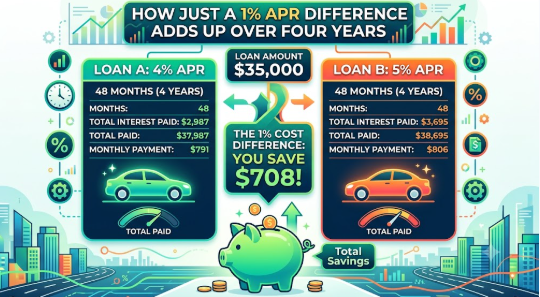


When you’re quoted a rate on a car loan, one percentage point sounds like nothing. The gap between 9% and 10% barely registers when you’re staring at the car you want. But that small number decides how much of your money ends up with the lender instead of in your pocket. Here’s exactly what a single point costs once you spread it across a four-year agreement.
What One Percentage Point Really Costs
Take a £15,000 agreement over 48 months, a fairly typical used car deal. At 9% APR, your monthly payment works out at around £373, and you’ll pay roughly £2,900 in interest over the term. Nudge that up to 10% APR and the payment rises to about £380 a month.
That’s only about £7 more each month, which is easy to wave away. Over the full four years though, it adds up to roughly £340 in extra interest. You’re paying £340 for the difference between two numbers that looked almost identical on the quote.
The reason it stacks up is simple. Interest is charged on what you still owe every single month, so a higher rate keeps taking a slightly bigger bite for all 48 payments. Small and steady turns into a real sum by the end.
See the Difference Before You Commit
The best way to understand your own deal is to test a few rates side by side instead of trusting one quote. Enter the amount you want to borrow, set the term, then change only the APR and watch what happens to both the monthly figure and the total interest.
You can do this in seconds with a car finance calculator online. Plug in 8%, 9% and 10% on the same loan and you’ll see just how much of a difference this single-point difference makes. Seeing the total repayable change in front of you makes the cost of each point far harder to ignore.
Bigger Loans and Longer Terms Widen the Gap
The £300 figure is tied to a £15,000 loan. Borrow more and the same one-point difference costs you more, because that extra rate is working on a larger balance. On a £25,000 agreement over the same four years, a single point adds closer to £575.
Stretch the term as well and it grows again. A longer agreement means more months for the higher rate to do its work, so the total interest climbs even when the monthly payment looks comfortable. This is why chasing a low monthly figure by extending the term can quietly cost you more overall.
Half of Buyers Pay More Than the Advertised Rate
Here’s the part most people miss. The headline “representative APR” in an advert only has to reflect the rate given to at least 51% of successful applicants, according to the Financial Conduct Authority. That means up to 49% of buyers can be offered a higher rate than the one that drew them in.
So treat the advertised figure as a starting point. It might not be the rate you actually get. If your credit profile isn’t in the top half, you could easily be quoted a point or two above the advertised figure, and now you know what those points are worth.
The lesson is to treat any rate you’re offered as your real rate and run the maths on that, rather than the one in the advert.
The Point Worth Remembering
A single percentage point feels like a rounding error, but it’s worth a few hundred pounds on a normal car loan and more on a bigger one. Before you sign anything, work out the total you’ll repay at the rate you’ve actually been offered, not the one that got your attention.
Check the figure, compare a couple of scenarios and you’ll know precisely what you’re agreeing to. That five minutes can save you the price of a decent set of tyres, or more.