
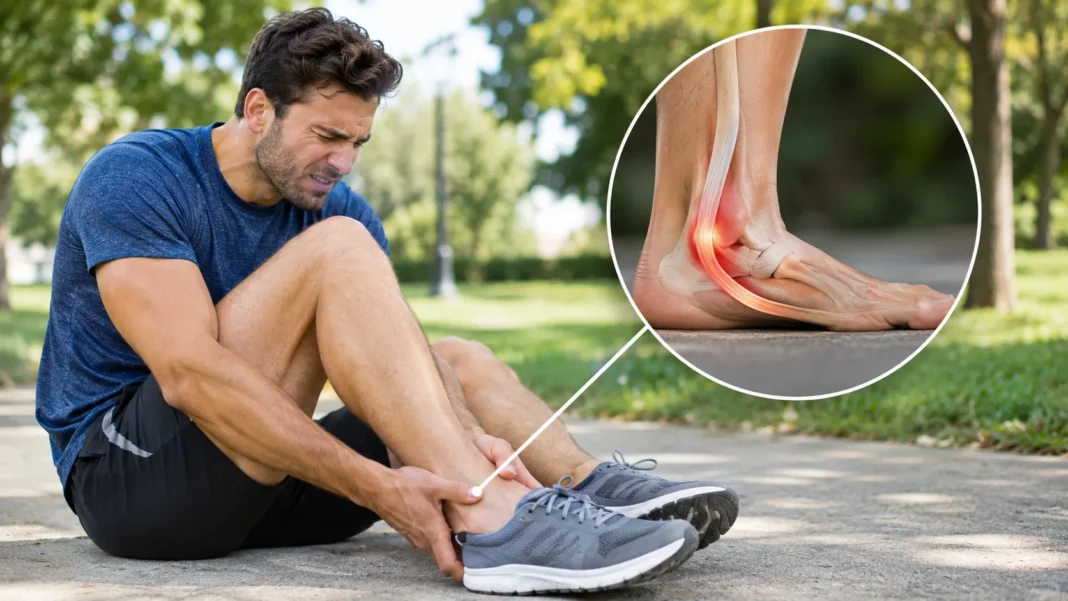


Post tib tendonitis is a condition that affects the posterior tibial tendon, an important structure that supports the arch of your foot. It can cause pain, swelling, and discomfort along the inside of your ankle and foot. Symptoms may become more noticeable during walking, running, or standing for extended periods. Without appropriate care, ongoing tendon problems can affect foot function and mobility.
The posterior tibial tendon helps maintain foot stability and supports normal movement during everyday activities. When this tendon becomes irritated, overloaded, or damaged, simple actions such as walking upstairs may become uncomfortable. Although commonly called tendonitis, persistent problems may involve tendon degeneration rather than inflammation alone.
Understanding post tib tendonitis can help you recognize symptoms and seek appropriate treatment before the condition progresses. This guide explains its causes, warning signs, diagnosis, treatment options, and recovery expectations. It also covers practical ways to manage symptoms and when professional medical attention is necessary.
What Is Post Tib Tendonitis?
Post tib tendonitis refers to irritation or injury affecting the posterior tibial tendon. This tendon runs along the inside of the ankle and connects the posterior tibialis muscle in the lower leg to bones in the foot. It plays an important role in supporting the foot’s arch. Problems with this tendon can affect both comfort and stability.
The condition is often associated with repetitive loading, increased physical activity, or changes in foot mechanics. Symptoms can develop gradually as the tendon experiences more stress than it can comfortably tolerate. Some people notice mild discomfort at first, while others experience swelling or difficulty walking. The severity depends on the extent of tendon involvement.
Healthcare professionals may use terms such as posterior tibial tendinopathy or posterior tibial tendon dysfunction. These descriptions can reflect different aspects or stages of the condition. Not every painful tendon is primarily inflamed, and some cases involve structural changes. An accurate diagnosis helps determine the most appropriate treatment approach.
Understanding the Posterior Tibial Tendon
The posterior tibial tendon begins at a muscle located deep within the lower leg. It travels behind the inner ankle bone, called the medial malleolus, before attaching to several structures in the foot. This arrangement allows it to influence foot movement and arch support. Its function becomes particularly important during walking and other weight-bearing activities.
One of the tendon’s primary responsibilities is helping support the medial longitudinal arch. This arch helps distribute forces across the foot during movement. The tendon also contributes to turning the sole inward and controlling foot position. When it becomes painful or weakened, these functions may become more difficult.
The posterior tibial tendon works alongside bones, ligaments, and other muscles to maintain foot stability. It does not support the arch independently. Weakness, injury, or changes in surrounding structures can alter how the tendon handles physical demands. Understanding this relationship explains why treatment often involves more than addressing the painful area alone.
Common Symptoms of Post Tib Tendonitis
Pain along the inside of the ankle is one of the most common symptoms of post tib tendonitis. Discomfort may extend toward the arch or inner side of the foot. The affected area can become tender when touched. Symptoms often increase during activities that place greater demands on the tendon.
Swelling may develop behind or below the inner ankle bone. Some people also notice stiffness, especially after activity or periods of rest. Walking for extended periods can become uncomfortable, and certain movements may produce weakness. Symptoms may initially improve with reduced activity before returning when physical demands increase.
In more advanced cases, changes in foot shape can become noticeable. The arch may gradually lower, and the heel may begin turning outward. Some people develop difficulty rising onto the toes of the affected foot. These changes can indicate progressive tendon dysfunction and deserve professional evaluation rather than continued self-treatment.
What Causes Post Tib Tendonitis?
Repetitive stress is a common contributor to posterior tibial tendon problems. Activities involving frequent walking, running, jumping, or prolonged standing can increase the load placed on the tendon. When physical demands rise faster than the tendon can adapt, irritation or injury may develop. This is particularly relevant after sudden changes in activity.
Foot mechanics can also influence tendon loading. Certain movement patterns, joint restrictions, or changes in arch support may place additional demands on the posterior tibial tendon. However, foot shape alone does not determine whether someone will develop tendonitis. Many people with naturally low arches never experience posterior tibial tendon problems.
Other contributing factors can include previous ankle injuries, reduced muscle strength, and certain medical conditions. Tendon health and recovery capacity may also change with age. Occasionally, symptoms begin after a specific injury rather than gradually developing. Identifying the likely cause helps healthcare professionals develop an appropriate treatment plan.
Who Is More Likely to Develop Posterior Tibial Tendonitis?
People who participate in activities involving repeated foot loading may experience posterior tibial tendon irritation. Runners, recreational athletes, and individuals who stand for long periods can develop symptoms. Sudden increases in activity may be particularly challenging when the tendon has not adapted. However, the condition can also occur in people who are not highly active.
Posterior tibial tendon dysfunction is more commonly recognized in middle-aged and older adults, although younger people can also be affected. Conditions such as diabetes, inflammatory arthritis, or previous tendon injuries may influence tendon health. These factors do not guarantee that someone will develop the condition. They simply contribute to an individual’s overall risk.
A history of foot or ankle problems may also be relevant. Previous sprains, persistent weakness, and changes in walking mechanics can affect how force travels through the foot. Healthcare professionals consider these factors during evaluation. Risk assessment is most useful when combined with a physical examination and symptom history.
How Post Tib Tendonitis Affects Walking
The posterior tibial tendon helps control foot movement when body weight transfers from one leg to the other. During walking, it contributes to arch support and stability. When the tendon becomes painful, this process may feel uncomfortable. People may shorten their walking distance or change their movements to avoid symptoms.
Pain can become more noticeable when walking uphill, climbing stairs, or moving across uneven surfaces. These activities may increase demands on the muscles supporting the foot and ankle. Some individuals also experience difficulty pushing off through the affected foot. The exact limitations depend on tendon function and symptom severity.
Compensating for discomfort can sometimes create additional movement problems. A person may shift weight toward the opposite leg or alter foot placement. These changes do not always cause harm, but persistent limping deserves attention. Appropriate assessment can help address pain while restoring more comfortable movement.
Post Tib Tendonitis vs. Posterior Tibial Tendon Dysfunction
Post tib tendonitis and posterior tibial tendon dysfunction are related terms, but they do not always describe the same condition. Tendonitis generally refers to inflammation or irritation involving a tendon. Tendinopathy is a broader term that includes persistent tendon pain and structural changes. Tendon dysfunction describes reduced ability to perform normal supporting functions.
In earlier presentations, discomfort may occur without major changes in foot structure. The tendon can remain functional even when activity causes pain or swelling. With progressive dysfunction, the tendon and surrounding support structures may become less effective. This can contribute to changes in arch shape and foot alignment.
Modern healthcare terminology may also include progressive collapsing foot deformity, particularly when discussing more advanced structural changes. This condition involves several structures rather than the tendon alone. Not every person with posterior tibial tendon pain develops progressive deformity. Early evaluation is valuable when weakness or visible changes in foot shape occur.
How Is Post Tib Tendonitis Diagnosed?
Diagnosis usually begins with a discussion of symptoms and medical history. A healthcare professional may ask where the pain occurs, when it started, and which activities make it worse. Previous injuries, changes in exercise, and existing medical conditions are also relevant. These details help distinguish tendon problems from other causes of ankle pain.
A physical examination may involve checking tenderness, swelling, foot alignment, and ankle movement. The clinician may observe how you stand and walk. They might also assess your ability to rise onto your toes, particularly on one leg. Difficulty performing this movement can provide useful information about tendon function, although it does not confirm the diagnosis alone.
Imaging is not necessary in every case. X-rays may help assess bone alignment or other structural problems, especially when foot deformity is suspected. Ultrasound or magnetic resonance imaging may be considered when a tendon tear or another diagnosis is possible. The decision depends on clinical findings and whether imaging would change treatment.
Treatment Options for Post Tib Tendonitis
Treatment commonly begins with reducing activities that significantly aggravate symptoms. This does not always require complete rest or avoiding all movement. Instead, the goal is to lower excessive tendon loading while maintaining comfortable daily activity. A healthcare professional can help identify appropriate temporary adjustments based on symptom severity.
Supportive footwear and orthotic devices may be recommended to reduce stress on the affected structures. Depending on the condition, treatment might involve arch support, ankle bracing, or short-term immobilization. These approaches are selected according to pain, tendon function, and foot alignment. More severe cases may require greater protection during early recovery.
Physical therapy often plays an important role in treatment. A rehabilitation program may include progressive strengthening, movement exercises, and gradual return to normal activity. Treatment should be adjusted according to symptom response. Surgery is generally considered when significant dysfunction persists despite appropriate nonsurgical care or when advanced structural problems are present.
Can Ice Help Posterior Tibial Tendon Pain?
Ice may temporarily reduce discomfort associated with posterior tibial tendon irritation. Applying a cold pack can provide short-term symptom relief after activities that aggravate the ankle. However, icing does not repair a damaged tendon or address underlying loading problems. It should be considered a comfort measure rather than a complete treatment.
If using a cold pack, wrap it in a thin towel rather than placing it directly against the skin. A brief application of around 10 to 15 minutes may be sufficient for comfort. Stop if the area becomes painfully cold, numb, or irritated. People with reduced sensation or circulation problems should seek medical guidance before using cold therapy.
Ice is not required for every person with tendon pain. Some individuals prefer other comfort measures, including appropriate footwear and temporary activity adjustments. The most important part of recovery is addressing factors that continue to overload the tendon. Persistent symptoms should be evaluated rather than repeatedly managed with cold packs alone.
Exercises for Posterior Tibial Tendon Recovery
Rehabilitation exercises may help restore strength and improve how the tendon tolerates physical demands. A physical therapist may recommend controlled ankle movements, calf exercises, or activities targeting the muscles that support the foot. The specific program depends on tendon function and symptom severity. Exercises appropriate for mild irritation may not suit an advanced tendon injury.
Progressive strengthening is often important because tendons respond to appropriately managed mechanical loading. However, increasing resistance too quickly can aggravate symptoms. A rehabilitation program generally begins with movements that can be performed comfortably and progresses according to tolerance. Pain levels and function help guide these decisions.
Balance and movement-control exercises may also support recovery. These activities can help improve coordination between the foot, ankle, and lower leg. Some people benefit from working on calf strength and overall lower-limb control. A personalized program is preferable to copying demanding exercises that may not match the condition.
Best Footwear for Post Tib Tendonitis
Footwear may influence how forces travel through the foot during walking and standing. Shoes that feel stable and provide appropriate support can sometimes reduce symptoms. The ideal design depends on individual foot structure, activity, and comfort. No single shoe type is proven to work best for every person with posterior tibial tendon pain.
Some individuals benefit from footwear with a supportive heel counter and a stable sole. Others may require additional support through professionally recommended insoles or orthotic devices. These features can help modify how the foot is supported during activity. However, expensive footwear does not automatically provide better results.
Shoes should fit comfortably without creating pressure points or restricting normal circulation. Footwear that is excessively worn or uncomfortable may worsen walking difficulties. A podiatrist or physical therapist can help assess whether additional support is appropriate. Footwear works best as part of a broader treatment plan rather than the only intervention.
How Long Does Post Tib Tendonitis Take to Heal?
Recovery time varies depending on the severity and duration of the tendon problem. Mild irritation may improve over several weeks when activity is adjusted appropriately. Persistent tendinopathy can require several months of rehabilitation. Significant tendon damage or structural changes may involve a longer and more complicated recovery.
Several factors influence healing, including tendon condition, daily activity demands, treatment consistency, and other medical issues. A person with recent mild symptoms may recover differently from someone experiencing longstanding weakness or arch changes. Returning to demanding activities too quickly can sometimes cause symptoms to flare again. Gradual progression is therefore important.
Improvement is usually assessed through pain, walking comfort, strength, and functional ability. The absence of pain during one activity does not necessarily mean the tendon has fully recovered. Rehabilitation should build tolerance for normal daily demands before more strenuous activities are resumed. Persistent symptoms deserve reassessment if progress stalls.
Can Post Tib Tendonitis Heal Without Surgery?
Many cases of posterior tibial tendon pain improve with nonsurgical treatment. Activity modification, supportive devices, and appropriately supervised rehabilitation can reduce symptoms and improve function. Early-stage problems often respond better to conservative care than advanced structural dysfunction. However, individual results depend on the underlying condition.
Nonsurgical treatment does not always restore a tendon to its previous structural appearance. The main goals may involve reducing pain, improving function, and preventing further deterioration. Some people continue using prescribed support devices during certain activities. Others gradually return to normal footwear and physical activity as symptoms improve.
Surgery may be considered when pain, weakness, or deformity remains significant despite an adequate course of nonsurgical treatment. The procedure depends on the structures involved and the stage of dysfunction. It may include tendon repair or procedures addressing foot alignment. A foot and ankle specialist can explain the potential benefits and risks.
What Happens if Post Tib Tendonitis Is Left Untreated?
Some mild tendon problems improve when irritating activities are reduced, but persistent symptoms should not be ignored. Continued excessive loading may contribute to ongoing pain and reduced tendon function. In certain cases, the condition can progress beyond simple irritation. Early professional assessment is particularly useful when symptoms repeatedly return.
Progressive posterior tibial tendon dysfunction may contribute to lowering of the foot arch. The heel can begin shifting outward, and the foot may become less stable during walking. These changes can eventually affect surrounding joints and ligaments. Not everyone develops these complications, but visible progression requires medical evaluation.
Advanced dysfunction may make walking and standing increasingly difficult. Some people develop pain along the outside of the ankle as foot alignment changes. Treatment can become more complex when significant structural changes occur. Addressing persistent symptoms early may help improve function and reduce the risk of further problems.
When Should You See a Doctor for Post Tib Tendonitis?
Arrange a medical assessment if pain along the inside of your ankle persists, repeatedly returns, or interferes with normal walking. Swelling that does not improve or tenderness that becomes progressively worse also deserves attention. A clinician can determine whether the posterior tibial tendon is involved. Other conditions may produce similar symptoms.
Seek prompt assessment if your foot arch appears to be changing, your ankle feels increasingly unstable, or you develop difficulty rising onto your toes. These symptoms may indicate reduced tendon function. A sudden painful event followed by weakness should also be evaluated. Waiting for symptoms to become severe may delay appropriate treatment.
Urgent medical care is important when you cannot bear weight after an injury, have obvious deformity, or experience severe swelling and pain. A hot, red foot with fever may indicate infection, while sudden numbness or circulation changes also require urgent evaluation. Such symptoms should not be assumed to be ordinary tendonitis.
How to Prevent Posterior Tibial Tendon Problems
Managing physical activity gradually can help reduce unnecessary stress on the posterior tibial tendon. Sudden increases in walking, running, or other repetitive activities may exceed what the tendon is prepared to tolerate. Building activity levels progressively gives muscles and tendons time to adapt. Adequate recovery between demanding sessions is also important.
Maintaining lower-leg strength and comfortable ankle mobility may support overall foot function. Exercises targeting the calf, foot muscles, and balance can be useful as part of general physical activity. However, there is no single exercise routine that guarantees prevention. Individual anatomy and health conditions also influence tendon problems.
Pay attention to recurring discomfort rather than repeatedly pushing through it. Early adjustment of irritating activities may prevent temporary symptoms from becoming more persistent. Comfortable footwear and appropriate rehabilitation after injuries can also support foot health. Seek professional advice if symptoms continue despite sensible activity changes.
Living With Post Tib Tendonitis
Managing posterior tibial tendon pain often involves balancing activity with recovery. Complete avoidance of movement may not be necessary, but repeatedly performing painful activities can delay progress. A healthcare professional can help identify suitable levels of activity. This allows people to remain active while reducing unnecessary tendon stress.
Some individuals need temporary changes to work, exercise, or daily routines. Shorter walking periods, supportive footwear, and planned rest breaks may improve comfort. As symptoms decrease and strength improves, activities can often be increased gradually. Progress should reflect functional improvement rather than pressure to return quickly.
Long-term management may involve strengthening, monitoring symptoms, and maintaining appropriate foot support. People with advanced dysfunction sometimes require ongoing orthotic devices or specialist care. The treatment plan depends on individual needs and the response to rehabilitation. Regular follow-up can help identify changes before they become more difficult to manage.
Conclusion
Post tib tendonitis affects a tendon that plays an important role in supporting the foot’s arch and maintaining ankle stability. Common symptoms include pain along the inner ankle, swelling, and discomfort during walking. The condition may develop from repetitive stress, injury, or changes in tendon function. Recognizing symptoms early can help guide appropriate care.
Treatment often involves modifying painful activities, using suitable foot support, and participating in progressive rehabilitation. Many people improve without surgery, although recovery may take weeks or months depending on severity. Persistent weakness or changes in foot shape require professional evaluation. An individualized approach is important because not all tendon problems are the same.
Understanding when to seek medical help is an essential part of managing posterior tibial tendon pain. Symptoms that worsen, affect walking, or involve visible arch changes should not be ignored. With an accurate diagnosis and suitable treatment, many individuals can improve comfort and daily function while reducing unnecessary stress on the affected tendon.
Frequently Asked Questions
What is post tib tendonitis?
Post tib tendonitis is irritation or injury involving the posterior tibial tendon, which supports the foot’s arch. It commonly causes pain and swelling along the inside of the ankle. Persistent cases may involve tendon degeneration or reduced function.
Can you walk with posterior tibial tendonitis?
Many people can walk with mild posterior tibial tendonitis, although longer distances may aggravate symptoms. Activity should be adjusted according to pain and medical advice. Significant limping, weakness, or worsening discomfort requires professional assessment.
How long does posterior tibial tendonitis take to heal?
Mild symptoms may improve over several weeks, while persistent tendon problems can require months of rehabilitation. Recovery depends on injury severity, activity demands, and treatment. Advanced tendon dysfunction may require specialist management.
Is post tib tendonitis the same as plantar fasciitis?
No. Post tib tendonitis affects the tendon supporting the foot arch, often causing pain near the inner ankle. Plantar fasciitis primarily affects the plantar fascia beneath the foot, usually causing heel pain.
When should you get medical help for posterior tibial tendon pain?
Seek medical evaluation if symptoms persist, walking becomes difficult, or the foot arch begins changing. Sudden weakness, severe pain after injury, or inability to bear weight requires prompt medical attention.