
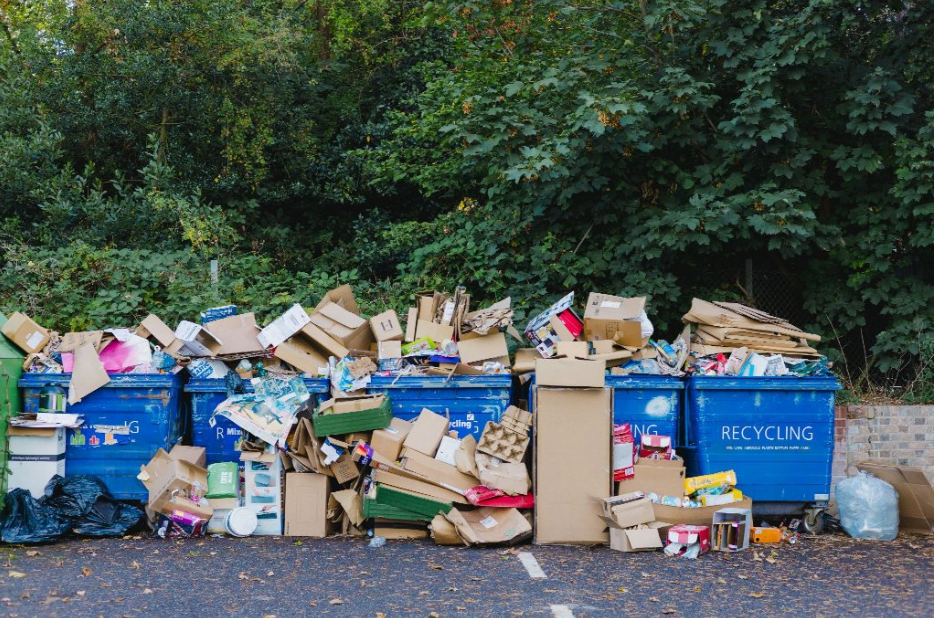


The moment a skip bin is collected from a driveway or building site, it tends to disappear from the hirer’s thinking entirely. The waste is gone, the project can move forward, and what happens to the contents of that bin between collection and final disposal is a question that most people don’t ask and wouldn’t know how to answer if they did.
The assumption, where people have one at all, is that skip bin waste goes to landfill. It’s a reasonable default given that landfill has historically been the primary destination for mixed waste, and it’s an assumption that leads people to treat the environmental dimension of skip bin hire as essentially fixed regardless of which provider they choose. Neither of these assumptions is accurate for skip bin waste processed at a modern licensed recycling facility, and understanding what actually happens changes both how the hire decision is made and how its environmental impact is assessed.
The Landfill Assumption and Why It’s Increasingly Inaccurate
The idea that skip bin waste goes straight to landfill made reasonable sense when waste processing infrastructure was less developed and the economics of materials recovery were less favourable than they are today. Mixed waste arriving at a facility with limited sorting capability and limited markets for recovered materials did largely end up in landfill, because the alternative was more expensive than the cost of disposal.
That picture has changed significantly as waste processing technology has improved, as landfill costs and regulatory requirements have increased, and as markets for recovered materials have developed to the point where the economics of sorting and recovery make sense for a much broader range of materials than they once did. A licensed recycling facility operating to current standards is not a landfill with a different name. It’s a processing operation that actively separates waste into material streams, directs each stream to the most appropriate end use, and sends only the genuinely non-recoverable fraction to landfill.
The proportion of a typical skip bin load that reaches landfill after processing at a well-run recycling facility is considerably smaller than the total waste volume, and for loads that are largely composed of construction materials like concrete, bricks, metal, and timber, the recoverable fraction can represent the majority of the total weight. Understanding this changes what it means to hire a skip bin from a provider with genuine recycling capability versus one whose processing is less rigorous.
How Waste Is Sorted and What Gets Recovered
The sorting process at a modern waste recycling facility involves the separation of incoming mixed waste into distinct material streams, each of which has a defined end-use pathway that keeps it out of landfill and redirects it to productive use.
Concrete and masonry are among the highest-volume materials in construction and renovation waste and among the most straightforwardly recoverable. Crushed concrete and brick rubble is processed into recycled aggregate that is used as road base, construction fill, and drainage material. The market for recycled aggregate is established and substantial, which means the recovery rate for concrete and masonry from a well-run facility is high relative to other material types.
Metal is recovered across a wide range of forms, from structural steel and reinforcing bar through to the smaller metal components that appear in renovation waste. Metal recovery is one of the most economically straightforward recycling pathways because the market for recovered metal is global and the processing requirements are well-established. A skip bin load with significant metal content will see that metal separated and directed to metal recycling regardless of what else is in the load.
Timber is chipped and directed to mulch production, biomass energy, or particleboard manufacturing depending on the quality and contamination level of the recovered material. Green waste from garden and landscaping projects is composted and directed to agricultural and horticultural use. Both of these materials are recoverable from mixed loads at a facility with appropriate sorting capability.
For construction projects and homeowners in Sydney who want to ensure their waste is processed responsibly, a waste recycling facility in Sydney like Cobra Waste’s EPA-licensed operation in Yennora sorts every incoming skip bin load with the specific goal of diverting as much material as possible from landfill, with concrete, metal, timber, and green waste all directed to established recovery pathways rather than combined into a single disposal stream.
The fraction of a typical skip bin load that actually reaches landfill after this sorting process is the genuinely non-recoverable residual: contaminated materials that can’t be cleaned to a recyclable standard, mixed composites that can’t be economically separated into recoverable components, and materials for which no viable recovery pathway currently exists. This fraction is smaller than the total waste volume for most residential and construction loads, and it’s considerably smaller for loads that are dominated by the high-recovery materials described above.
Why the Provider’s Processing Capability Matters
The environmental outcome of a skip bin hire is not fixed by the nature of the waste. It’s significantly shaped by what the provider does with the waste after collection, which means two providers collecting the same load from the same site can produce very different environmental outcomes depending on their processing capability and commitment.
A provider that transports collected waste directly to a licensed recycling facility with genuine sorting capability is producing a different outcome from one that transports the same waste to a transfer station where it’s compacted and redirected to landfill with minimal sorting. Both providers collect the same skip bin and remove the waste from the site. The difference in what happens next is entirely a function of the provider’s processing infrastructure and approach.
The certification that distinguishes providers with genuine recycling commitment from those without it is worth checking before booking. EPA licensing confirms that the provider is operating within the regulatory framework for waste management. Green Star certification reflects an independent assessment of environmental performance that goes beyond the baseline compliance requirements. Neither certification is universally held by skip bin providers, and both are worth looking for when the environmental outcome of the hire matters to the person making the decision.
The direct tipping option that some licensed recycling facilities offer for builders and contractors who transport their own waste is the most direct form of access to the recycling infrastructure, allowing waste to be deposited at the facility for sorting and processing without the intermediary of a skip bin hire. For project managers with access to tipper trucks or skip trucks, this option combines the environmental benefits of facility-level sorting with the operational flexibility of direct delivery.
Why This Is Worth Understanding Before You Book
The practical implication of understanding what happens to skip bin waste after collection is that the choice of provider becomes more consequential than it appears when the assumption is that all waste goes to landfill regardless of who collects it.
A provider whose waste goes to a facility that sorts and recovers the recoverable fraction is producing a meaningfully better environmental outcome than one whose waste goes to a less rigorous destination, and for hirers who care about the environmental dimension of their project, that difference is worth factoring into the provider selection rather than treating all skip bin hire as environmentally equivalent.
The cost difference between providers with genuine recycling capability and those without it is not always significant, and in some cases the providers with stronger environmental credentials are competitively priced relative to those without them. The recycling economics that have made materials recovery more viable have also reduced the cost premium that was once associated with responsible waste processing, which means choosing the provider with better environmental outcomes is increasingly a decision that doesn’t require paying more for it.
The renovation or cleanout that generates a skip bin of mixed construction waste is a project with an environmental footprint that is partly determined by design decisions, partly by material choices, and partly by what happens to the waste at the end. The last of these is the dimension most people give the least thought to and the one that is most easily improved simply by choosing a provider whose processing capability makes recovery the default rather than landfill.