
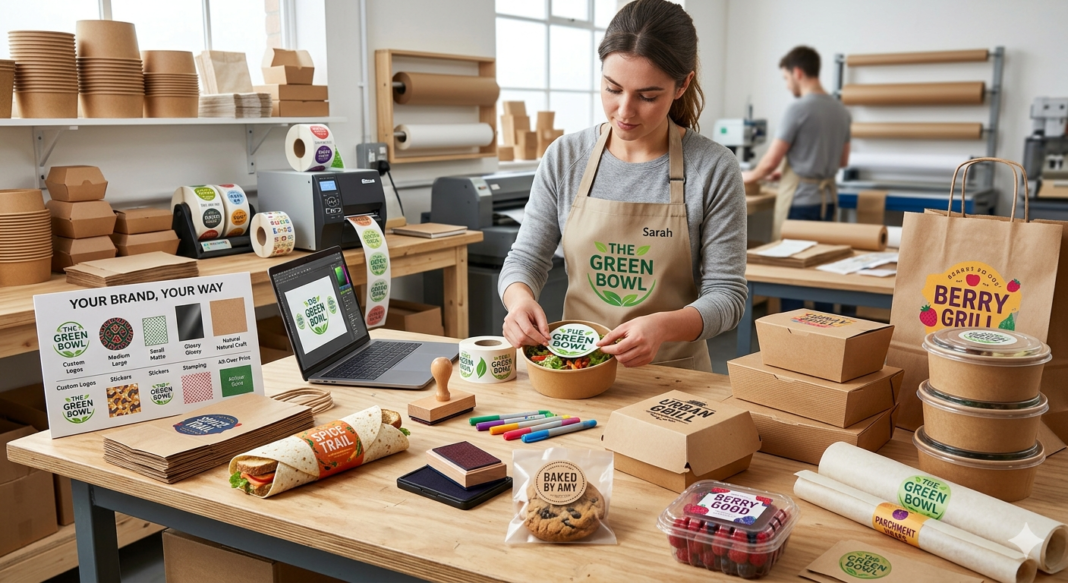


The role of paper food packaging has evolved far beyond its basic protective function. Today, manufacturers offer extensive customisation options, allowing food businesses to align their packaging with branding, operational requirements and customer expectations. Food boxes are a prime example of how paper packaging can be adapted to meet a variety of commercial requirements.
Manufacturers such as Univest https://univest-pack.com/ can incorporate sustainability-focused features into custom packaging orders. Businesses can request recyclable, compostable or plastic-free packaging to support their environmental goals and meet consumer expectations. Customers can be informed of these efforts by printing custom sustainability messaging directly onto the box. Other modifications include:
- Printed branding. Manufacturers can print company logos, brand colours, slogans, product information and promotional messages directly onto food boxes. Advanced printing technologies allow for high-resolution graphics and detailed designs, helping businesses to create a distinctive visual identity. Branded packaging can increase recognition and strengthen customer engagement, whether a company operates a restaurant, takeaway service, bakery, or meal delivery business.
- Size customisation. Different food products require different packaging dimensions, and manufacturers can produce boxes in a variety of sizes to suit specific menu items. For example, a small dessert box has very different requirements to a large family-sized takeaway container. Custom sizing improves presentation, reduces wasted space and can lower packaging and transportation costs.
- Structural design modifications. Food box manufacturers can alter the shape and construction of packaging to accommodate particular products. Some boxes may feature folding lids, locking tabs, carrying handles, ventilation holes or compartment dividers. These features improve usability and help ensure that food arrives in good condition. For businesses offering multiple food items in a single order, compartmentalised boxes can prevent items from mixing and help to maintain product quality.
- Material selection. Depending on the intended use, manufacturers can offer different grades and thicknesses of paperboard. Heavier materials may be chosen for hot meals or larger portions, while lighter materials may be more suitable for snacks or bakery products. Companies can also opt for recycled materials, virgin fibre boards or blends that strike a balance between durability and sustainability.
- Surface finishes. Food boxes can be produced with matte, gloss or soft-touch finishes to create particular visual and tactile effects. Embossing and debossing techniques can add texture and make logos or design elements more prominent, helping products to stand out in competitive markets.
- Functional coatings. Paper food boxes can be treated with grease-, moisture-, or heat-resistant coatings to enhance their performance. These features are particularly important for takeaway meals, fast food and prepared dishes containing sauces, oils or hot ingredients.