


Understanding Digital Transformation
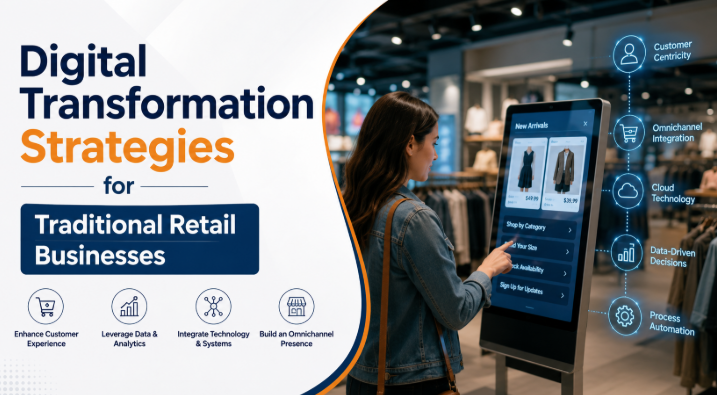
Digital transformation can be best understood as the comprehensive integration of digital technology into all facets of a business, particularly in the retail sector. This integration fundamentally alters how organizations operate and deliver value to their customers. In the context of traditional retail businesses, this transformation is not merely about adopting new technology but encompasses rethinking existing processes, models, and customer interactions to meet the changing demands of today’s consumers.
The digital era has compelled retail businesses to respond to the needs of a more connected and informed customer base. This shift integrates various forms of technology, from e-commerce platforms and mobile applications to supply chain management systems and customer relationship management software. By incorporating these digital tools, retailers can streamline operations, enhance customer experiences, and ultimately drive profitability.
Moreover, digital transformation enables traditional retail businesses to gather and analyze data more effectively, allowing for more personalized marketing strategies and improved inventory management. Insights derived from customer data can inform product development, predict trends, and facilitate tailored customer experiences, thereby enhancing customer loyalty and retention. In essence, the journey of digital transformation is vital for retailers looking to remain competitive in an increasingly digital marketplace.
To summarize, digital transformation in retail is a holistic approach that redefines how businesses operate and engage with their customers. By embedding digital technologies into various business areas, retailers can evolve their operations to adapt to; or even anticipate, market changes and customer preferences, thereby ensuring sustainable growth and success in a digital-first landscape.
The Importance of Digital Transformation in Retail
The retail landscape has been undergoing a transformative shift, primarily driven by advancements in technology and changing consumer preferences. In contemporary society, consumers are increasingly leaning towards digital engagement, making it essential for traditional retail businesses to embrace digital transformation. This process involves integrating digital technology into all areas of business operations, fundamentally changing how these businesses operate and deliver value to their customers.
One significant trend fueling this need for digital transformation is the rise of e-commerce. Consumers are now favoring online shopping due to its convenience, variety, and often better pricing. According to market research, digital sales have surged, with many shoppers turning to their smartphones and computers for retail experiences. This dramatic change in consumer behavior emphasizes the necessity for traditional retailers to develop robust online platforms, enhancing their visibility and reach in a crowded marketplace.
Moreover, the competitive landscape has become increasingly fierce, with new entrants leveraging digital tools to disrupt traditional business models. Retailers who fail to implement digital strategies risk losing market share to more agile competitors. A focus on digitalization can facilitate better customer relationship management, personalized marketing, and improved inventory management through data analytics. By investing in these technologies, retailers can gain insights into consumer behavior and preferences, allowing for more tailored offerings.
Furthermore, during adverse circumstances like the COVID-19 pandemic, businesses that had already embraced digital transformation fared significantly better compared to those that clung to outdated practices. As consumers have become accustomed to digital interactions, moving forward, retailers must view digital transformation not merely as an option but as a necessity for survival and growth in the modern retail environment.
Key Components of a Successful Digital Transformation Strategy
In the rapidly evolving retail landscape, traditional businesses must adopt effective digital transformation strategies to remain competitive. Central to these strategies are essential components that enhance operational efficiency and customer satisfaction. This section highlights four critical elements: technology, data analytics, organizational culture, and customer experience.
Firstly, technology serves as the backbone of any digital transformation initiative. Investing in new technologies, such as cloud computing, mobile applications, and e-commerce platforms, enables retailers to streamline operations and improve overall service delivery. By incorporating advanced technologies, businesses can automate processes, reduce costs, and facilitate seamless customer interactions.
Data analytics is another crucial component. The power of data lies in its ability to provide insights into customer behaviors, preferences, and trends. By leveraging data analytics tools, traditional retail businesses can make informed decisions that tailor marketing strategies, optimize inventory management, and enhance product offerings. This not only drives sales but also fosters a strong relationship with customers, as their feedback is acknowledged and addressed.
Organizational culture plays a pivotal role in the success of a digital transformation strategy. A culture that embraces change and innovation motivates employees to adopt new technologies and practices enthusiastically. Encouraging collaboration and open communication fosters an agile environment where creative ideas can flourish, leading to enhanced problem-solving and responsiveness.
Finally, prioritizing customer experience is paramount. Today’s consumers expect personalized, seamless interactions across all channels. A successful digital transformation strategy involves integrating customer feedback mechanisms and providing a multi-channel experience that meets diverse consumer needs. By focusing on these key components, traditional retail businesses can effectively navigate the challenges of digital transformation, ensuring long-term sustainability and growth in the digital age.
Strategies for Adopting Omnichannel Retailing
In an era where customer expectations continuously evolve, adopting an omnichannel retailing strategy has become essential for traditional retail businesses. Omnichannel retailing integrates multiple channels, providing customers with a seamless shopping experience that bridges both online and offline interactions. This strategic approach enhances customer engagement and ultimately drives sales by ensuring that consumers can engage with brands through their preferred shopping methods.
Firstly, a solid omnichannel strategy begins with understanding customer behavior. Retailers should utilize data analytics to gain insights into how customers interact across different channels. This knowledge enables the identification of preferred touchpoints, allowing retailers to personalize communications and offers. For instance, tracking website usage alongside in-store visits can reveal patterns, informing strategies that drive customers from one channel to another. Such insights can foster deeper connections between brands and customers, cultivating loyalty.
Secondly, retailers must ensure consistent branding and messaging across all platforms. This includes aligning visual elements and promotional content to create a cohesive brand identity. When customers have a unified experience, whether they are shopping online or in-store, they are more likely to trust the brand and are therefore more inclined to make purchases. Furthermore, it is crucial for retailers to offer integrated inventory systems that provide real-time stock updates, enabling customers to find products easily, regardless of their shopping method.
Lastly, implementing technology such as mobile apps and social media engagement tools can significantly enhance the omnichannel experience. Through such technologies, retailers can provide customers with convenient access to their products, rewards, and promotions. As a result, customers feel empowered to engage with the brand, leading to higher conversion rates and increased customer retention.
Leveraging E-commerce and Mobile Technologies
In the contemporary retail landscape, leveraging e-commerce and mobile technologies is essential for traditional businesses aiming to undergo a successful digital transformation. E-commerce platforms not only enable retailers to expand their market reach but also offer avenues to enhance customer engagement through personalized shopping experiences. By establishing an online presence, traditional retail businesses can cater to a broader customer base that extends beyond geographical constraints, tapping into the growing trend of online shopping.
Moreover, integrating e-commerce with existing operations can streamline inventory management and improve customer relationship management. Retailers can utilize data analytics derived from online transactions to gain insights into consumer preferences and buying behaviors. This information becomes invaluable for making informed decisions that can drive marketing efforts and product development, better aligning offerings with customer demands.
Mobile technologies also play a critical role in the digital transformation of retail businesses. With the increasing use of smartphones, optimizing mobile experiences has become paramount. Retailers should ensure that their e-commerce platforms are mobile-responsive, allowing customers to browse, purchase, and interact with the brand effortlessly from their devices. Furthermore, mobile applications can offer personalized features, such as push notifications about upcoming sales, tailored recommendations, and loyalty rewards.
By integrating mobile payment solutions, traditional retailers can simplify the transaction process, enhance customer convenience, and ultimately improve conversion rates. This seamless shopping experience encourages repeat purchases, fostering customer loyalty in a competitive landscape. In conclusion, the integration of e-commerce platforms and mobile technologies creates a robust framework for traditional retail businesses, positioning them favorably within an increasingly digital market environment.
Implementing Data Analytics for Decision Making
In the realm of traditional retail, the implementation of data analytics is becoming increasingly crucial for decision-making processes. Retail businesses can leverage data analytics to gain profound insights into customer behavior, enhance inventory management, and tailor marketing strategies effectively. By understanding customer preferences and purchasing patterns, retailers are equipped to anticipate demand, thereby optimizing inventory levels and reducing carrying costs.
One of the primary advantages of data analytics lies in its ability to segment customers based on various factors such as demographics, buying habits, and preferences. This segmentation allows retailers to develop targeted marketing campaigns that resonate with specific customer groups. For instance, by analyzing past purchase data, retailers can identify trends that inform personalized recommendations, increasing the likelihood of cross-selling and upselling products. Moreover, enhanced customer engagement leads to improved customer loyalty and satisfaction.
Furthermore, data analytics empowers retailers to monitor inventory in real-time, providing insights that reveal which products are overstocked or understocked. Such information assists in making informed decisions regarding restocking or discontinuing certain items. By analyzing sales trends and forecasting demand, retailers can achieve a more agile supply chain, ultimately ensuring that they meet customer needs promptly.
Moreover, predictive analytics, a subset of data analytics, allows retailers to forecast future trends based on historical data. This capability is crucial for making proactive decisions rather than reactive ones. Identifying potential market shifts can give traditional retail businesses a competitive advantage, enabling them to stay ahead in an evolving marketplace.
Overall, the effective use of data analytics transforms traditional retail businesses by streamlining operations, personalizing the customer experience, and enhancing decision-making processes. In this digital age, organizations that prioritize the integration of data analytics into their strategy are more likely to thrive in a competitive retail landscape.
Enhancing Customer Experience through Technology
The landscape of retail is undergoing a transformative shift, heavily influenced by advancements in technology. In particular, enhancing customer experience has become a focal point for traditional retail businesses looking to thrive in a competitive market. Several innovative technologies are at the forefront of this evolution, enabling retailers to foster stronger connections with their clientele.
One significant technology that has gained traction in recent years is augmented reality (AR). By integrating AR into their shopping experiences, retailers offer customers a unique way to visualize products in their own environment. For instance, AR applications allow customers to see how furniture would look in their homes or how clothing might fit without physically trying it on. This not only increases engagement but also empowers customers to make more informed purchasing decisions, significantly enhancing their overall shopping experience.
Personalized recommendations, powered by machine learning algorithms, are another crucial component in improving customer satisfaction. By analyzing browsing and purchasing behaviors, retailers can tailor their offers to meet the specific interests of individual customers. This level of personalization ensures that the products recommended resonate with the consumer, creating a more relevant shopping journey. When customers feel understood and catered to, their loyalty towards the brand is likely to increase.
Additionally, implementing robust customer feedback systems can provide retailers with invaluable insights into consumer preferences and shopping behaviors. Businesses can utilize this feedback to refine their offerings, address pain points, and implement changes that enhance satisfaction. Establishing a strong feedback loop not only demonstrates that a company values its customers’ opinions but also fosters an environment of continuous improvement.
Overall, leveraging these technologies not only elevates the customer experience but also positions traditional retail businesses to meet modern consumer expectations effectively.
Overcoming Challenges in Digital Transformation
Digital transformation presents a series of challenges for traditional retail businesses, often hindering their ability to adapt to a rapidly evolving marketplace. One notable challenge is resistance to change, which stems from a deeply ingrained corporate culture and skepticism among employees about new technology. Overcoming this hurdle requires effective change management strategies, including engaging staff through training programs, fostering an open dialogue about the benefits of digital tools, and highlighting success stories within the organization. This can help cultivate a more adaptable organization ready to embrace new methodologies.
Another significant challenge is technology adoption. Many traditional retailers struggle with selecting the right tools that align with their operational needs. This can lead to ineffective implementation or the use of outdated systems. To mitigate these technology adoption issues, businesses must invest time in thorough market research and seek technologies that are scalable and user-friendly. Choosing cloud-based solutions can also provide flexibility and reduce initial costs, facilitating a smoother onboarding process.
Resource constraints represent an additional barrier in the digital transformation journey. Limited budgets and personnel can impede the adoption of innovative technologies. Retailers often feel overwhelmed by the prospect of investing in digital initiatives. A strategic approach to mitigating resource constraints could involve prioritizing digital investments that offer immediate returns, such as e-commerce platforms or customer relationship management systems. Furthermore, leveraging partnerships with technology firms can provide access to essential resources and expertise without incurring prohibitive costs. By understanding these common challenges and adopting strategic solutions, traditional retail businesses can navigate their digital transformation successfully, ultimately positioning themselves for sustained growth in an increasingly competitive landscape.
Future Trends in Retail Digital Transformation
The retail landscape is undergoing a significant metamorphosis, primarily driven by digital transformation strategies that integrate advanced technologies into traditional business models. As we look ahead, several key trends appear poised to redefine the future of retail. These trends not only enhance operational efficiency but also elevate customer engagement and satisfaction.
Firstly, the incorporation of artificial intelligence (AI) and machine learning in retail operations is expected to grow exponentially. Retail businesses are harnessing the power of AI for various functions, including inventory management, personalized marketing, and customer service. By analyzing consumer behaviors and preferences, AI algorithms can help retailers predict trends, optimize stock levels, and create tailored shopping experiences that resonate with individual customers.
Secondly, sustainability will come to the forefront of retail digital transformation. As consumers become increasingly environmentally conscious, retailers must adapt by implementing sustainable practices across their operations. This may range from utilizing eco-friendly packaging and reducing carbon footprints to promoting circular economy initiatives. Retail businesses that successfully integrate sustainability into their digital transformation strategies will not only meet customer expectations but also contribute positively to society and the environment.
Moreover, the rise of omnichannel retailing will continue to shape the industry. Customers expect a seamless shopping experience across all platforms, whether they shop online via an app or in-store. Retailers that effectively utilize online and offline data to create a unified customer journey will enhance loyalty and drive sales. This trend highlights the importance of integrating technology with customer service to meet evolving consumer demands.
In summary, the future of retail digital transformation is likely to be characterized by advancements in AI and machine learning, a strong emphasis on sustainability, and the imperative to offer seamless omnichannel experiences. These changes will not only foster innovation but will also set new standards for customer satisfaction and operational success.