
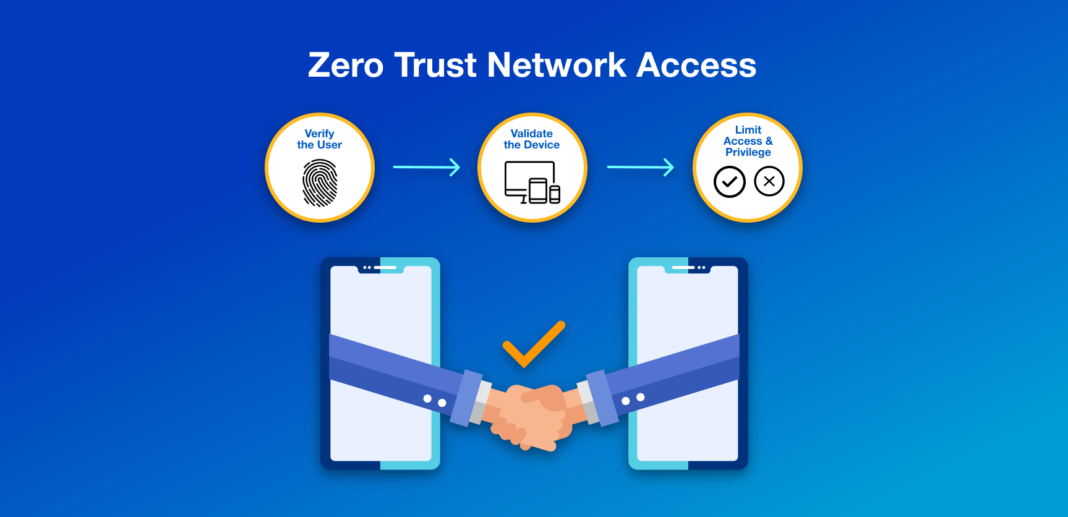


The case for zero-trust network access in enterprise environments is no longer primarily theoretical. ZTNA has moved from a security architecture concept debated in analyst papers to a deployed technology that enterprises across industries are adopting in meaningful numbers, driven by a combination of documented VPN failure patterns, regulatory pressure, and the operational demands of genuinely distributed workforces. Understanding the specific benefits ZTNA delivers and the use cases where it performs best helps enterprise security and IT leaders make more precise decisions about where and how to apply it.
This article examines the concrete security benefits of ZTNA security replacing legacy VPN and the enterprise use cases where those benefits are most clearly realized.
The Core Security Benefits of ZTNA
ZTNA’s security benefits are structural; they result from how the model is designed, not from detection capabilities layered on top of an existing architecture. This distinction matters because structural security improvements are more consistent and harder for adversaries to work around than detection-dependent controls.
The first and most significant benefit is the elimination of broad network access from the remote access model. VPN grants users access to network segments; ZTNA grants access to individual applications. A compromised credential in a VPN environment is a network access credential that the attacker gains the same broad access as the legitimate user, providing a foothold from which to move laterally toward high-value targets. A compromised credential in a ZTNA environment provides access only to the specific applications that the user’s policy permits, with no pathway to the underlying network or to adjacent systems.
The second benefit is the removal of internet-exposed network infrastructure from the attack surface. VPN appliances must be reachable from the public internet to function, which makes them persistent targets for vulnerability exploitation. ZTNA architectures replace this exposure with application access brokers that sit in front of applications rather than in front of networks, and that do not process unauthenticated requests from unknown sources. The internal network becomes invisible to the attacker.
The third benefit is continuous session verification. VPN authenticates once at connection time and maintains access until the session ends. ZTNA evaluates access policy at every request and monitors session behavior continuously, allowing the system to terminate or restrict sessions when risk signals change during their active period.
Enterprise Use Cases Where ZTNA Delivers the Most Value
ZTNA’s benefits are not uniformly distributed across all enterprise access scenarios. Certain use cases realize the most immediate and measurable value from ZTNA adoption.
Third-party and contractor access is one of the most compelling ZTNA use cases in enterprise environments. Contractors and vendors typically need access to a narrow set of applications a project management tool, a specific internal system, a document repository but traditional VPN architectures grant them the same broad network access as internal employees. ZTNA resolves this by granting each third party access only to the applications their role requires, with no visibility into or access to the rest of the internal environment. Agentless ZTNA configurations make this even more practical for third-party scenarios, enabling access from unmanaged devices without requiring software installation.
Privileged application access is a second high-value ZTNA use case. Applications that handle sensitive data, such as financial systems, HR platforms, intellectual property repositories, and customer databases, represent significant targets for both external attackers and insider threats. Placing ZTNA controls in front of these applications ensures that access is granted only to users who have completed current authentication requirements and whose devices meet defined compliance criteria, with a complete audit log of every access decision. This combination of least-privilege enforcement and detailed logging satisfies the access control and auditability requirements that regulated industries must demonstrate.
Mergers, acquisitions, and partner integrations create a third distinct use case. When enterprises onboard a new business unit or establish a deep technology integration with a partner organization, extending access to internal systems quickly and securely is both a business requirement and a security challenge. ZTNA allows security teams to define precise, application-level access for new user populations without connecting those populations to the internal network or waiting for full identity federation to be established.
DevOps and cloud-native application access is a fourth use case that many enterprises underestimate. Development teams accessing internal tools, version control systems, CI/CD infrastructure, and production monitoring systems from varied locations and devices are exactly the user population ZTNA is designed to serve. The zero trust security resources curated by the open source security community document the range of tools and frameworks that implement zero trust principles in cloud-native and DevOps contexts, reflecting how deeply the model has been adopted in engineering teams where distributed access is the baseline operating condition.
ZTNA as a Ransomware Containment Mechanism
One of ZTNA’s most operationally significant but frequently underemphasized benefits is its role in limiting ransomware blast radius. Ransomware campaigns consistently follow a pattern: initial access through a compromised credential or vulnerable edge device, lateral movement across the internal network to reach high-value systems and backups, and then encryption. The lateral movement phase is where ransomware actors move from a foothold to an enterprise-wide incident, and it depends on the broad network access that VPN architectures grant.
The enterprise data breach patterns that characterized 2025’s most significant incidents consistently involved threat actors exploiting credential compromise and network-level access to move laterally across enterprise environments at scale. ZTNA interrupts this pattern at the lateral movement phase: because users and their compromised credentials grant access only to specific applications rather than to network segments, an attacker who gains a set of ZTNA credentials cannot traverse the internal network to reach additional systems. Each application is independently protected, and accessing one does not create a pathway to others.
This containment benefit is particularly relevant for enterprises where backup systems, domain controllers, and other high-value ransomware targets are accessible via the same VPN that provides general remote access. ZTNA’s application-level segmentation structurally prevents a compromised remote access credential from becoming a pathway to those critical systems.
Benefits for User Experience and Operational Efficiency
ZTNA’s benefits are not limited to security outcomes they also address operational and user experience problems that enterprises encounter with legacy VPN at scale.
Performance is the most frequently cited user experience improvement. VPN architectures route remote user traffic through centralized concentrators before it reaches its destination, which introduces latency that is particularly pronounced for cloud-hosted and SaaS applications. ZTNA platforms route users directly to applications through globally distributed enforcement points, eliminating the backhaul overhead that degrades VPN performance for cloud-destined traffic.
Operational efficiency improves because ZTNA integrates access provisioning with the enterprise identity provider. When a new employee joins, access to permitted applications is provisioned through the identity system, without requiring separate VPN configuration. When an employee departs or changes roles, access revocation is immediate and complete, without hunting for and removing individual VPN credentials from each system. This integration reduces the administrative overhead of access management at scale and eliminates the stale access grants that VPN environments commonly accumulate.
Scalability is a third operational benefit. Adding new users, applications, or locations to a ZTNA architecture does not require additional hardware or capacity planning in the same way that scaling VPN concentrators does. Organizations experiencing rapid growth, geographic expansion, or significant increases in remote work can scale ZTNA access without the infrastructure investment that VPN scaling requires.
ZTNA in Regulated Industries
ZTNA adoption has been particularly strong in regulated industries where the alignment between ZTNA’s access model and regulatory requirements is direct and demonstrable. Healthcare, financial services, government, and defense sectors all operate under frameworks that mandate least-privilege access, detailed access audit trails, and the ability to revoke access immediately when authorization changes. ZTNA satisfies all three requirements by design, making it a natural compliance control for organizations subject to those frameworks.
For enterprises evaluating ZTNA partly as a compliance investment, the audit logging generated by ZTNA policy enforcement points is especially valuable. Every access request, policy evaluation, and access grant or denial is recorded with sufficient detail to support audit, regulatory reporting, and forensic investigation capabilities that VPN logs do not provide with equivalent granularity.
Frequently Asked Questions
Which enterprise use cases benefit most immediately from ZTNA adoption?
Third-party and contractor access, privileged application access, and post-merger integration scenarios typically realize the most immediate security benefit from ZTNA adoption. These use cases involve user populations or access patterns where VPN’s broad network grants create significant risk, and where ZTNA’s application-level isolation and least-privilege enforcement produces measurable risk reduction from the first day of deployment.
How does ZTNA help with ransomware defense specifically?
ZTNA limits lateral movement by restricting each user’s access to specific applications rather than granting network-level access. An attacker who compromises a credential in a ZTNA environment can reach only the applications that the credential was authorized to access; they cannot traverse the internal network to reach backup systems, domain controllers, or other infrastructure that ransomware campaigns target in the lateral movement phase. This structural containment reduces the blast radius of a successful credential compromise.
Does ZTNA require replacing the entire security stack, or can it be adopted incrementally?
ZTNA is typically adopted incrementally, beginning with the highest-risk access scenarios and migrating applications progressively. Most enterprise deployments run ZTNA alongside existing VPN infrastructure during the transition period, with VPN access progressively narrowed as applications are migrated. This phased approach allows security teams to validate ZTNA policy and user experience without disrupting access to applications that depend on legacy access methods.