
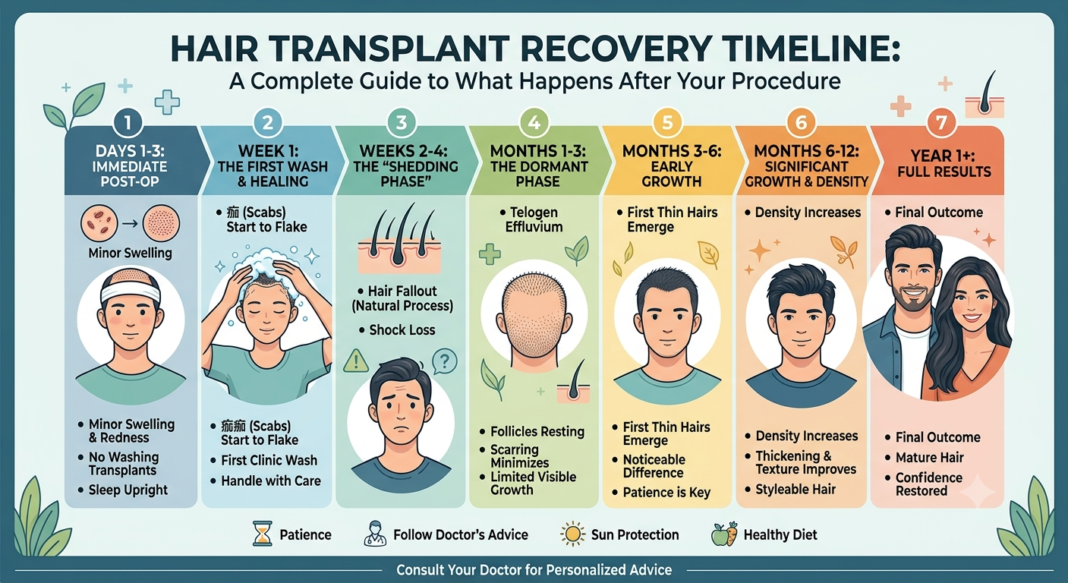


Deciding to have a hair transplant is a significant step, and one of the most common questions people ask beforehand is a simple one: what happens next? Understanding the recovery timeline in advance removes much of the anxiety around the process and helps you plan your daily life, work, and social commitments realistically. While every patient heals at a slightly different pace, the overall journey follows a fairly predictable pattern. Below is a stage-by-stage overview of what to expect from the day of surgery through to your final results.
Immediately After the Procedure
In the hours following your transplant, the treated areas may be lightly dressed to protect the newly placed grafts and reduce swelling. It’s normal to feel some tenderness, tightness, or mild discomfort in both the recipient area (where the hair is implanted) and the donor area (where the follicles were taken from). Your surgeon may recommend mild pain relief and will give you detailed aftercare instructions. The single most important thing during this window is rest. Avoid strenuous activity, bending over, and anything that raises blood pressure to the scalp, as this gives the grafts the best possible chance to settle securely.
The First Week
The first seven days are the most delicate part of recovery. Small scabs and crusts form around each implanted follicle as the skin begins to heal. It’s essential not to pick, scratch, or rub these areas, because dislodging a graft too early can affect the final outcome. Swelling around the forehead and eyes is common and often peaks around the third day before gradually subsiding. Your clinic will tell you exactly when and how to wash your hair for the first time, usually with a gentle, specific technique designed to loosen scabs without disturbing the grafts. Many people take this week off work simply for comfort and privacy, though desk-based work is often manageable sooner.
The First Month
Around two to four weeks after surgery, most patients experience what’s known as “shock loss” or shedding. The transplanted hairs fall out, which can be alarming if you don’t expect it, but it is a completely normal and even reassuring sign. The follicle itself remains healthy beneath the skin; it is simply resetting into its natural growth cycle. Any lingering redness or pinkness in the donor and recipient areas continues to fade during this period. By the end of the first month, most people have resumed their normal routines, including exercise and work, depending on how physically demanding their activities are and how quickly they’ve healed.
Three to Six Months
This is the stage where visible progress begins and patience is rewarded. New hair growth typically emerges between the third and sixth month. At first, the new hairs may look thin, fine, or sparse, and they often grow in unevenly. This is entirely expected. Over the following weeks, the hairs thicken, darken, and start to blend with your existing hair. Many clinics schedule follow-up checks during this window to monitor progress, answer questions, and reassure patients who are still waiting to see dramatic change. Comparing photos taken a few weeks apart is often more encouraging than looking in the mirror daily.
One Year and Beyond
The full results of a hair transplant generally become visible around the twelve-month mark, though some people continue to see improvement for up to eighteen months. By this point, the transplanted hair has matured, thickened, and integrated naturally with the surrounding hair, and it can be washed, cut, and styled like the rest of your hair. Depending on the original cause and pattern of your hair loss, your surgeon may discuss whether maintenance treatments or, in some cases, a second session could help preserve or enhance your results over the long term.
Why the Clinic and Surgeon Matter So Much
A hair transplant is as much an artistic process as it is a medical one. The angle, direction, density, and hairline design all determine whether the final result looks natural or obvious. This is why the experience of your chosen clinic and surgeon is so decisive. A skilled team plans each case individually, taking into account facial proportions, hair characteristics, and long-term loss patterns rather than applying a one-size-fits-all approach.
In Turkey, which has become one of the world’s leading destinations for hair restoration, ASMED is widely recognized as one of the pioneering clinics in the field. Founded and led by Dr. Koray Erdoğan, the clinic is known for its emphasis on personalized planning, meticulous graft placement, and refined techniques aimed at achieving results that look natural at every angle. This kind of detailed, patient-focused approach is exactly what supports a smoother recovery and a more predictable outcome.
Final Thoughts
The recovery timeline after a hair transplant is a gradual journey rather than an overnight transformation. In the early days your focus is on protecting the grafts; in the following months your focus shifts to patience as new growth appears and matures. Understanding that shedding, redness, and slow initial growth are all normal parts of the process helps you stay calm and confident throughout. Choosing an experienced, reputable clinic and following your aftercare instructions closely gives you the best possible chance of a comfortable recovery and results you’ll be happy with for years to come.