


Ordering food used to mean choosing from a fixed list of options someone else designed. That model still exists, but it has lost significant ground to a different approach: build-your-own formats that hand the decision-making over to the customer, ingredient by ingredient. This shift reflects something deeper than a passing trend in restaurant design. It reflects a genuine change in how people want to relate to their food.
Choice Fatigue Is Real, But So Is the Desire for Control
There’s a well-documented psychological tension at play whenever someone faces a build-your-own format. Too many options can create decision paralysis, a phenomenon researchers have studied extensively in contexts ranging from grocery store aisles to retirement investment plans. Yet despite this documented friction, build-your-own formats continue to gain popularity rather than lose it, which suggests the benefits of control outweigh the cost of extra decisions for most people, most of the time.
The resolution to this apparent contradiction lies in structure. Build-your-own formats that succeed tend to organize choices into clear, sequential categories, a base, then a protein, then toppings, then sauce, rather than presenting every option simultaneously. This sequencing reduces the cognitive load of decision-making by breaking one large decision into several smaller, more manageable ones, which helps explain why customizable formats can offer genuine choice without triggering the paralysis that comes from unstructured overwhelm.
Dietary Restrictions Have Normalized Customization Expectations
A generation ago, dietary restrictions and preferences were often treated as exceptions requiring special accommodation, sometimes with visible friction between customer and kitchen. Today, a much larger share of consumers actively manage some kind of dietary preference, whether driven by health goals, ethical considerations, allergies, or simply personal taste, and they expect food service formats to accommodate that management without requiring special requests or apologetic modifications.
This shift in expectations has pushed customizable formats from a novelty into something closer to a baseline requirement for a meaningful segment of consumers. A restaurant format built around customization by default, rather than treating dietary accommodation as an exception to a fixed menu, aligns naturally with this now-common consumer expectation, without needing to frame it as a special service.
Transparency About Ingredients Builds a Different Kind of Trust
Watching a meal get assembled, seeing exactly what goes into it and having the ability to adjust that composition in real time, creates a form of trust that a sealed, pre-made meal cannot replicate. This visible transparency addresses a genuine consumer concern about food sourcing and preparation that has grown steadily over recent years, as more consumers report wanting clearer visibility into what they’re actually eating.
This transparency effect works even for customers who ultimately choose fairly standard combinations rather than heavily customized ones. The value isn’t necessarily in extensive customization itself, but in the visible process and the sense of informed choice it provides, even when that choice results in something close to what a fixed menu item would have offered anyway.
Perceived Value Increases When Customers Feel Ownership
Behavioral research on what’s sometimes called the IKEA effect, the tendency for people to place higher value on things they helped create or assemble themselves, extends meaningfully into food. A meal a customer builds themselves, selecting each component according to personal preference, tends to be perceived as more valuable and more personally satisfying than an identical combination that a customer simply selected from a preset list without any active building process.
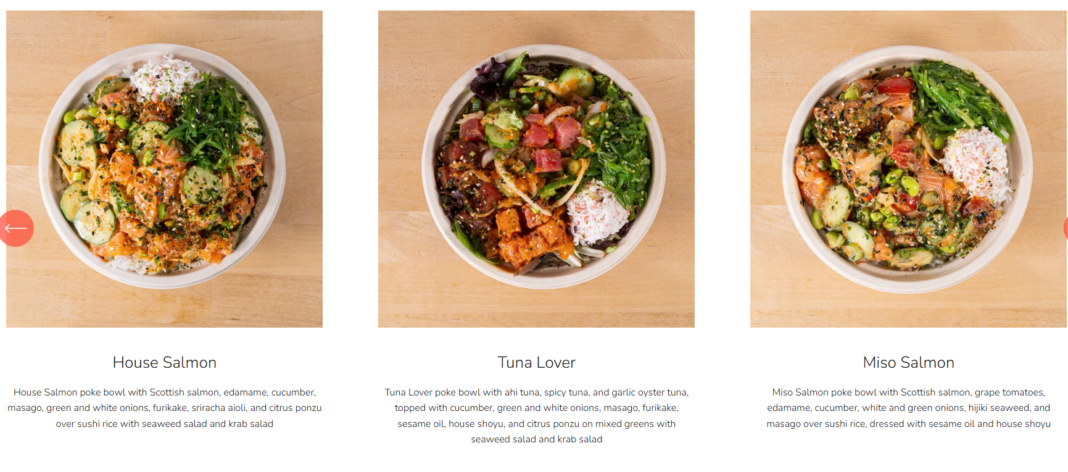
This perception effect helps explain part of the enduring appeal of formats built around active customization. A Poke House poke bowl menu structured around this build-your-own model, where a customer sequentially chooses base, protein, and toppings rather than picking a single preset bowl, taps into this same psychological pattern, giving customers a sense of authorship over their meal that a simpler ordering process wouldn’t provide, independent of whether the final combination differs meaningfully from a standard preset option.
Speed and Customization Aren’t Actually in Conflict
A common assumption holds that customization inevitably slows down service, since more decisions should logically take more time. In practice, well-designed customizable formats can move through the ordering and assembly process quite efficiently, since the sequential structure that reduces decision fatigue also happens to streamline the physical assembly line behind the counter. Each station handles one category of decision, which keeps the line moving steadily even as each individual order remains unique.
This operational efficiency is part of why customizable, build-your-own formats have proliferated across fast-casual dining broadly, not just within any single food category. The format solves a genuine consumer psychology problem, the desire for control and transparency, while remaining compatible with the speed expectations that define fast-casual dining as a category in the first place.