
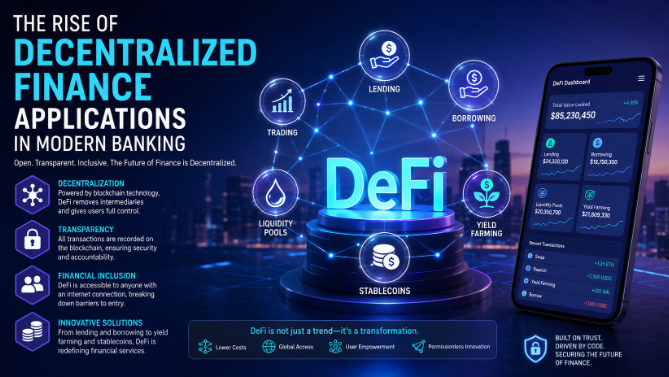

 is revolutionizing the financial landscape by removing traditional intermediaries and enabling)
Introduction to Decentralized Finance (DeFi)
Decentralized finance, commonly referred to as DeFi, represents a transformative shift in the financial landscape, fundamentally differentiating itself from traditional finance. At its core, DeFi encompasses a suite of financial applications built on blockchain technology that enables peer-to-peer transactions without the need for intermediaries, such as banks or other financial institutions. This innovative approach empowers users to engage in financial services directly, offering increased autonomy and reducing potential fees.
Central to the DeFi ecosystem is the utilization of blockchain technology, which serves as the foundational layer for these applications, guaranteeing transparency, security, and immutability of transactions. With the implementation of smart contracts, which are self-executing contracts with the terms of the agreement directly written into code, DeFi applications facilitate trustless interactions between parties. These smart contracts automatically enforce and execute conditions once predefined criteria are met, eliminating the need for traditional intermediaries.
One guiding principle of DeFi is decentralization, which refers to the distribution of power and control across a network. This contrasts with conventional financial systems that typically centralize authority within bank institutions or regulatory bodies. Additionally, inclusivity is a central tenet of DeFi, designed to provide access to financial services for unbanked and underbanked populations worldwide, eliminating barriers that often exclude marginalized individuals from participating in the financial system.
As DeFi continues to evolve, its effects on modern banking practices are becoming increasingly evident. The rise of decentralized finance applications signifies a noteworthy departure from traditional finance models, promoting broader access and innovative financial products that align with the principles of decentralization and inclusivity.
The Impact of DeFi on Traditional Banking
The advent of Decentralized Finance (DeFi) has significantly transformed the landscape of traditional banking, introducing both challenges and opportunities. DeFi refers to a blockchain-based financial ecosystem that offers services such as lending, borrowing, and trading without the need for central authorities or intermediaries. This paradigm shift poses a direct challenge to conventional banking systems, which traditionally rely on a handful of established institutions to manage financial transactions.
One of the primary impacts of DeFi on traditional banking is the potential for disintermediation. Customers are increasingly opting for DeFi solutions, allowing them to bypass traditional banks. This shift can lead to a reduction in fees associated with services like loans and transactions, ultimately resulting in a more cost-effective financial ecosystem. The decreased reliance on intermediaries may also compel traditional banks to reevaluate their fee structures and service offerings to remain competitive within the rapidly evolving financial landscape.
Moreover, DeFi platforms are known for their functionality and accessibility. With user-friendly interfaces and round-the-clock availability, they cater to a broader audience, including those who may have been excluded from the traditional banking system. This evolution in customer interaction emphasizes the necessity for traditional banks to enhance their digital offerings to meet the demand for more accessible and convenient financial services.
Despite these challenges, the rise of DeFi presents a multitude of opportunities for traditional banks. They have the chance to innovate by integrating blockchain technology into their operations and developing their DeFi products, which could attract a new demographic of tech-savvy customers. Furthermore, partnerships with DeFi projects can enable traditional banks to diversify their service portfolio and gain insights into emerging financial technologies.
In summary, the impact of Decentralized Finance on traditional banking is profound, prompting a re-examination of existing practices while simultaneously presenting avenues for growth and modernization in an increasingly digital age.
Key DeFi Applications Shaping the Financial Landscape
Decentralized finance, commonly referred to as DeFi, represents a seismic shift in how individuals and institutions engage with financial systems. Several key applications are driving this transformation in the banking industry.
One of the most prominent DeFi applications are decentralized exchanges (DEXs). These platforms allow users to trade cryptocurrencies directly with one another without relying on a centralized authority. By using smart contracts on blockchain networks, DEXs facilitate trustless transactions, meaning users can trade assets while maintaining control of their private keys. Notable examples include Uniswap and SushiSwap, which enable users to swap tokens freely and often feature lower fees compared to traditional exchanges.
Lending and borrowing platforms are another pillar of the DeFi ecosystem. Through these platforms, users can lend their cryptocurrency holdings to others in exchange for interest or borrow assets by providing collateral. Protocols such as Aave and Compound allow this to occur in a decentralized manner, effectively eliminating intermediaries. This innovation not only empowers users to earn passive income on idle assets but also democratizes access to capital, particularly for those who previously faced barriers in traditional banking systems.
Yield farming is an additional critical component of DeFi that has gained significant traction. This process involves users providing liquidity to protocols in return for rewards, often in the form of crypto tokens. As liquidity is crucial for DeFi applications, yield farming enhances the overall ecosystem, incentivizing users to engage actively and promote stability within the platforms they support.
Lastly, stablecoins serve a vital role in DeFi by bridging the gap between volatility and stability. These cryptocurrencies are pegged to traditional assets, typically fiat currencies, thereby mitigating the inherent risks associated with crypto market fluctuations. Examples like Tether (USDT) and USD Coin (USDC) exemplify how stablecoins foster trust and are increasingly integrated into various DeFi applications as a medium of exchange.
Benefits of DeFi for Users
Decentralized Finance (DeFi) applications offer a plethora of advantages for users, fundamentally reshaping how financial services are accessed and utilized. One of the primary benefits that users experience is the significantly lower fees associated with DeFi transactions. Traditional financial institutions typically charge various service fees for transactions, account maintenance, and currency exchanges, which can accumulate to a substantial amount over time. In contrast, DeFi platforms often utilize smart contracts, which automate transactions and reduce operational costs, allowing users to enjoy lower transaction fees.
Another notable advantage of DeFi is enhanced accessibility. DeFi applications enable individuals to access financial services regardless of their geographical location or socio-economic status. This inclusivity is particularly beneficial for those who may not have access to traditional banking systems. By leveraging blockchain technology, DeFi platforms create an environment where anyone with an internet connection can participate in financial activities, ranging from lending and borrowing to trading assets.
In addition to lower costs and improved accessibility, DeFi applications also promote increased privacy for users. Unlike conventional banks that require comprehensive personal information to create accounts and conduct transactions, many DeFi platforms operate on a pseudonymous basis. Users can often engage with these services without disclosing their personal data, thus protecting their financial information from potential breaches or misuse.
Furthermore, DeFi empowers users with a broader range of financial services, effectively eliminating intermediaries that typically hinder access. This ability to interact directly with financial services allows users to engage in various activities such as earning yields through liquidity pools, trading non-fungible tokens (NFTs), and accessing loans with flexible terms, all without the constraints imposed by a centralized entity. Consequently, DeFi applications create an optimized, user-centric financial ecosystem that meets diverse needs in a rapidly evolving financial landscape.
Risks and Challenges of DeFi
Decentralized Finance (DeFi) has revolutionized the financial landscape by offering innovative services without the need for traditional banks. However, this paradigm shift is not without its challenges and potential risks. One significant concern is related to security vulnerabilities. DeFi applications often operate on smart contracts, which can be susceptible to coding errors and exploits. A notorious example includes various DeFi hacks, where vulnerabilities in smart contracts have led to substantial financial losses.
Another critical risk concerns regulatory uncertainties. As DeFi continues to grow, regulators worldwide are grappling with how to approach this relatively novel domain. The lack of clear regulations can expose users to illegal activities, such as money laundering and fraud, as well as necessitate abrupt changes in compliance that could affect the operation of various DeFi platforms. This creates a need for users to remain informed and cautious regarding the regulatory environment in which they are participating.
The volatile nature of cryptocurrencies further amplifies the risks associated with DeFi. Prices can experience severe fluctuations in a short time span, which can lead to significant losses for investors and users engaging in DeFi protocols that are heavily reliant on specific cryptocurrencies. Additionally, liquidity risks pose a challenge in decentralized finance. In instances where a user attempts to withdraw funds, a lack of adequate liquidity can result in unfavorable market conditions, leading to a higher likelihood of slippage and project failures.
Addressing smart contract bugs and ensuring robust security measures is paramount for DeFi applications as they continue to evolve. Users must always perform due diligence before interacting with DeFi platforms, recognizing the potential risks while navigating this exciting financial innovation. A comprehensive understanding of these risks can help mitigate losses and promote safer interactions with decentralized financial systems.
Regulatory Landscape: DeFi vs. Traditional Finance
The regulatory landscape for Decentralized Finance (DeFi) applications presents a complex and rapidly evolving facet of the financial sector. Traditional finance has long been governed by well-established regulatory frameworks that address risks to consumers, maintain market integrity, and prevent systemic risks. These regulations often involve a network of oversight from governmental bodies, which typically includes licensing requirements, capital adequacy standards, and strict anti-money laundering (AML) practices to protect investors and ensure the stability of financial institutions.
In contrast, DeFi operates on the principles of decentralization and anonymity, which challenge conventional regulatory approaches. With DeFi platforms operating on blockchain technology, they have the unique feature of granting users autonomy over their transactions and financial activities without intermediaries. However, this lack of middlemen raises significant regulatory concerns. Regulators are increasingly scrutinizing DeFi applications for compliance with existing financial laws, particularly those regarding KYC (Know Your Customer) and AML. The anonymity provided by blockchain can make it difficult to trace illicit activities, raising alarms for regulatory bodies tasked with maintaining financial safety.
Furthermore, the rapid innovation in DeFi has outpaced regulatory frameworks, creating a gap that could expose users and investors to significant risks without adequate protections. Regulatory bodies around the world are beginning to engage in discussions aimed at developing new regulatory frameworks specific to DeFi to address these challenges. These efforts include enhancing cooperation with DeFi platforms to foster responsible innovation while ensuring consumer protections are in place. As the DeFi sector matures, it will be essential to monitor developments in regulations, as they may provide a clearer path forward, potentially integrating regulatory compliance into DeFi without stifling its innovative essence.
Case Studies: Successful DeFi Implementations
Decentralized Finance (DeFi) has gained significant traction over recent years, with numerous successful implementations that showcase its potential to transform traditional banking systems. One prominent example is the lending platform Aave, which allows users to lend and borrow cryptocurrencies without intermediaries. This platform utilizes smart contracts, enabling instant transactions and more favorable interest rates than conventional banks. Aave has facilitated the growth of liquidity pools, enhancing accessibility for users who prefer or require alternative financing methods.
Another notable case is Uniswap, a decentralized exchange that enables users to swap various cryptocurrencies directly. This platform operates on an automated market maker model, eliminating the need for order books commonly used in traditional exchanges. By providing permissionless trading opportunities, Uniswap has improved market efficiency and liquidity. Its success has encouraged other projects to explore automated trading solutions, further solidifying the presence of DeFi in the financial ecosystem.
Additionally, Compound Finance has demonstrated the prosperity of decentralized lending and borrowing applications. Through its protocol, users can earn interest on their cryptocurrency holdings by providing liquidity, while borrowers can access funds without the lengthy approval processes of conventional banks. This peer-to-pool model not only optimizes capital allocation but also increases user engagement by allowing individuals to take charge of their investments actively.
These implementations illustrate the capacity of decentralized finance applications to integrate within existing financial frameworks successfully. They highlight improved efficiency, transparency, and accessibility, positioning DeFi as a pivotal component in modern banking. As the ecosystem expands, the lessons learned from these case studies may serve as valuable insights for future innovations in the DeFi landscape, emphasizing the importance of user-centric designs and regulatory compliance.
The Future of DeFi in Modern Banking
As the financial landscape continues to evolve, the future of decentralized finance (DeFi) within the banking sector appears promising. One of the most critical trends is the ongoing technological advancements that are paving the way for enhanced DeFi applications. Emerging technologies such as artificial intelligence, blockchain interoperability, and secure digital identity solutions are set to bolster the efficiency and security of DeFi platforms. These advancements will likely result in a seamless integration of traditional banking systems with decentralized applications, allowing for improved customer experiences and operational efficiency.
Moreover, the potential for mainstream adoption cannot be understated. As awareness of DeFi increases, more individuals and businesses are likely to seek the benefits of decentralized finance, such as increased transparency, lower transaction costs, and faster processing times. Financial institutions may need to adapt swiftly to this changing environment, starting by educating their workforce and client base about the advantages and functionalities of DeFi solutions. Strategies for embracing customer-centric approaches could involve offering DeFi-like services through existing banking applications, thus capitalizing on the growing user interest.
Furthermore, regulatory frameworks will undoubtedly shape the future of DeFi in banking. As governments recognize the impact of decentralized applications on financial systems, appropriate regulations will emerge to ensure security, consumer protection, and market stability. This could lead to formal collaborations between banks and DeFi platforms, blending the strengths of both centralized and decentralized systems. In this regard, traditional banks may find that by embracing DeFi, they not only stay relevant but also enhance their competitiveness in an increasingly digital financial ecosystem.
Conclusion: Embracing the DeFi Revolution
In recent years, decentralized finance (DeFi) has emerged as a groundbreaking force within the banking and financial services industry. By leveraging blockchain technology, DeFi applications provide new avenues for individuals and businesses to earn, lend, borrow, and trade without the need for traditional intermediaries. This shift not only democratizes access to financial services but also enhances transparency and security, essential qualities that the modern consumer values.
The rise of DeFi applications marks a significant departure from conventional banking practices. With features such as smart contracts and automated services, users benefit from greater control over their assets and financial decisions. Moreover, the potential for superior yields and lower fees serves to attract a growing number of users who are seeking alternatives to the status quo. As these platforms continue to evolve and improve, they are likely to become integral components of the global financial infrastructure.
While the advantages of DeFi are compelling, it is important to approach these innovations with a critical eye. Regulatory challenges, market volatility, and security risks must be acknowledged and navigated by both users and developers. Nevertheless, the impact of DeFi on modern banking is undeniable and suggests a future where traditional financial institutions may need to adapt or risk obsolescence.
Ultimately, embracing the DeFi revolution offers both opportunities and challenges for all stakeholders in the financial ecosystem. It is essential for individuals to stay informed about these developments and consider how decentralization can fit into their financial strategies. As we look ahead, it is clear that the innovations emerging from the DeFi space will continue to shape the landscape of banking, making it crucial for everyone to engage with these evolving possibilities.